The US is prosecuting a border phone wipe tied to duress-password tools
Federal prosecutors are charging US citizen Sam Tunick over an alleged phone wipe at Atlanta’s Hartsfield-Jackson airport after he supposedly gave agents a fake duress password [2]. The government says the case involves a rarely used statute on destroying or damaging property to stop seizure, while…
Federal prosecutors are charging US citizen Sam Tunick over an alleged phone wipe at Atlanta’s Hartsfield-Jackson airport after he supposedly gave agents a fake duress password [2]. The government says the case involves a rarely used statute on destroying or damaging property to stop seizure, while Tunick’s lawyers say the detention and search were unlawful and tied to his political activity rather than the stated child-exploitation inquiry [2]. The evidence also says the phone wipe used a feature of the privacy-focused GrapheneOS [2].
Why it matters: The case could clarify how far US authorities can go when demanding access to devices at the border and how much legal risk users face for using privacy tools. It also raises the stakes for encrypted and privacy-focused operating systems if prosecutors treat anti-seizure features as evidence of obstruction [2].
Key insights: The dispute is not just about one phone; it is about whether border agents can rely on warrantless seizure logic in this setting [2]. | GrapheneOS’s duress-password feature is central because prosecutors are treating a privacy tool as part of the alleged offense [2]. | The defense is attacking both the legality of the detention and the search, which could determine whether any evidence survives [2].
Cheatsheet facts: What changed: The US has brought charges over an alleged phone wipe using a duress-password feature at the airport [2]. | Why now: Border scrutiny of devices is intensifying, and the case tests how prosecutors treat privacy tools under seizure law [2]. | Watch next: Whether the court accepts the defense claim that the detention and seizure were unlawful, and whether evidence from the phone is excluded [2].
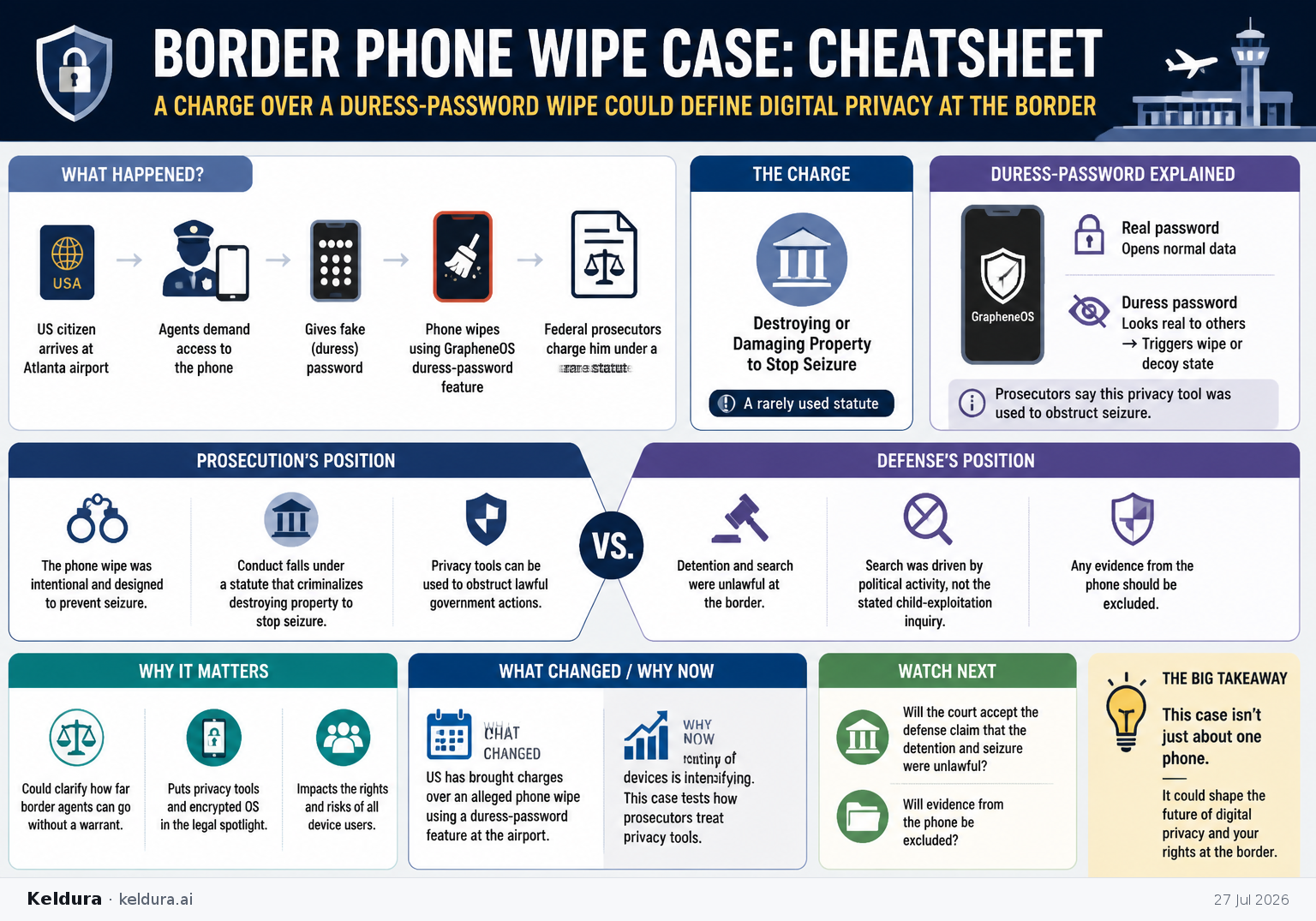
Federal prosecutors are charging US citizen Sam Tunick over an alleged phone wipe at Atlanta’s Hartsfield-Jackson airport after he supposedly gave agents a fake duress password [2]. The government says the case involves a rarely used statute on destroying or damaging property to stop seizure, while Tunick’s lawyers say the detention and search were unlawful and tied to his political activity rather than the stated child-exploitation inquiry [2]. The evidence also says the phone wipe used a feature of the privacy-focused GrapheneOS [2].
Why it matters: The case could clarify how far US authorities can go when demanding access to devices at the border and how much legal risk users face for using privacy tools. It also raises the stakes for encrypted and privacy-focused operating systems if prosecutors treat anti-seizure features as evidence of obstruction [2].
Key insights: The dispute is not just about one phone; it is about whether border agents can rely on warrantless seizure logic in this setting [2]. | GrapheneOS’s duress-password feature is central because prosecutors are treating a privacy tool as part of the alleged offense [2]. | The defense is attacking both the legality of the detention and the search, which could determine whether any evidence survives [2].
Cheatsheet facts: What changed: The US has brought charges over an alleged phone wipe using a duress-password feature at the airport [2]. | Why now: Border scrutiny of devices is intensifying, and the case tests how prosecutors treat privacy tools under seizure law [2]. | Watch next: Whether the court accepts the defense claim that the detention and seizure were unlawful, and whether evidence from the phone is excluded [2].
X copy pack
Edition complete
You've reached the end of this edition.