Global energy disruptions are lifting costs and nudging inflation higher in China
The World Bank says disruptions to global energy supply in the second quarter raised costs and uncertainty in China, though the impact was cushioned by reserves, diversified fuel imports, renewables, and temporary retail fuel price caps. Higher energy prices pushed inflation to 1.1 percent year on…
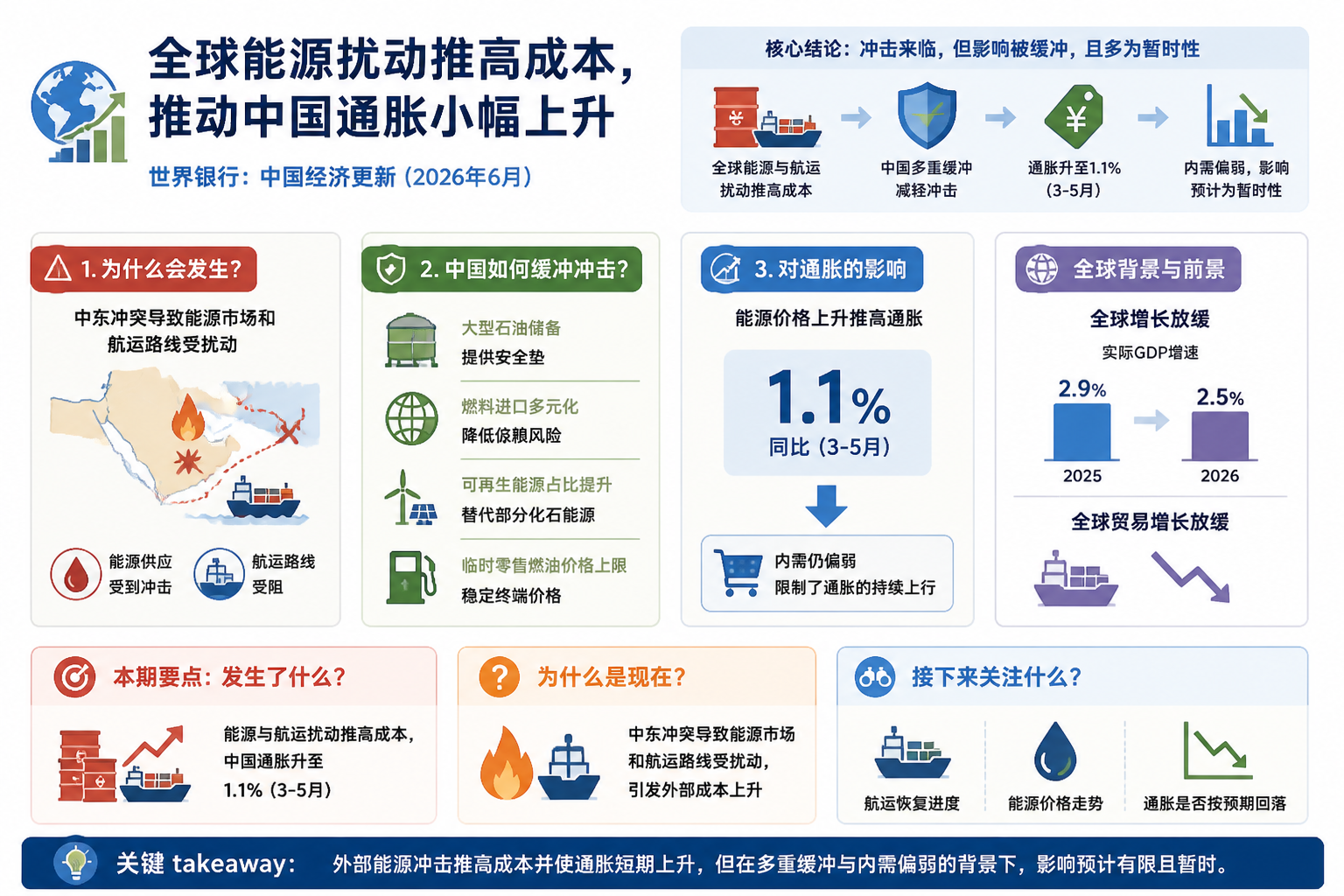
The World Bank says disruptions to global energy supply in the second quarter raised costs and uncertainty in China, though the impact was cushioned by reserves, diversified fuel imports, renewables, and temporary retail fuel price caps. Higher energy prices pushed inflation to 1.1 percent year on year in March-May, but the report says the effect is likely temporary because domestic demand remains weak. [1]
Why it matters: Energy shocks matter for markets because they can feed into inflation, logistics costs, and corporate margins even when the domestic economy is soft. In China’s case, the report suggests the macro impact is being muted, but the episode still highlights vulnerability to external supply disruptions and the policy tradeoffs of cushioning prices. [1]
Key insights: The report links the cost shock to disruptions in global energy supply and shipping routes tied to the conflict in the Middle East. [1] | China’s large oil reserves and diversified fuel imports helped soften the hit relative to more exposed economies. [1] | Global growth is projected to slow from 2.9 percent in 2025 to 2.5 percent in 2026, and global trade growth is expected to decelerate. [1] | The World Bank says peak disruptions are assumed to be short-lived, with shipping gradually recovering by the end of the year. [1]