Dietary antioxidant capacity linked to lower ulcerative colitis severity
A cross-sectional study of 158 ulcerative colitis patients in Imam Reza Hospital in Tabriz, Iran, found that higher dietary total antioxidant capacity was associated with lower disease severity. After adjustment for confounders, patients in the highest DTAC tertile had lower odds of active UC than…
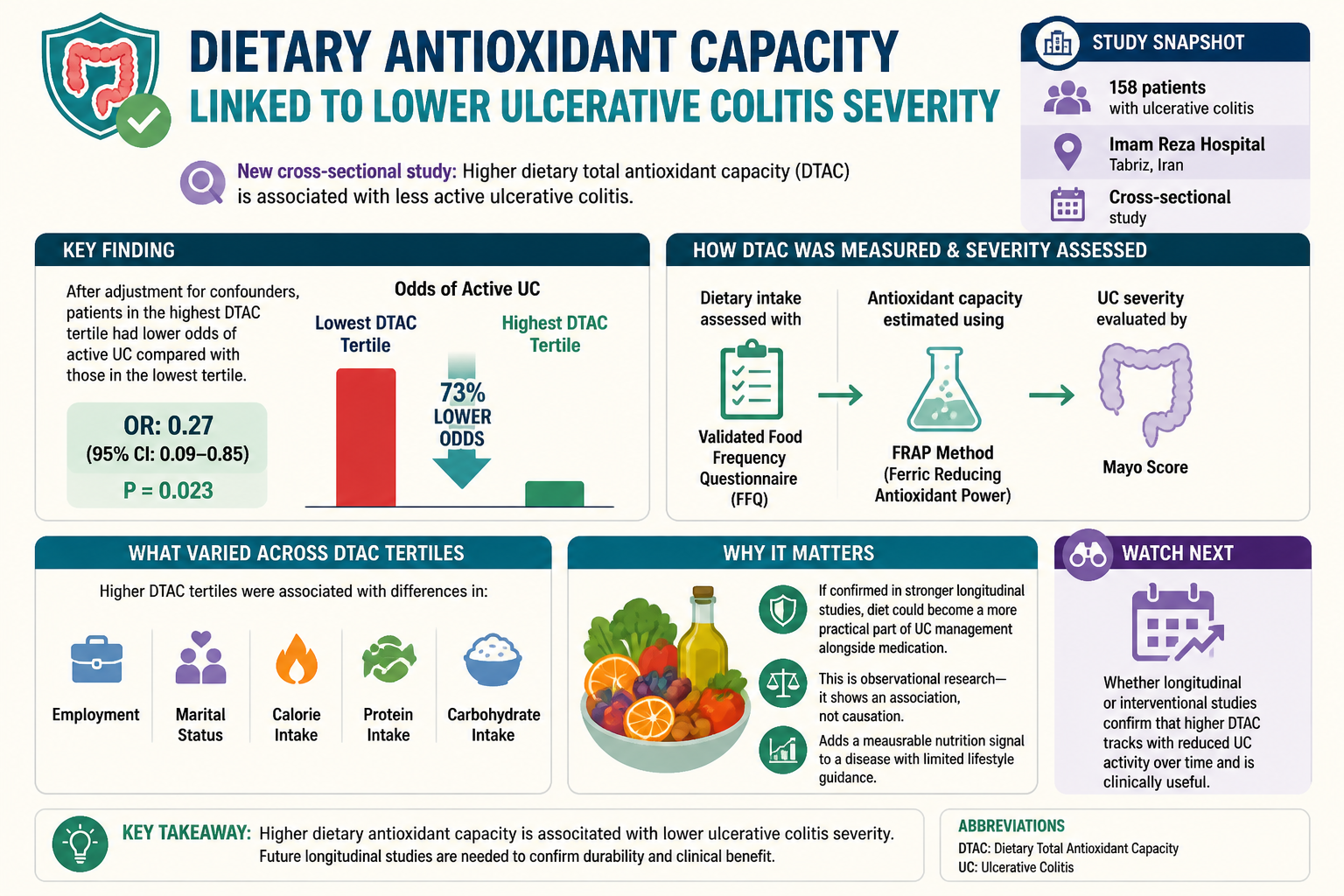
A cross-sectional study of 158 ulcerative colitis patients in Imam Reza Hospital in Tabriz, Iran, found that higher dietary total antioxidant capacity was associated with lower disease severity. After adjustment for confounders, patients in the highest DTAC tertile had lower odds of active UC than those in the lowest tertile [OR: 0.27 (95% CI: 0.09–0.85); P = 0.023]. [1]
Why it matters: If the association holds in stronger longitudinal studies, diet could become a more practical part of ulcerative colitis management alongside medication. The study is observational, so it does not prove causation, but it adds a measurable nutrition signal to a disease often managed with limited lifestyle guidance. [1]
Key insights: The analysis used a validated food frequency questionnaire and the FRAP method to estimate dietary antioxidant capacity, then compared UC severity using the Mayo Score. [1] | Higher DTAC tertiles were also associated with differences in demographic and dietary characteristics, including employment, marital status, calorie intake, protein intake, and carbohydrate intake. [1] | The authors explicitly call for future longitudinal studies to test whether the association is durable over time and clinically useful. [1]