WHO says the world is off track on HIV, hepatitis and STI targets, even as HIV gains are threatened
WHO’s 2026 mid-term progress report says progress is mixed and the world is off track to reach the 2030 targets for HIV, viral hepatitis and STIs. The report says HIV has seen the strongest gains, but funding cuts threaten them, while viral hepatitis deaths are rising and STI trends are likely wors…
WHO’s 2026 mid-term progress report says progress is mixed and the world is off track to reach the 2030 targets for HIV, viral hepatitis and STIs. The report says HIV has seen the strongest gains, but funding cuts threaten them, while viral hepatitis deaths are rising and STI trends are likely worsening, with surveillance gaps limiting certainty. [4]
Why it matters: This is a broad warning that the global response is no longer just about scale-up; it is about protecting hard-won gains from financing shocks and service disruption. The report points to integration, community leadership, better health data, and targeted investment as the main levers to avoid missing 2030 public-health goals. [4][5]
Key insights: WHO says the latest data show the world is off track for 2030 on HIV, viral hepatitis and STIs. [4] | The report identifies HIV as the area with the strongest gains, but says funding cuts threaten those gains. [4] | WHO says viral hepatitis deaths are rising, not falling, and that STI surveillance is too weak to measure the full trend. [4] | WHO highlights integrated services, community leadership, stronger health data, and protecting essential programmes during disruption as key next steps. [4][5]
Cheatsheet facts: What changed: WHO released its 2026 mid-term progress report and says progress is mixed across HIV, viral hepatitis and STIs. [4] | Why now: The report marks the halfway point to the 2030 targets and comes amid an unprecedented funding crisis for HIV programmes. [5][4] | Watch next: Look for whether countries announce financing protections, integrated service plans, or data/surveillance upgrades after AIDS 2026. [4][5]
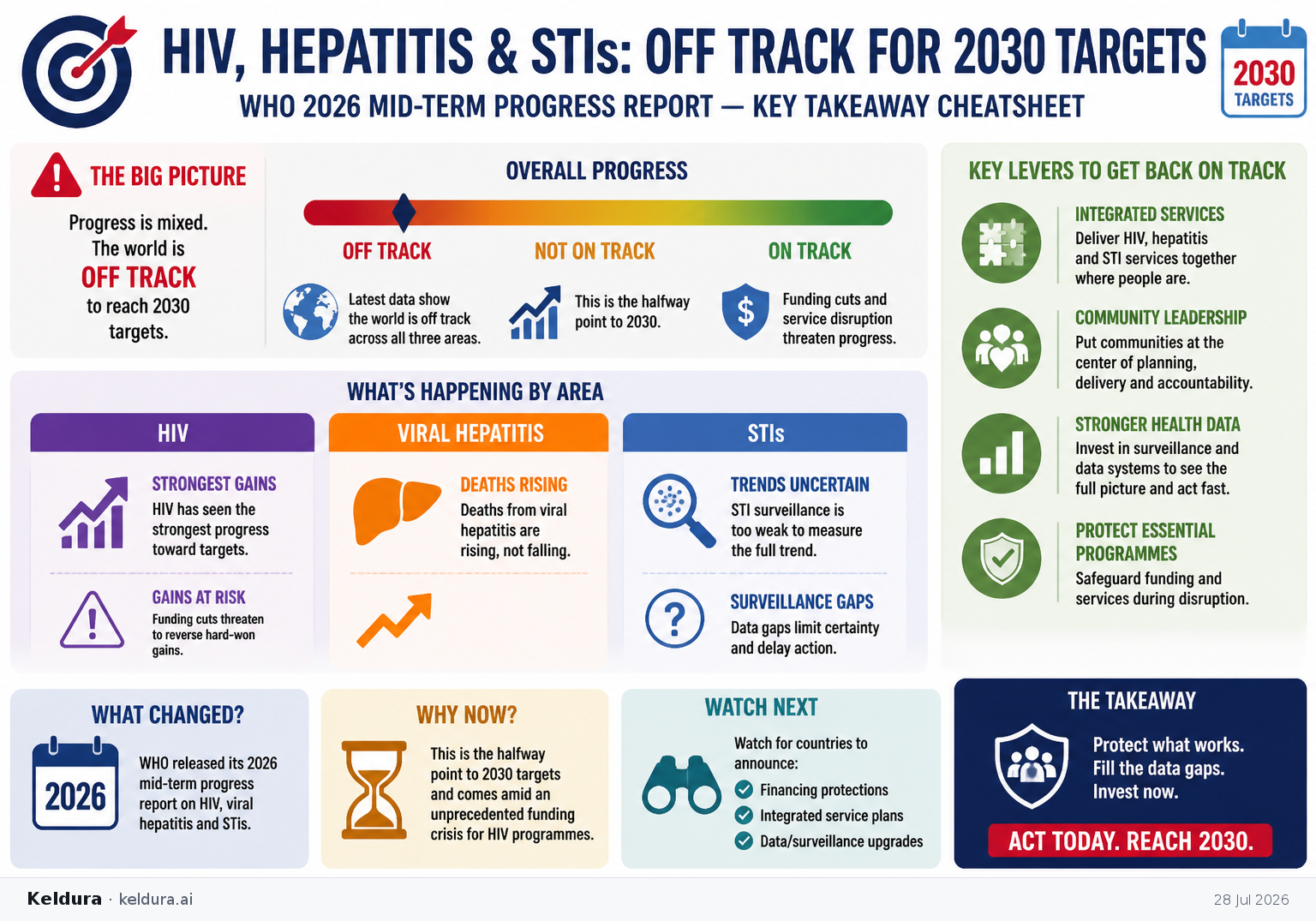
WHO’s 2026 mid-term progress report says progress is mixed and the world is off track to reach the 2030 targets for HIV, viral hepatitis and STIs. The report says HIV has seen the strongest gains, but funding cuts threaten them, while viral hepatitis deaths are rising and STI trends are likely worsening, with surveillance gaps limiting certainty. [4]
Why it matters: This is a broad warning that the global response is no longer just about scale-up; it is about protecting hard-won gains from financing shocks and service disruption. The report points to integration, community leadership, better health data, and targeted investment as the main levers to avoid missing 2030 public-health goals. [4][5]
Key insights: WHO says the latest data show the world is off track for 2030 on HIV, viral hepatitis and STIs. [4] | The report identifies HIV as the area with the strongest gains, but says funding cuts threaten those gains. [4] | WHO says viral hepatitis deaths are rising, not falling, and that STI surveillance is too weak to measure the full trend. [4] | WHO highlights integrated services, community leadership, stronger health data, and protecting essential programmes during disruption as key next steps. [4][5]
Cheatsheet facts: What changed: WHO released its 2026 mid-term progress report and says progress is mixed across HIV, viral hepatitis and STIs. [4] | Why now: The report marks the halfway point to the 2030 targets and comes amid an unprecedented funding crisis for HIV programmes. [5][4] | Watch next: Look for whether countries announce financing protections, integrated service plans, or data/surveillance upgrades after AIDS 2026. [4][5]
X copy pack
Edition complete
You've reached the end of this edition.