European central banks reposition gold for crisis access
De Nederlandsche Bank moved 86 tonnes of its roughly 313 tonnes of gold held in the US and Canada to London, saying the change would improve preparedness for severe crises amid increasing geopolitical unrest.[6] France also announced this year that it had returned gold reserves from the US, extendi…
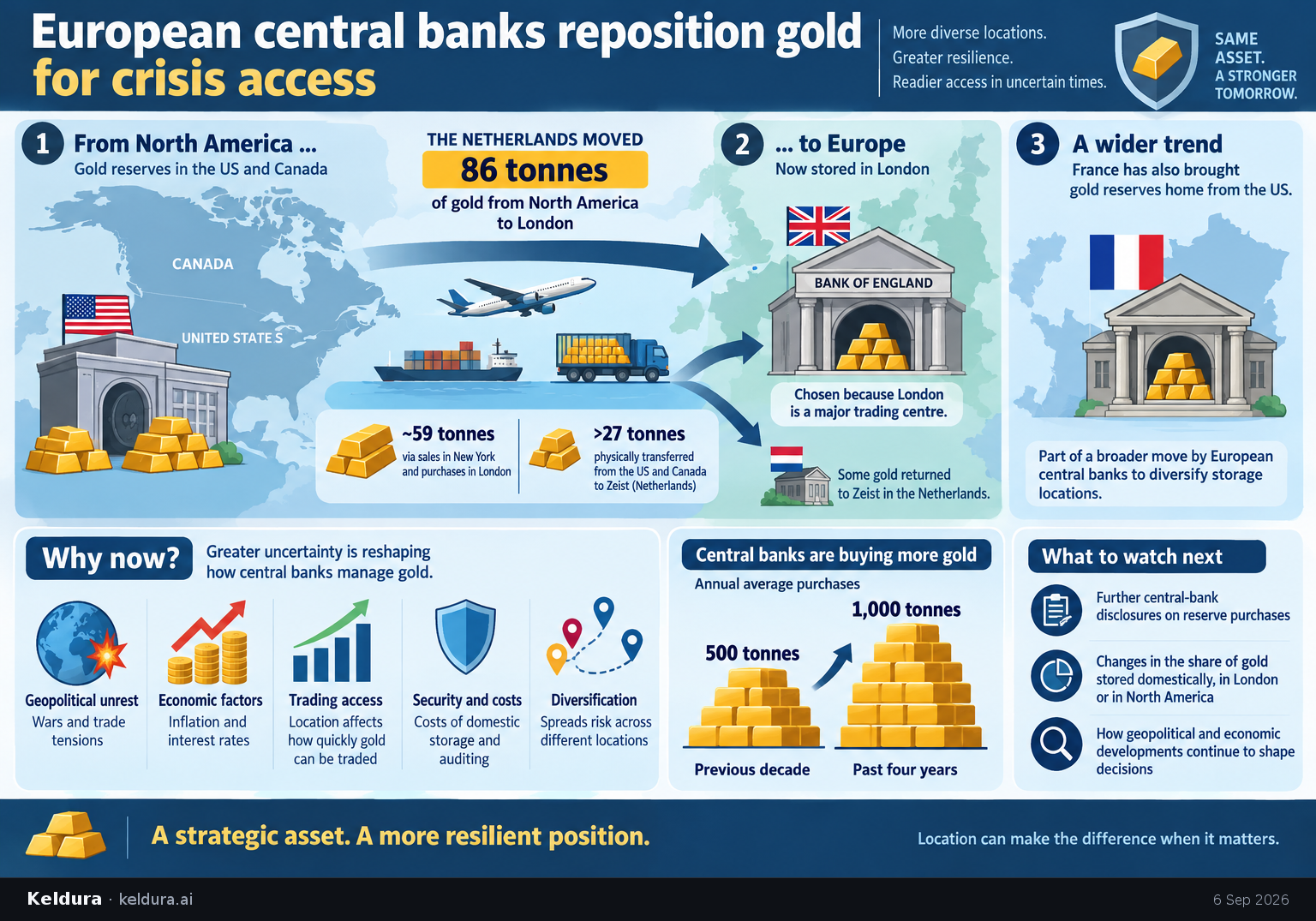
De Nederlandsche Bank moved 86 tonnes of its roughly 313 tonnes of gold held in the US and Canada to London, saying the change would improve preparedness for severe crises amid increasing geopolitical unrest.[6] France also announced this year that it had returned gold reserves from the US, extending a broader trend toward diversifying storage locations.[6]
Why it matters: Gold’s location affects how quickly reserves can be accessed or traded during a crisis, while the moves also reveal how geopolitical and economic uncertainty is reshaping central-bank management of a strategic asset.[6]
Key insights: The Dutch gold was relocated between March and August and is now held in Bank of England vaults, with London selected because it is a major trading centre.[6] | About 59 tonnes were shifted through sales in New York and purchases in London, while more than 27 tonnes were physically transferred from the US and Canada to Zeist.[6] | Central banks have bought an annual average of 1,000 tonnes of gold over the past four years, compared with 500 tonnes annually over the preceding decade.[6] | Wars and trade tensions influence storage decisions, but inflation, interest rates, trading access and the costs of domestic security and auditing also matter.[6]
Cheatsheet facts: What changed: The Netherlands shifted 86 tonnes of gold from North America to London, while France has also brought reserves home from the US.[6] | Why now: Central banks are seeking resilience, geographic diversification and rapid market access amid heightened geopolitical and economic uncertainty.[6] | Watch next: Track further central-bank disclosures on reserve purchases and changes in the shares of gold stored domestically, in London or in North America.[6]