How expensive oil is forcing markets to reprice interest rates
On Sept. 28 and 29, rising oil prices and Treasury yields drove a broad retreat in U.S. stocks and deepened a global bond selloff.
Major sovereign-bond markets are heading toward their worst month in years as higher energy costs intensify inflation concerns and AI-related investment supports economic growth; two-year U.S. Treasury yields rose almost 60 basis points during September.[1] On Monday, the S&P 500 fell 0.77%, while…
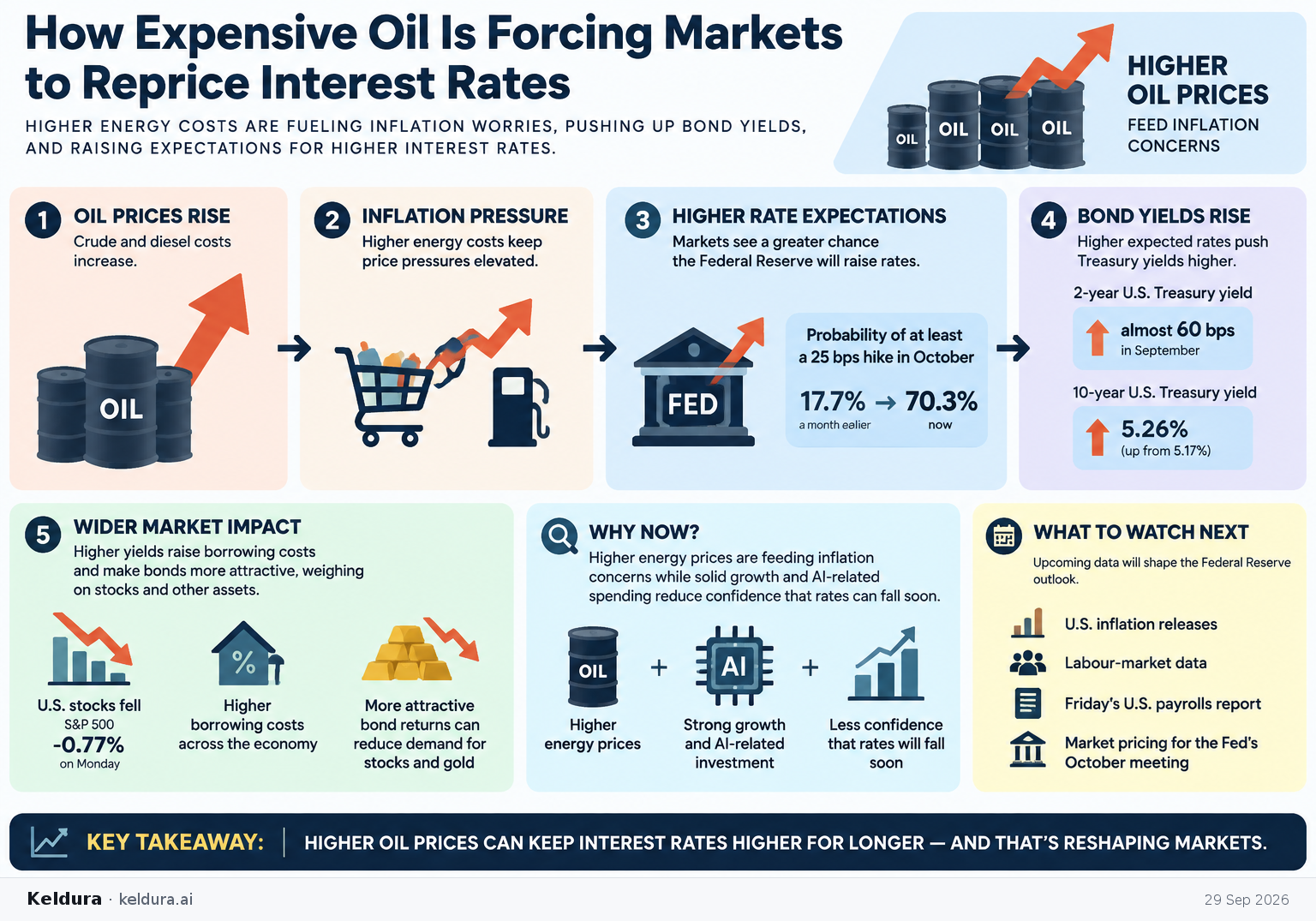
Major sovereign-bond markets are heading toward their worst month in years as higher energy costs intensify inflation concerns and AI-related investment supports economic growth; two-year U.S. Treasury yields rose almost 60 basis points during September.[1] On Monday, the S&P 500 fell 0.77%, while markets put a 70.3% probability on a Federal Reserve increase of at least 25 basis points in October, up from 17.7% a month earlier.[4]
Why it matters: The mechanism reaches beyond bond traders: oil-driven inflation can keep policy rates elevated, higher Treasury yields raise borrowing costs across the economy, and more attractive bond returns can reduce the relative appeal of stocks and non-yielding assets such as gold.[1][7]
Key insights: The 10-year Treasury yield jumped to 5.26% from 5.17%, returning to a level last seen in 2007.[7] | Crude and diesel costs have increased inflation concerns, while Federal Reserve officials have indicated that further rate increases may be needed if price pressures do not moderate.[4] | Global 10-year sovereign yields have reached multi-year peaks, suggesting that the repricing extends beyond the United States.[1] | Inflation and labour-market releases, culminating in Friday’s U.S. payrolls report, are the next scheduled inputs into the Federal Reserve outlook.[4]
Cheatsheet facts: What changed: Two-year Treasury yields rose almost 60 basis points in September, the 10-year yield reached 5.26%, and U.S. stocks fell as oil and borrowing costs climbed.[1][4][7] | Why now: Higher energy prices are feeding inflation concerns while solid growth and AI-related spending are reducing confidence that interest rates can fall soon.[1][4] | Watch next: Track this week’s U.S. inflation and labour-market releases, Friday’s payrolls report, and market pricing for the Federal Reserve’s October meeting.[4]
Major sovereign-bond markets are heading toward their worst month in years as higher energy costs intensify inflation concerns and AI-related investment supports economic growth; two-year U.S. Treasury yields rose almost 60 basis points during September.[1] On Monday, the S&P 500 fell 0.77%, while markets put a 70.3% probability on a Federal Reserve increase of at least 25 basis points in October, up from 17.7% a month earlier.[4]
Why it matters: The mechanism reaches beyond bond traders: oil-driven inflation can keep policy rates elevated, higher Treasury yields raise borrowing costs across the economy, and more attractive bond returns can reduce the relative appeal of stocks and non-yielding assets such as gold.[1][7]
Key insights: The 10-year Treasury yield jumped to 5.26% from 5.17%, returning to a level last seen in 2007.[7] | Crude and diesel costs have increased inflation concerns, while Federal Reserve officials have indicated that further rate increases may be needed if price pressures do not moderate.[4] | Global 10-year sovereign yields have reached multi-year peaks, suggesting that the repricing extends beyond the United States.[1] | Inflation and labour-market releases, culminating in Friday’s U.S. payrolls report, are the next scheduled inputs into the Federal Reserve outlook.[4]
Cheatsheet facts: What changed: Two-year Treasury yields rose almost 60 basis points in September, the 10-year yield reached 5.26%, and U.S. stocks fell as oil and borrowing costs climbed.[1][4][7] | Why now: Higher energy prices are feeding inflation concerns while solid growth and AI-related spending are reducing confidence that interest rates can fall soon.[1][4] | Watch next: Track this week’s U.S. inflation and labour-market releases, Friday’s payrolls report, and market pricing for the Federal Reserve’s October meeting.[4]
X copy pack
[1] Battered bond market braces for a new era of interest rates | Reuters — reuters.com[4] US stocks fall as higher oil prices, Treasury yields weigh - The Business Times — businesstimes.com.sg[7] Stock markets struggling to keep up with rising oil prices and bond yields - National | Globalnews.ca — globalnews.caRead in BriefingsPost to X