WHO warns heat is a fast-growing public health hazard
WHO’s updated heat and health fact sheet says heat stress is a leading cause of weather-related deaths and can worsen cardiovascular disease, diabetes, mental health conditions, asthma, and some infectious diseases [4]. It adds that exposure to extreme heat is rising in all regions, with heat-relat…
WHO’s updated heat and health fact sheet says heat stress is a leading cause of weather-related deaths and can worsen cardiovascular disease, diabetes, mental health conditions, asthma, and some infectious diseases [4]. It adds that exposure to extreme heat is rising in all regions, with heat-related mortality among people over 65 increasing by about 85% between 2000–2004 and 2017–2021 [4].
Why it matters: WHO presents heat as largely predictable and preventable, with public-health and multi-sector interventions able to save lives now and in the future [4]. The briefing also links heat to excess mortality, disrupted health services, lost labor productivity, and higher risk for older adults and people with chronic disease, making it a broad health-system and economic issue [4].
Key insights: WHO estimates about 489,000 heat-related deaths each year between 2000 and 2019, with 45% in Asia and 36% in Europe [4]. | The fact sheet says heatwaves are increasing in frequency, duration, intensity, and magnitude because of climate change [4]. | WHO notes that high heat can trigger public health emergencies and can disrupt health facilities, transport, and water infrastructure through power shortages [4]. | WHO says low-cost interventions at individual, community, organizational, governmental, and societal levels can reduce harm [4].
Cheatsheet facts: What changed: WHO refreshed its guidance to stress that extreme heat is becoming more frequent and more dangerous [4]. | Why now: Rising temperatures and aging, chronic-disease-heavy populations are increasing vulnerability [4]. | Watch next: Observable heatwave alerts, public-health advisories, and local heat-preparedness measures during upcoming hot periods [4].
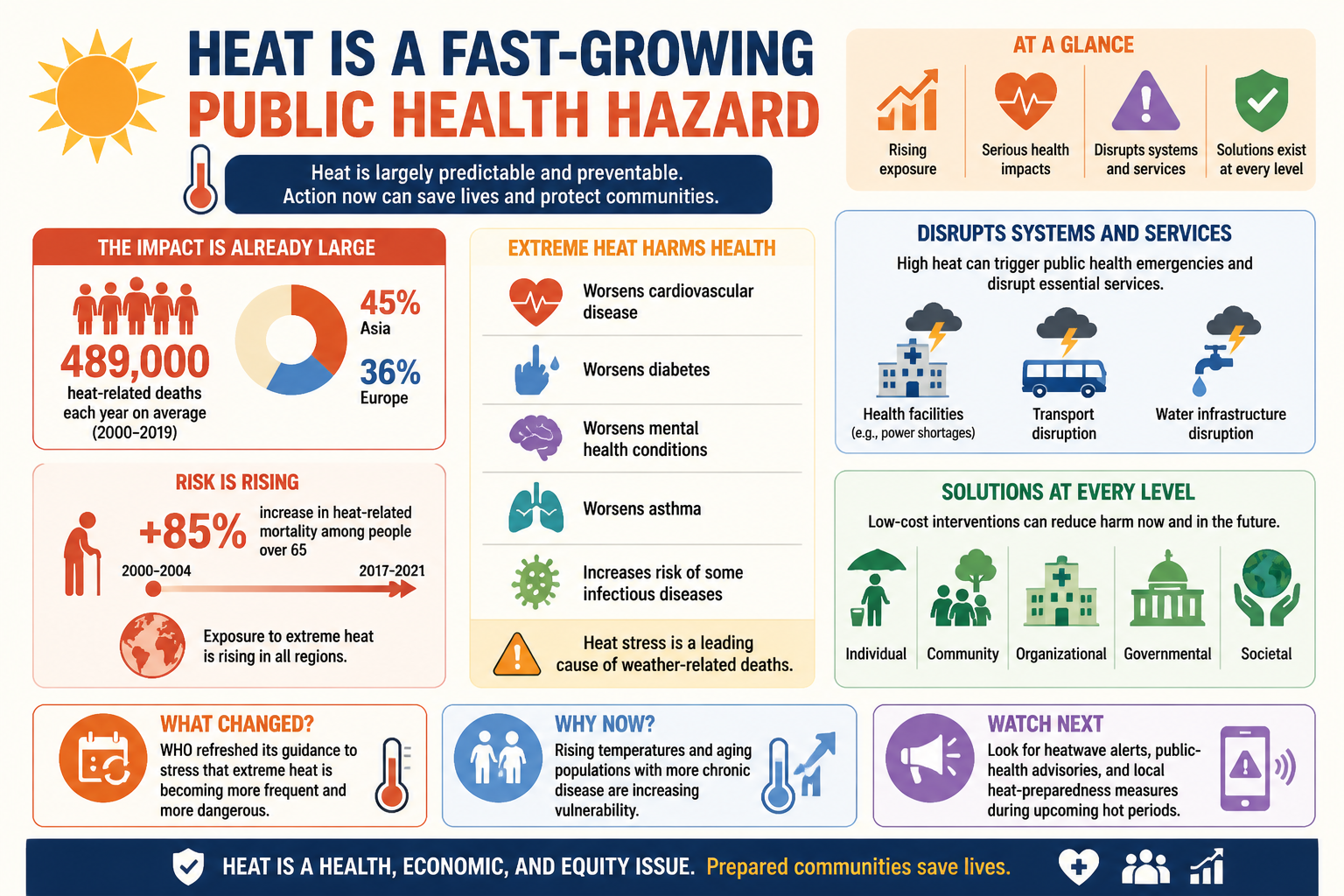
WHO’s updated heat and health fact sheet says heat stress is a leading cause of weather-related deaths and can worsen cardiovascular disease, diabetes, mental health conditions, asthma, and some infectious diseases [4]. It adds that exposure to extreme heat is rising in all regions, with heat-related mortality among people over 65 increasing by about 85% between 2000–2004 and 2017–2021 [4].
Why it matters: WHO presents heat as largely predictable and preventable, with public-health and multi-sector interventions able to save lives now and in the future [4]. The briefing also links heat to excess mortality, disrupted health services, lost labor productivity, and higher risk for older adults and people with chronic disease, making it a broad health-system and economic issue [4].
Key insights: WHO estimates about 489,000 heat-related deaths each year between 2000 and 2019, with 45% in Asia and 36% in Europe [4]. | The fact sheet says heatwaves are increasing in frequency, duration, intensity, and magnitude because of climate change [4]. | WHO notes that high heat can trigger public health emergencies and can disrupt health facilities, transport, and water infrastructure through power shortages [4]. | WHO says low-cost interventions at individual, community, organizational, governmental, and societal levels can reduce harm [4].
Cheatsheet facts: What changed: WHO refreshed its guidance to stress that extreme heat is becoming more frequent and more dangerous [4]. | Why now: Rising temperatures and aging, chronic-disease-heavy populations are increasing vulnerability [4]. | Watch next: Observable heatwave alerts, public-health advisories, and local heat-preparedness measures during upcoming hot periods [4].