WHO is putting menopause, cognition, and mental health into the mainstream of women’s health
WHO says the second webinar in its series on menopause will address the effects of menopause on cognition and mental health, including brain fog, mood changes, and brain health in the postmenopausal years [1]. The same material frames menopause as a natural life stage that is often overlooked as a…
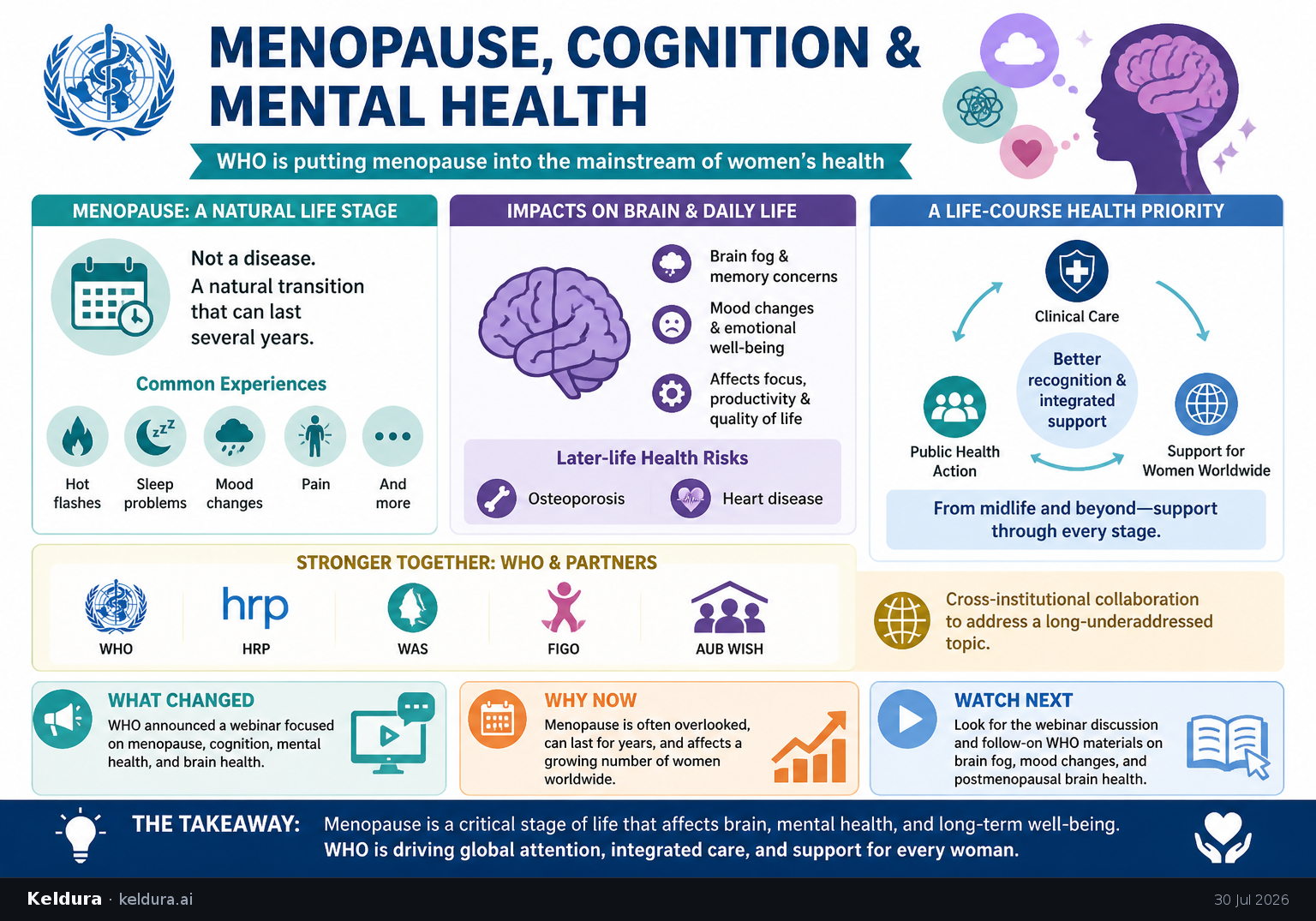
WHO says the second webinar in its series on menopause will address the effects of menopause on cognition and mental health, including brain fog, mood changes, and brain health in the postmenopausal years [1]. The same material frames menopause as a natural life stage that is often overlooked as a health issue, lasting several years and associated with symptoms such as hot flashes, sleep problems, mood changes, pain, and later-life risks including osteoporosis and heart disease [1].
Why it matters: This matters because WHO is explicitly treating menopause as a life-course health issue rather than a narrow reproductive milestone, which can shape clinical priorities, public health messaging, and support for millions of women worldwide [1].
Key insights: WHO links menopausal symptoms to daily functioning and later health risks, reinforcing the need for integrated care rather than symptom-only treatment [1]. | The webinar series is being run by WHO alongside HRP, WAS, FIGO, and AUB WISH, signaling cross-institutional attention to a long-underaddressed topic [1]. | WHO says better recognition and support are essential as more women enter this life stage worldwide [1]. | The framing explicitly connects perimenopause and menopause to a critical stage requiring clinical and public health responses across the lifespan [1].
Cheatsheet facts: What changed: WHO announced a webinar focused on menopause, cognition, mental health, and brain health [1]. | Why now: WHO says menopause is often overlooked, can last for years, and affects a growing number of women worldwide [1]. | Watch next: Look for the webinar discussion or follow-on WHO materials that elaborate on brain fog, mood changes, and postmenopausal brain health [1].
WHO says the second webinar in its series on menopause will address the effects of menopause on cognition and mental health, including brain fog, mood changes, and brain health in the postmenopausal years [1]. The same material frames menopause as a natural life stage that is often overlooked as a health issue, lasting several years and associated with symptoms such as hot flashes, sleep problems, mood changes, pain, and later-life risks including osteoporosis and heart disease [1].
Why it matters: This matters because WHO is explicitly treating menopause as a life-course health issue rather than a narrow reproductive milestone, which can shape clinical priorities, public health messaging, and support for millions of women worldwide [1].
Key insights: WHO links menopausal symptoms to daily functioning and later health risks, reinforcing the need for integrated care rather than symptom-only treatment [1]. | The webinar series is being run by WHO alongside HRP, WAS, FIGO, and AUB WISH, signaling cross-institutional attention to a long-underaddressed topic [1]. | WHO says better recognition and support are essential as more women enter this life stage worldwide [1]. | The framing explicitly connects perimenopause and menopause to a critical stage requiring clinical and public health responses across the lifespan [1].
Cheatsheet facts: What changed: WHO announced a webinar focused on menopause, cognition, mental health, and brain health [1]. | Why now: WHO says menopause is often overlooked, can last for years, and affects a growing number of women worldwide [1]. | Watch next: Look for the webinar discussion or follow-on WHO materials that elaborate on brain fog, mood changes, and postmenopausal brain health [1].