Apple’s OpenAI lawsuit collides with IPO and hardware ambitions
Apple has filed a trade secrets lawsuit against OpenAI, with the complaint alleging a pattern of misconduct that reaches up to OpenAI’s chief hardware officer and claims more than 400 former Apple employees now work at the company [1]. TechCrunch says OpenAI’s response has been carefully hedged, an…
Apple has filed a trade secrets lawsuit against OpenAI, with the complaint alleging a pattern of misconduct that reaches up to OpenAI’s chief hardware officer and claims more than 400 former Apple employees now work at the company [1]. TechCrunch says OpenAI’s response has been carefully hedged, and the timing is especially awkward because the company is reportedly eyeing an IPO as early as later this year [1].
Why it matters: The case could complicate OpenAI’s hardware plans and make its public-market path harder to manage, while also sharpening broader scrutiny of how AI companies handle data and personnel coming out of Big Tech [1].
Key insights: The complaint is framed as serious enough to implicate senior hardware leadership, not just lower-level staff movement [1]. | OpenAI’s measured response suggests legal risk management is already shaping its public posture [1]. | The dispute lands just as OpenAI’s IPO timetable is being discussed, raising the stakes beyond a normal trade-secrets fight [1]. | TechCrunch links the case to a wider trust issue: how much people should trust AI companies with their data [1].
Cheatsheet facts: What changed: Apple filed a trade secrets lawsuit against OpenAI, and the complaint alleges misconduct tied to more than 400 former Apple employees now at OpenAI [1]. | Why now: The lawsuit arrives while OpenAI is reportedly considering an IPO as soon as later this year [1]. | Watch next: Any formal court filings or public OpenAI updates that clarify the alleged misconduct, hardware implications, or IPO impact [1].
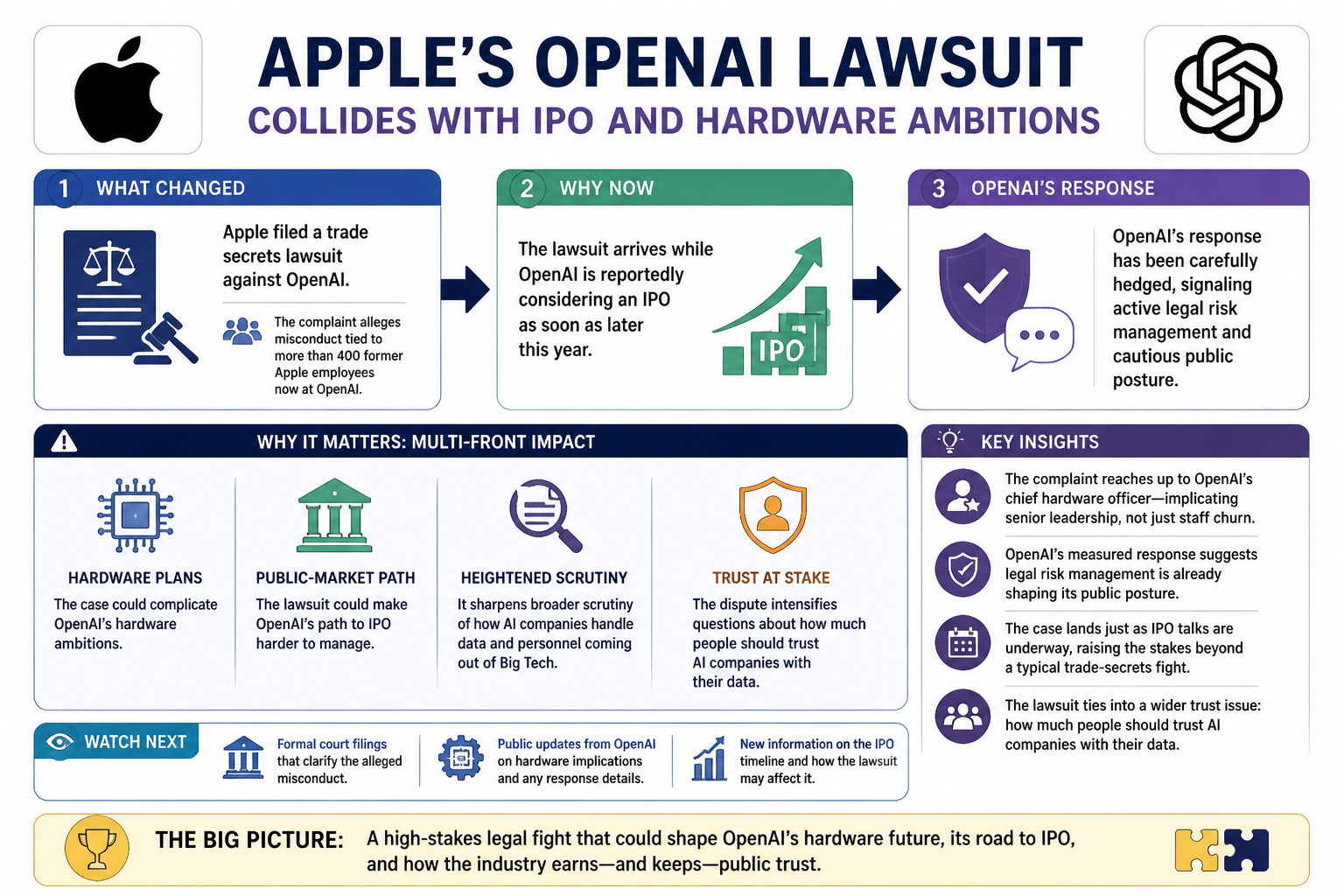
Apple has filed a trade secrets lawsuit against OpenAI, with the complaint alleging a pattern of misconduct that reaches up to OpenAI’s chief hardware officer and claims more than 400 former Apple employees now work at the company [1]. TechCrunch says OpenAI’s response has been carefully hedged, and the timing is especially awkward because the company is reportedly eyeing an IPO as early as later this year [1].
Why it matters: The case could complicate OpenAI’s hardware plans and make its public-market path harder to manage, while also sharpening broader scrutiny of how AI companies handle data and personnel coming out of Big Tech [1].
Key insights: The complaint is framed as serious enough to implicate senior hardware leadership, not just lower-level staff movement [1]. | OpenAI’s measured response suggests legal risk management is already shaping its public posture [1]. | The dispute lands just as OpenAI’s IPO timetable is being discussed, raising the stakes beyond a normal trade-secrets fight [1]. | TechCrunch links the case to a wider trust issue: how much people should trust AI companies with their data [1].
Cheatsheet facts: What changed: Apple filed a trade secrets lawsuit against OpenAI, and the complaint alleges misconduct tied to more than 400 former Apple employees now at OpenAI [1]. | Why now: The lawsuit arrives while OpenAI is reportedly considering an IPO as soon as later this year [1]. | Watch next: Any formal court filings or public OpenAI updates that clarify the alleged misconduct, hardware implications, or IPO impact [1].