Monsoon forecasting is becoming more useful, but gaps in observations and coordination still limit impact
Better monsoon forecasts are helping communities prepare for floods, droughts and heatwaves, and seasonal outlooks are already informing agriculture, water management and disaster preparedness. The World Meteorological Organization says the Open Monsoon Conference 2026 focused on how advances in mo…
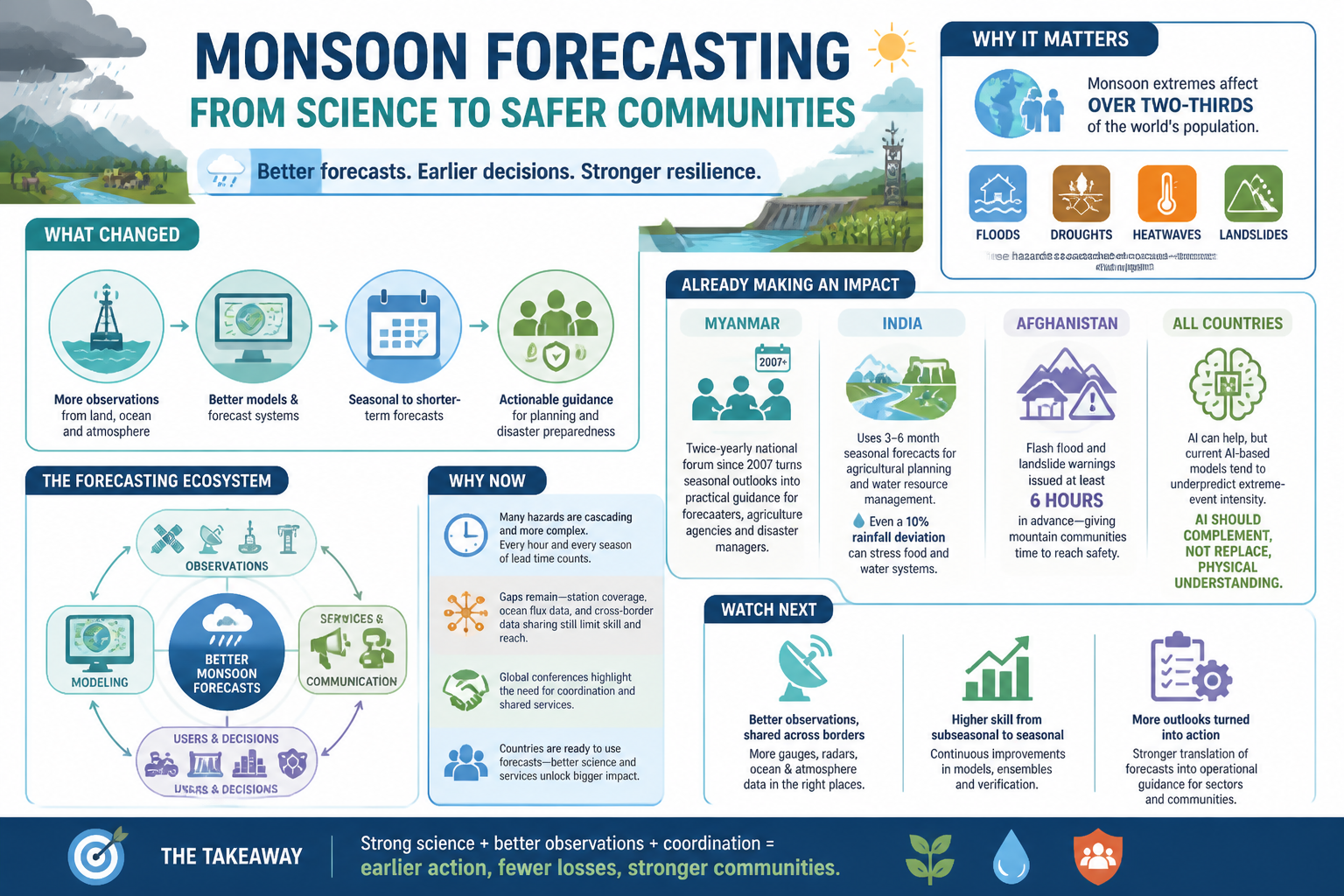
Better monsoon forecasts are helping communities prepare for floods, droughts and heatwaves, and seasonal outlooks are already informing agriculture, water management and disaster preparedness. The World Meteorological Organization says the Open Monsoon Conference 2026 focused on how advances in monsoon science, observations and forecasting can better support services for increasingly complex weather and climate risks. [1]
Why it matters: Monsoon extremes affect more than two-thirds of the world’s population, and the evidence shows they can cascade into floods, droughts, heatwaves and landslides. Improving forecast skill matters because countries are already using these tools to make earlier, more targeted decisions, but the remaining gaps in station coverage, ocean flux data, and cross-border sharing still constrain resilience. [1]
Key insights: Myanmar has run a twice-yearly national monsoon forum since 2007 to turn seasonal outlooks into practical guidance for forecasters, agriculture agencies and disaster managers. [1] | India is using three- to six-month seasonal forecasts for agricultural planning and water resource management, where even a 10% rainfall deviation can stress food and water systems. [1] | Afghanistan’s meteorological service issues flash flood and landslide warnings at least six hours in advance, giving mountain communities time to reach safety. [1] | The evidence says AI can help, but current AI-based models tend to underpredict extreme-event intensity, so the emerging consensus is that AI should complement physical understanding rather than replace it. [1]
Cheatsheet facts: What changed: Monsoon science and forecasting have improved enough to support seasonal planning, flood warnings and disaster preparedness in several countries. [1] | Why now: Monsoon risks are cascading across floods, droughts, heatwaves and landslides, while recent conferences highlighted persistent gaps in lead time, observations and shared services. [1] | Watch next: Look for better targeted observations shared across borders, improvements in subseasonal-to-seasonal forecast skill, and whether more services can translate outlooks into operational guidance. [1]
Better monsoon forecasts are helping communities prepare for floods, droughts and heatwaves, and seasonal outlooks are already informing agriculture, water management and disaster preparedness. The World Meteorological Organization says the Open Monsoon Conference 2026 focused on how advances in monsoon science, observations and forecasting can better support services for increasingly complex weather and climate risks. [1]
Why it matters: Monsoon extremes affect more than two-thirds of the world’s population, and the evidence shows they can cascade into floods, droughts, heatwaves and landslides. Improving forecast skill matters because countries are already using these tools to make earlier, more targeted decisions, but the remaining gaps in station coverage, ocean flux data, and cross-border sharing still constrain resilience. [1]
Key insights: Myanmar has run a twice-yearly national monsoon forum since 2007 to turn seasonal outlooks into practical guidance for forecasters, agriculture agencies and disaster managers. [1] | India is using three- to six-month seasonal forecasts for agricultural planning and water resource management, where even a 10% rainfall deviation can stress food and water systems. [1] | Afghanistan’s meteorological service issues flash flood and landslide warnings at least six hours in advance, giving mountain communities time to reach safety. [1] | The evidence says AI can help, but current AI-based models tend to underpredict extreme-event intensity, so the emerging consensus is that AI should complement physical understanding rather than replace it. [1]
Cheatsheet facts: What changed: Monsoon science and forecasting have improved enough to support seasonal planning, flood warnings and disaster preparedness in several countries. [1] | Why now: Monsoon risks are cascading across floods, droughts, heatwaves and landslides, while recent conferences highlighted persistent gaps in lead time, observations and shared services. [1] | Watch next: Look for better targeted observations shared across borders, improvements in subseasonal-to-seasonal forecast skill, and whether more services can translate outlooks into operational guidance. [1]