Iran Moves to Expand Its Shipping Restrictions Near Hormuz
Iran says it will establish a new exclusion or prohibited zone outside the Strait of Hormuz, extending from the US naval blockade line toward the strait and into the Persian Gulf.[1][4] The announcement follows US strikes on three Iranian oil tankers after Iran launched ballistic missiles at US Nav…
Iran says it will establish a new exclusion or prohibited zone outside the Strait of Hormuz, extending from the US naval blockade line toward the strait and into the Persian Gulf.[1][4] The announcement follows US strikes on three Iranian oil tankers after Iran launched ballistic missiles at US Navy ships, while Tehran says it subsequently targeted tankers using unauthorized routes and other US-linked vessels.[1]
Why it matters: The escalating attacks and competing restrictions place military and commercial vessels at greater risk around a strategic waterway that previously carried one-fifth of global oil supplies.[1][4]
Key insights: Mohsen Rezaei said the zone would be announced in the coming days, although the available reports provide few operational details about its boundaries or enforcement.[1][4] | US Central Command denied Iran's claim that it struck an uncrewed US military vessel in the strait, calling it a “total lie.”[1] | Iran blames Washington for disrupting shipping, while the US says its tanker strikes were retaliation for ballistic-missile attacks on its warships.[1]
Cheatsheet facts: What changed: Iran announced plans for an additional restricted zone near the Strait of Hormuz after another exchange of attacks with the US.[1][4] | Why now: Hostilities resumed after a period of relative calm, with attacks expanding from commercial shipping to US warships and Iranian oil tankers.[1] | Watch next: Watch for Iran's promised declaration specifying the zone's location, reach and treatment of vessels entering it.[1][4]
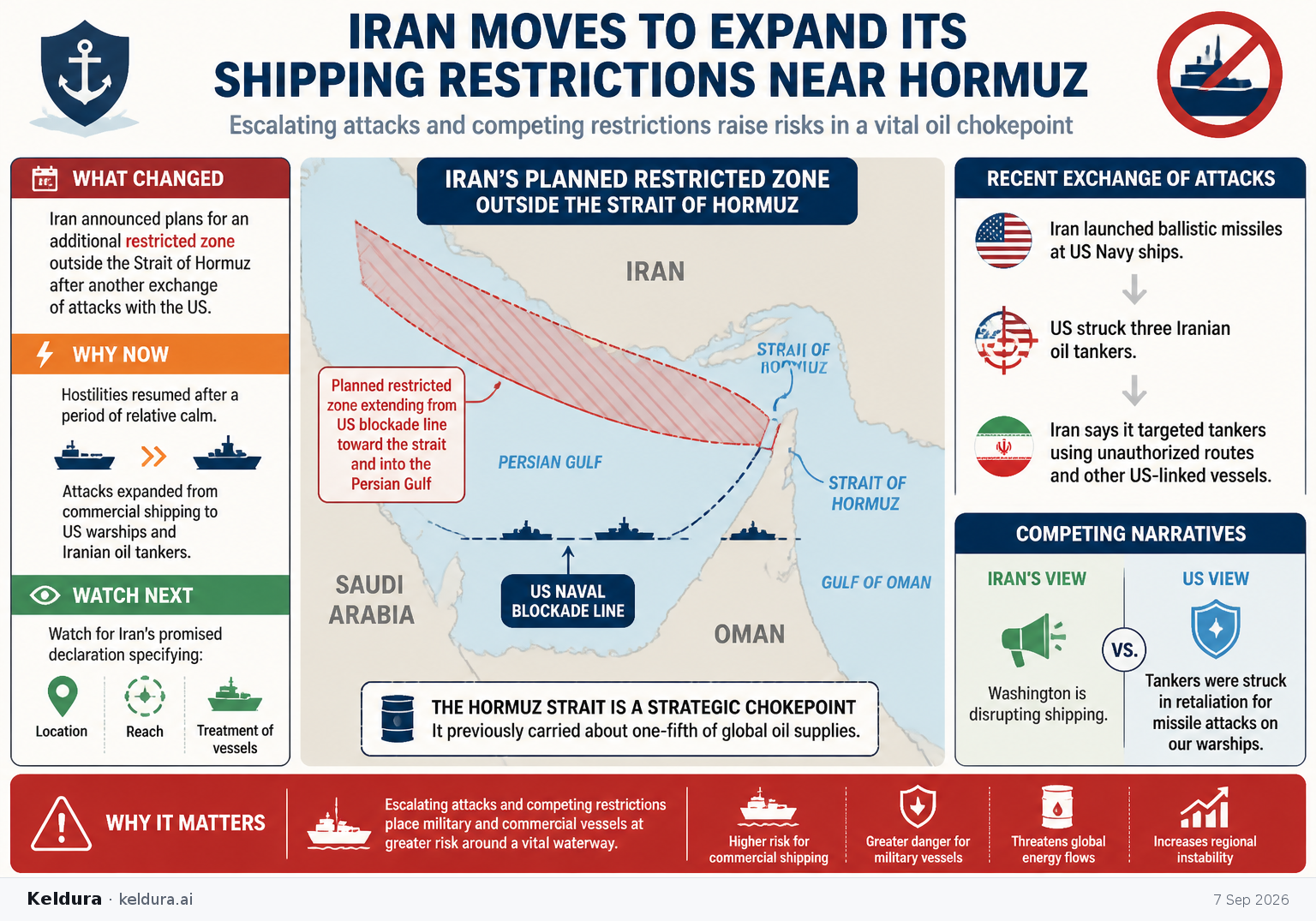
Iran says it will establish a new exclusion or prohibited zone outside the Strait of Hormuz, extending from the US naval blockade line toward the strait and into the Persian Gulf.[1][4] The announcement follows US strikes on three Iranian oil tankers after Iran launched ballistic missiles at US Navy ships, while Tehran says it subsequently targeted tankers using unauthorized routes and other US-linked vessels.[1]
Why it matters: The escalating attacks and competing restrictions place military and commercial vessels at greater risk around a strategic waterway that previously carried one-fifth of global oil supplies.[1][4]
Key insights: Mohsen Rezaei said the zone would be announced in the coming days, although the available reports provide few operational details about its boundaries or enforcement.[1][4] | US Central Command denied Iran's claim that it struck an uncrewed US military vessel in the strait, calling it a “total lie.”[1] | Iran blames Washington for disrupting shipping, while the US says its tanker strikes were retaliation for ballistic-missile attacks on its warships.[1]
Cheatsheet facts: What changed: Iran announced plans for an additional restricted zone near the Strait of Hormuz after another exchange of attacks with the US.[1][4] | Why now: Hostilities resumed after a period of relative calm, with attacks expanding from commercial shipping to US warships and Iranian oil tankers.[1] | Watch next: Watch for Iran's promised declaration specifying the zone's location, reach and treatment of vessels entering it.[1][4]
X copy pack
[1] Iran-US war latest: Tehran vows to extend ‘exclusion zone’ near Strait of Hormuz after US strikes on tankers | The Independent — the-independent.com[4] Iran says it will declare ‘prohibited zone’ near Hormuz Strait in coming days | The Straits Times — straitstimes.comRead the full editionPost to X