Britain Moves on EU Agreements Without Committing to Rejoining
Britain is preparing to enact new EU agreements, but how far is Andy Burnham willing to take the relationship?
After the November 20 EU-UK summit in Brussels, Prime Minister Andy Burnham told MPs he would not rule out seeking a mandate for another referendum on EU membership.
Burnham told the Commons he had no fixed destination for Britain’s relationship with the European Union and did not rule out seeking a mandate for another in-or-out vote at the next general election. The government’s immediate step is to publish the European Partnerships Bill on November 26 to put…
Open original · [10] Analysis: Can Andy Burnham turn volume down on UK rejoining EU debate? — BBC World
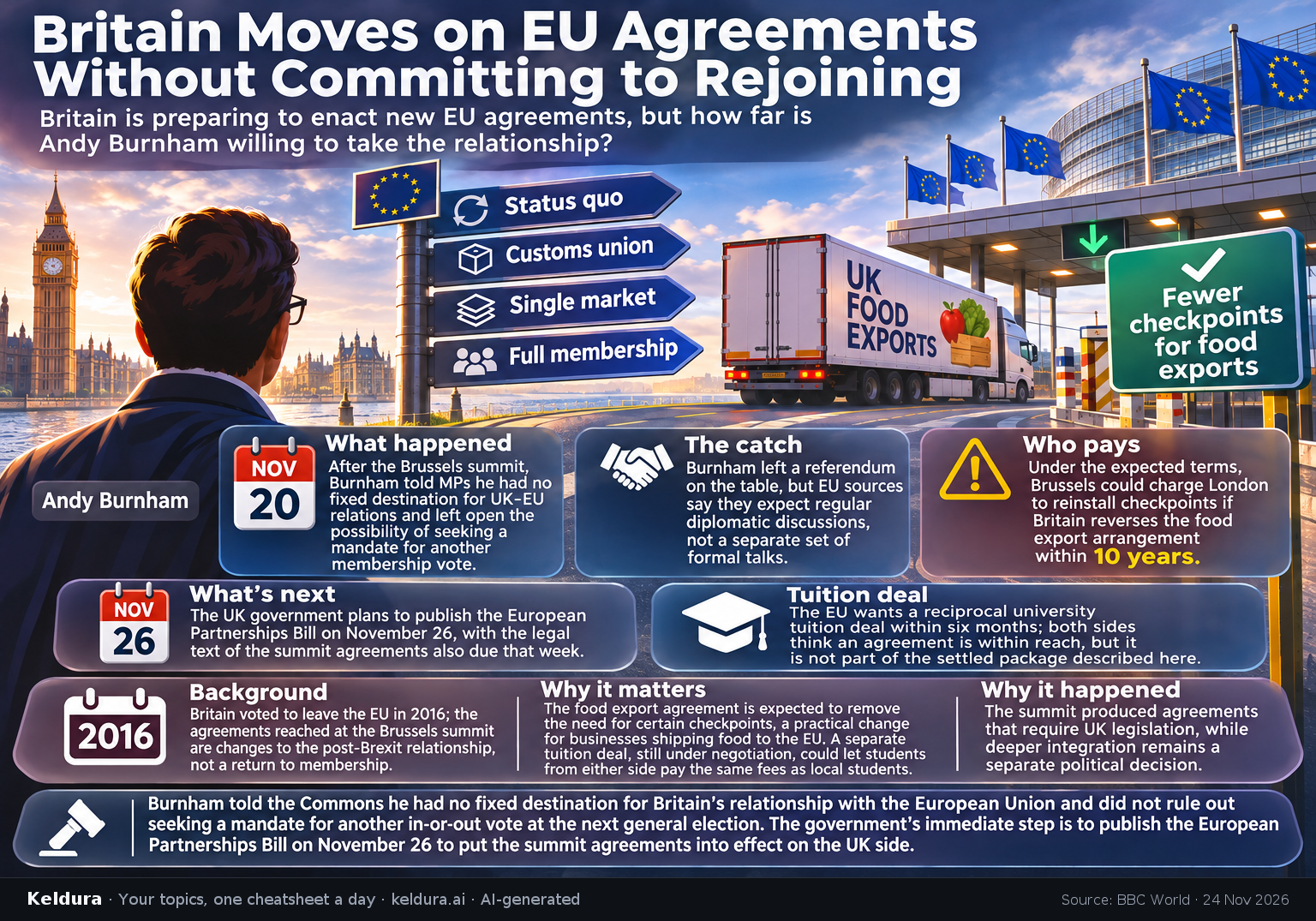
Burnham told the Commons he had no fixed destination for Britain’s relationship with the European Union and did not rule out seeking a mandate for another in-or-out vote at the next general election. The government’s immediate step is to publish the European Partnerships Bill on November 26 to put the summit agreements into effect on the UK side. [10]
Why it matters: The food export agreement is expected to remove the need for certain checkpoints, a practical change for businesses shipping food to the EU. A separate tuition deal, still under negotiation, could let students from either side pay the same fees as local students. [10]
Key insights: Britain could be charged for reinstalling checkpoints if a future government reverses the food export arrangement within 10 years, under terms reported as expected ahead of publication. [10] | EU sources describe the wider conversation as part of regular diplomacy rather than a new formal negotiation, and see four options: the status quo, a customs union, the single market or full membership. [10] | The EU wants a reciprocal university tuition deal within six months; both sides think an agreement is within reach, but it is not part of the settled package described here. [10]
Cheatsheet facts: What happened: After the Brussels summit, Burnham told MPs he had no fixed destination for UK-EU relations and left open the possibility of seeking a mandate for another membership vote. [10] | Background: Britain voted to leave the EU in 2016; the agreements reached at the Brussels summit are changes to the post-Brexit relationship, not a return to membership. [10] | Who pays: Under the expected terms, Brussels could charge London to reinstall checkpoints if Britain reverses the food export arrangement within 10 years. [10] | The catch: Burnham left a referendum on the table, but EU sources say they expect regular diplomatic discussions, not a separate set of formal talks. [10] | What's next: The UK government plans to publish the European Partnerships Bill on November 26, with the legal text of the summit agreements also due that week. [10]
X copy pack
Edition complete
You've reached the end of this edition.