Nepal-Tibet flood toll rises as rescuers monitor secondary hazards
The combined toll from the Nepal-Tibet flash flood has reached at least 750 dead, with more than 3,000 people missing; more than 3,700 people have been rescued in Nepal.[1] Authorities are also monitoring lakes created by the glacial collapse, although satellite imagery indicated that one lake was…
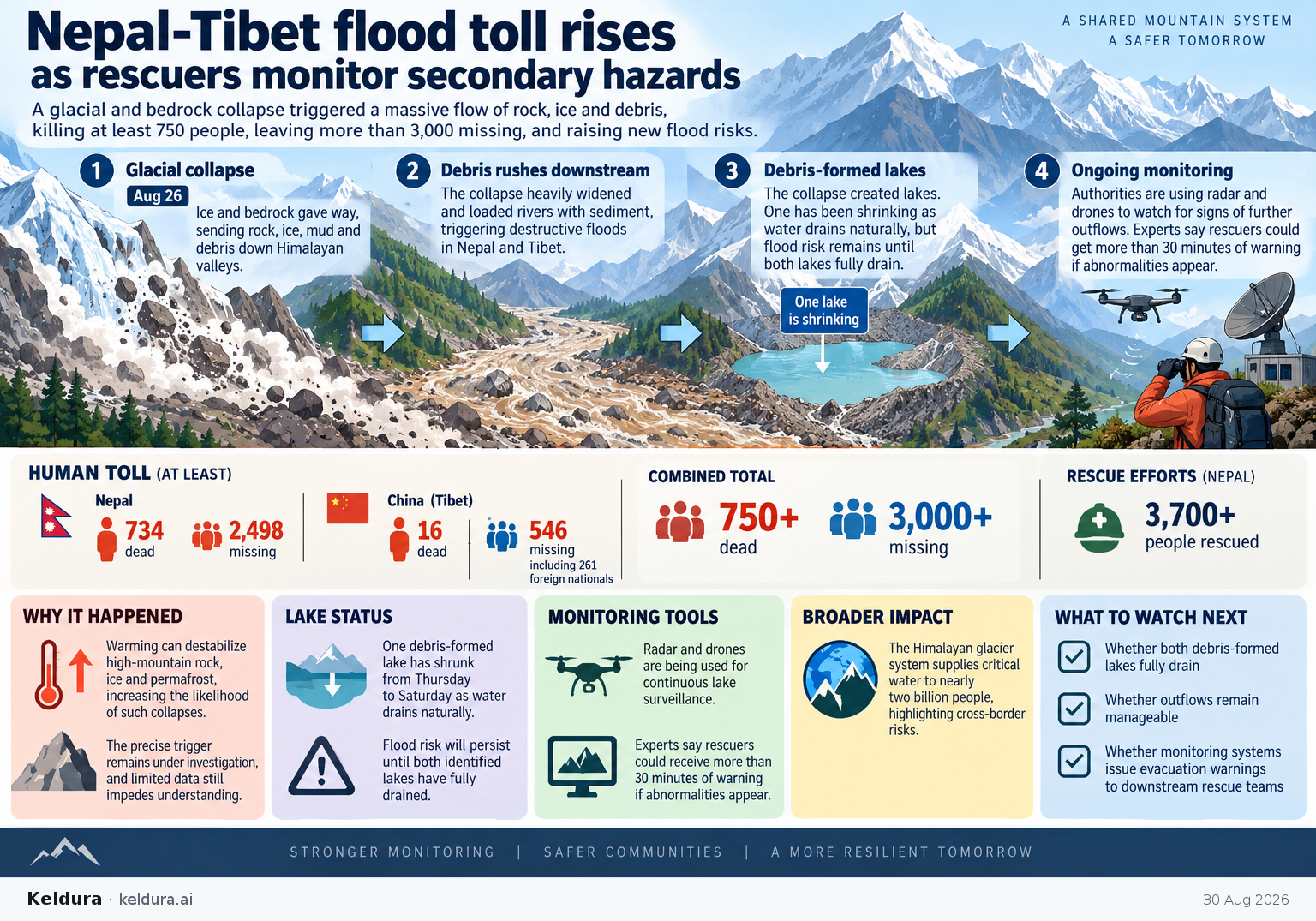
The combined toll from the Nepal-Tibet flash flood has reached at least 750 dead, with more than 3,000 people missing; more than 3,700 people have been rescued in Nepal.[1] Authorities are also monitoring lakes created by the glacial collapse, although satellite imagery indicated that one lake was shrinking as water drained naturally.[4] The collapse’s precise trigger remains uncertain, but scientists say warming can destabilize high-mountain rock, ice and permafrost and increase the likelihood of such disasters.[2][4][5]
Why it matters: The disaster illustrates the cross-border risks surrounding a Himalayan glacier system that supplies critical water to nearly two billion people.[2] It also highlights the need for better monitoring and data: Nepal and China agreed to increase real-time hydrological data sharing, while researchers said limited data still impedes understanding of collapse mechanisms.[2][4]
Key insights: Chinese authorities reported 16 deaths and 546 missing, including 261 foreign nationals, while Nepal reported 734 deaths and 2,498 missing.[1] | Satellite analysis indicated that bedrock beneath part of the glacier failed along with the ice, sending rock and ice into the valley and heavily widening and loading downstream rivers with sediment.[5] | One debris-formed lake had shrunk from Thursday to Saturday, but officials said flood risk would persist until both identified lakes had fully drained.[4] | China deployed radar and drones for continuous lake surveillance, with experts saying rescuers could receive more than 30 minutes of warning if abnormalities appeared.[4]
Cheatsheet facts: What changed: The confirmed combined death toll rose to at least 750, while more than 3,000 people remained missing and rescue teams faced warnings about rising waters.[1] | Why now: A glacial and bedrock collapse on Aug 26 sent rock, ice, mud and debris through Himalayan river systems; its precise trigger is still under investigation.[2][4][5] | Watch next: Track whether both debris-formed lakes fully drain, whether outflows remain manageable, and whether monitoring systems issue evacuation warnings to downstream rescue teams.[4]
X copy pack
[1] Nepal-Tibet death toll rises amid new flood fears and race to free group trapped in tunnel | Nepal-Tibet flood disaster | The Guardian — theguardian.com[4] Threat of lake burst after glacial collapse near Nepal-Tibet disaster site eases - The Globe and Mail — theglobeandmail.com[2] UN, Nepal warn of climate threat after deadly floods | The Straits Times — straitstimes.com[5] 'Impacts of warming trends': Scientists analyse satellite imagery to trace what caused Nepal flash floods - India TV News — indiatvnews.comRead in BriefingsPost to X