Canada Activates Sweeping Counter-Tariffs on US Goods
Canada’s retaliatory tariffs took effect Tuesday, covering nearly C$28bn ($20bn) of US products and reaching rates as high as 50%.[5] The measures target goods ranging from steel and furniture to clothing, although Canada removed fresh fish, lobster and dozens of other seafood products following in…
Canada’s retaliatory tariffs took effect Tuesday, covering nearly C$28bn ($20bn) of US products and reaching rates as high as 50%.[5] The measures target goods ranging from steel and furniture to clothing, although Canada removed fresh fish, lobster and dozens of other seafood products following industry pushback.[5]
Why it matters: Economists warn that the counter-tariffs will raise Canadian consumer prices for everyday goods, while businesses are preparing for a prolonged dispute with the country’s largest trading partner.[5]
Key insights: The United States already applies a 25% tariff to Canadian cars and trucks, taxes Canadian steel, aluminium and lumber, and introduced 50% tariffs on additional goods in late August.[5] | Canada’s latest measures are in addition to retaliatory taxes on finished US vehicles that do not comply with the Canada-US-Mexico free-trade agreement.[5] | Canada’s GDP grew 3.3% in the second quarter and employment increased by 181,000 from April through July, but the economy lost about 41,000 jobs in August as US tariffs took effect and trade talks collapsed.[5] | The share of Canadian exports going to the United States fell to 66% in July from an average of 75% before the trade war.[5]
Cheatsheet facts: What changed: Canada imposed tariffs of up to 50% on nearly C$28bn of US goods, while exempting seafood products after domestic opposition.[5] | Why now: The measures are a dollar-for-dollar response to US tariffs, with no trade agreement on the horizon.[5] | Watch next: Monitor consumer prices, employment and the US share of Canadian exports for evidence of the dispute’s domestic and trade effects.[5]
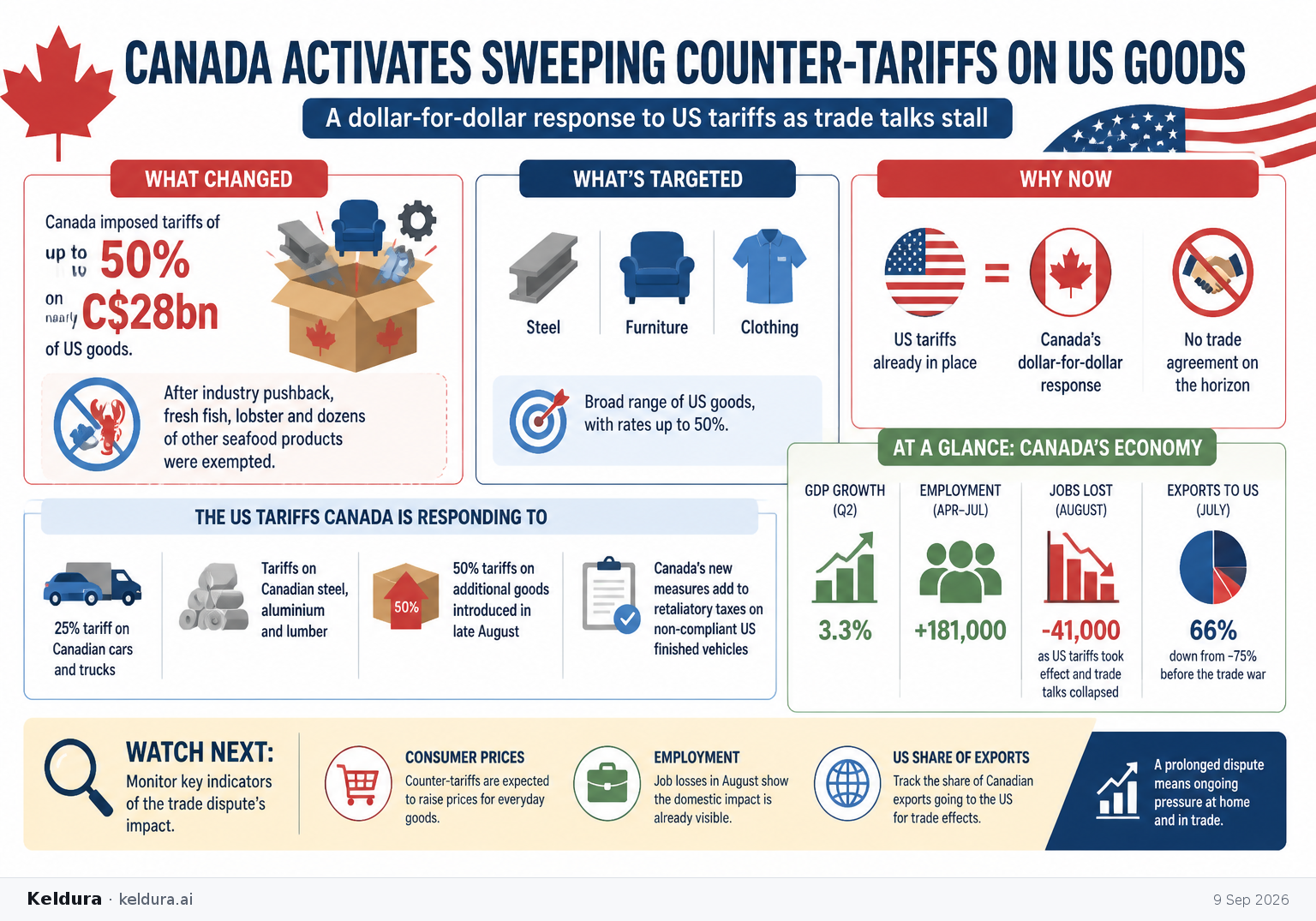
Canada’s retaliatory tariffs took effect Tuesday, covering nearly C$28bn ($20bn) of US products and reaching rates as high as 50%.[5] The measures target goods ranging from steel and furniture to clothing, although Canada removed fresh fish, lobster and dozens of other seafood products following industry pushback.[5]
Why it matters: Economists warn that the counter-tariffs will raise Canadian consumer prices for everyday goods, while businesses are preparing for a prolonged dispute with the country’s largest trading partner.[5]
Key insights: The United States already applies a 25% tariff to Canadian cars and trucks, taxes Canadian steel, aluminium and lumber, and introduced 50% tariffs on additional goods in late August.[5] | Canada’s latest measures are in addition to retaliatory taxes on finished US vehicles that do not comply with the Canada-US-Mexico free-trade agreement.[5] | Canada’s GDP grew 3.3% in the second quarter and employment increased by 181,000 from April through July, but the economy lost about 41,000 jobs in August as US tariffs took effect and trade talks collapsed.[5] | The share of Canadian exports going to the United States fell to 66% in July from an average of 75% before the trade war.[5]
Cheatsheet facts: What changed: Canada imposed tariffs of up to 50% on nearly C$28bn of US goods, while exempting seafood products after domestic opposition.[5] | Why now: The measures are a dollar-for-dollar response to US tariffs, with no trade agreement on the horizon.[5] | Watch next: Monitor consumer prices, employment and the US share of Canadian exports for evidence of the dispute’s domestic and trade effects.[5]