How a Saudi pipeline shutdown became a global inflation threat
Oil approached $108 on Sept.
Brent rose as much as 3.7% and traded at $107.95 a barrel, while West Texas Intermediate reached $103.19 after Saudi Arabia suspended its East-West pipeline.[3] The route can carry about seven million barrels per day from the Eastern Province to the Red Sea, allowing exports to bypass disruption in…
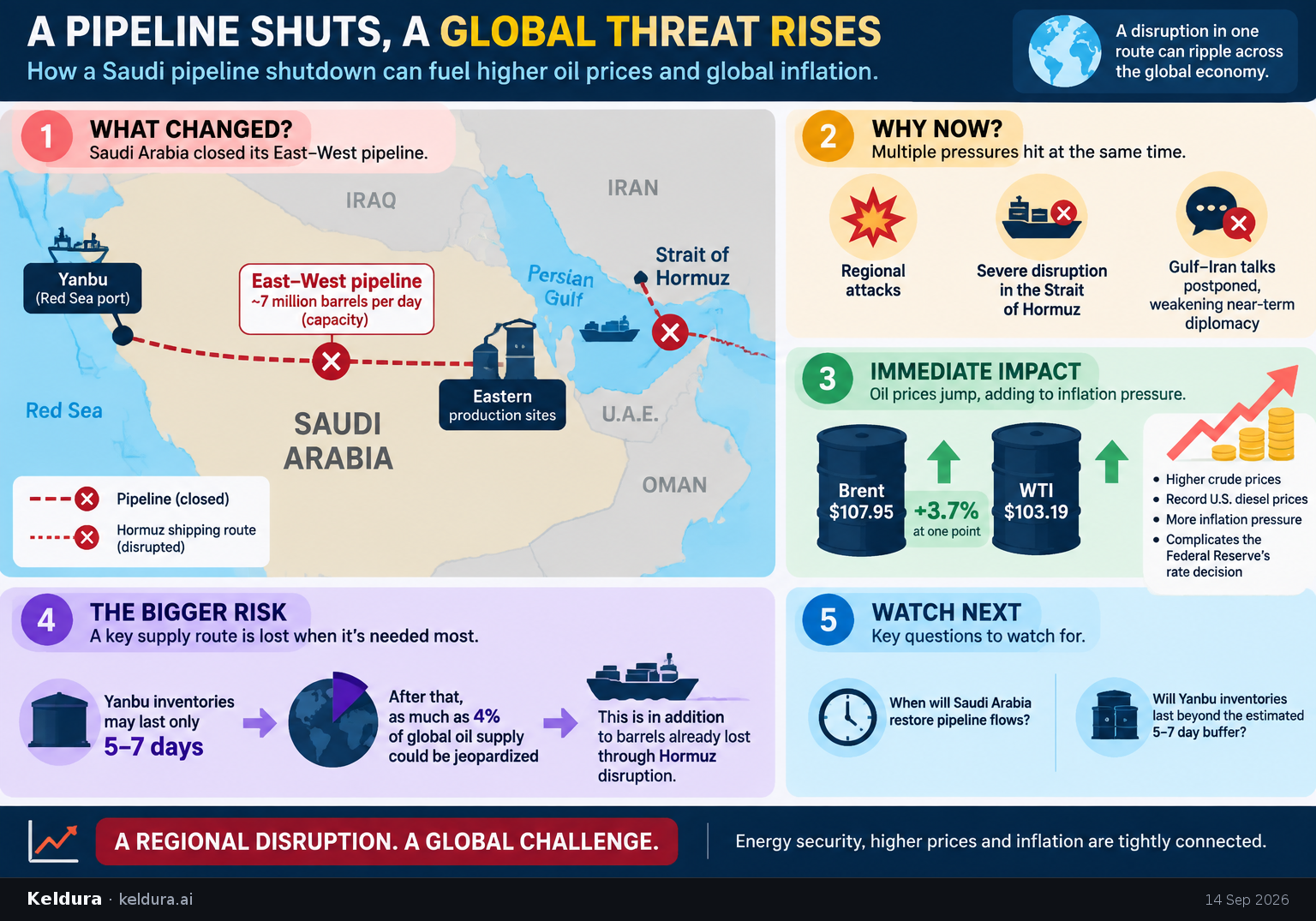
Brent rose as much as 3.7% and traded at $107.95 a barrel, while West Texas Intermediate reached $103.19 after Saudi Arabia suspended its East-West pipeline.[3] The route can carry about seven million barrels per day from the Eastern Province to the Red Sea, allowing exports to bypass disruption in the Strait of Hormuz.[3] Saudi Arabia has not disclosed the extent of any damage or when flows will resume, while estimates for restoring the route range from days to weeks.[3][4]
Why it matters: The closure removes a major alternative to Hormuz at a time when regional shipping is already constrained, potentially exposing as much as 4% of global oil supply once inventories at Yanbu are depleted.[4] Higher crude and record US diesel prices add to inflation pressure and complicate the Federal Reserve’s rate decision.[2][4]
Key insights: Saudi Arabia’s East-West pipeline has full pumping capacity of about seven million barrels per day and connects eastern production sites with the Red Sea port of Yanbu.[3] | Traders and Saudi buyers estimated that Yanbu had enough stored oil to maintain exports for only five to seven days if the pipeline remained closed.[4] | After that inventory buffer, as much as 4% of global oil supply could be jeopardized in addition to barrels already lost through Hormuz disruption.[4] | Oman postponed a planned meeting between Iran and other Gulf powers, weakening near-term hopes for a diplomatic response to the transit crisis.[2][4]
Cheatsheet facts: What changed: Saudi Arabia closed the East-West pipeline, removing a route with roughly seven million barrels per day of capacity that bypasses Hormuz.[3] | Why now: The closure coincides with severe Hormuz disruption, continued regional attacks and the postponement of Gulf-Iran talks.[3][4] | Watch next: Watch for a Saudi timeline for restoring pipeline flows and whether Yanbu inventories extend beyond the estimated five-to-seven-day export buffer.[3][4]
Brent rose as much as 3.7% and traded at $107.95 a barrel, while West Texas Intermediate reached $103.19 after Saudi Arabia suspended its East-West pipeline.[3] The route can carry about seven million barrels per day from the Eastern Province to the Red Sea, allowing exports to bypass disruption in the Strait of Hormuz.[3] Saudi Arabia has not disclosed the extent of any damage or when flows will resume, while estimates for restoring the route range from days to weeks.[3][4]
Why it matters: The closure removes a major alternative to Hormuz at a time when regional shipping is already constrained, potentially exposing as much as 4% of global oil supply once inventories at Yanbu are depleted.[4] Higher crude and record US diesel prices add to inflation pressure and complicate the Federal Reserve’s rate decision.[2][4]
Key insights: Saudi Arabia’s East-West pipeline has full pumping capacity of about seven million barrels per day and connects eastern production sites with the Red Sea port of Yanbu.[3] | Traders and Saudi buyers estimated that Yanbu had enough stored oil to maintain exports for only five to seven days if the pipeline remained closed.[4] | After that inventory buffer, as much as 4% of global oil supply could be jeopardized in addition to barrels already lost through Hormuz disruption.[4] | Oman postponed a planned meeting between Iran and other Gulf powers, weakening near-term hopes for a diplomatic response to the transit crisis.[2][4]
Cheatsheet facts: What changed: Saudi Arabia closed the East-West pipeline, removing a route with roughly seven million barrels per day of capacity that bypasses Hormuz.[3] | Why now: The closure coincides with severe Hormuz disruption, continued regional attacks and the postponement of Gulf-Iran talks.[3][4] | Watch next: Watch for a Saudi timeline for restoring pipeline flows and whether Yanbu inventories extend beyond the estimated five-to-seven-day export buffer.[3][4]
X copy pack
[3] Oil nears $108 after Saudi Arabia shuts pipeline amid attacks | The National — thenationalnews.com[4] Diplomacy stumbles with postponement of meeting on Strait of Hormuz proposal - BusinessWorld Online — bworldonline.com[2] Tech firms hit by AI slowdown call with Fed expected to hike rates | The Straits Times — straitstimes.comRead in BriefingsPost to X