How did hot growth and oil push markets into a higher-rate regime?
The benchmark 10-year Treasury yield climbed above 5%, reaching its highest level since 2007, after US business activity accelerated.
The benchmark 10-year Treasury yield climbed above 5%, reaching its highest level since 2007, after US business activity accelerated and an oil rally renewed fears that inflation will remain elevated. [1][2][5][6] The dollar approached a two-month high, while the S&P 500 fell about 0.8% and the Nas…
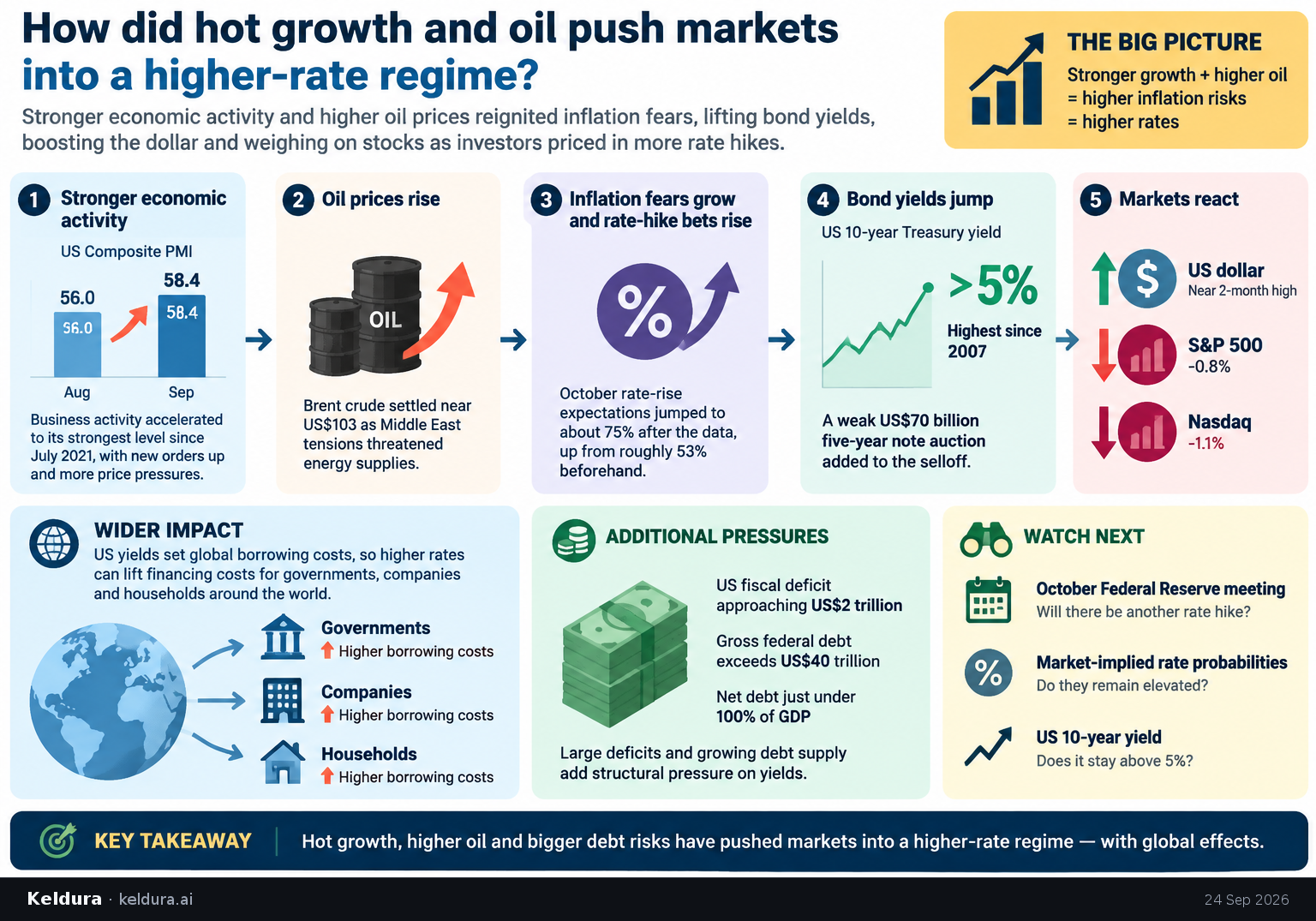
The benchmark 10-year Treasury yield climbed above 5%, reaching its highest level since 2007, after US business activity accelerated and an oil rally renewed fears that inflation will remain elevated. [1][2][5][6] The dollar approached a two-month high, while the S&P 500 fell about 0.8% and the Nasdaq dropped roughly 1.1% as investors increased bets on another Federal Reserve rate rise. [1][2][6]
Why it matters: Treasuries provide reference rates for debt worldwide, so higher US yields can raise financing costs for governments, companies and households far beyond America. [1] The move is also spreading across markets: Japan’s benchmark 10-year yield reached a 30-year high, while rising interest-rate expectations strengthened the dollar against major currencies. [2][3]
Key insights: The flash US Composite PMI Output Index rose from 56.0 in August to 58.4 in September, its strongest reading since July 2021, as new orders surged and supply constraints increased price pressure. [2] | October rate-rise expectations jumped to about 75% after the activity data, compared with roughly 53% beforehand; a separate market measure placed the probability at 71%. [2][6] | The Treasury selloff was amplified by a weak US$70 billion auction of five-year notes, while Brent crude settled near US$103 as Middle East tensions threatened energy supplies. [5] | Large fiscal deficits and growing debt supply are adding structural pressure: the US deficit is approaching US$2 trillion, gross federal debt exceeds US$40 trillion and net debt is just under 100% of GDP. [1]
Cheatsheet facts: What changed: The US 10-year Treasury yield moved above 5% and reached its highest level since 2007, while the dollar rose and major US stock indices declined. [1][2][6] | Why now: US activity accelerated, oil prices rose, a five-year Treasury auction was weak and investors increased expectations of further Federal Reserve tightening. [2][5][6] | Watch next: Watch the October Federal Reserve meeting, market-implied rate probabilities and whether the US 10-year yield remains above 5%. [1][2][6]
The benchmark 10-year Treasury yield climbed above 5%, reaching its highest level since 2007, after US business activity accelerated and an oil rally renewed fears that inflation will remain elevated. [1][2][5][6] The dollar approached a two-month high, while the S&P 500 fell about 0.8% and the Nasdaq dropped roughly 1.1% as investors increased bets on another Federal Reserve rate rise. [1][2][6]
Why it matters: Treasuries provide reference rates for debt worldwide, so higher US yields can raise financing costs for governments, companies and households far beyond America. [1] The move is also spreading across markets: Japan’s benchmark 10-year yield reached a 30-year high, while rising interest-rate expectations strengthened the dollar against major currencies. [2][3]
Key insights: The flash US Composite PMI Output Index rose from 56.0 in August to 58.4 in September, its strongest reading since July 2021, as new orders surged and supply constraints increased price pressure. [2] | October rate-rise expectations jumped to about 75% after the activity data, compared with roughly 53% beforehand; a separate market measure placed the probability at 71%. [2][6] | The Treasury selloff was amplified by a weak US$70 billion auction of five-year notes, while Brent crude settled near US$103 as Middle East tensions threatened energy supplies. [5] | Large fiscal deficits and growing debt supply are adding structural pressure: the US deficit is approaching US$2 trillion, gross federal debt exceeds US$40 trillion and net debt is just under 100% of GDP. [1]
Cheatsheet facts: What changed: The US 10-year Treasury yield moved above 5% and reached its highest level since 2007, while the dollar rose and major US stock indices declined. [1][2][6] | Why now: US activity accelerated, oil prices rose, a five-year Treasury auction was weak and investors increased expectations of further Federal Reserve tightening. [2][5][6] | Watch next: Watch the October Federal Reserve meeting, market-implied rate probabilities and whether the US 10-year yield remains above 5%. [1][2][6]
X copy pack
[1] The Trump effect: Why cracks are widening in financial markets — smh.com.au[2] Dollar jumps near 2-month high on Fed outlook, rising oil price - Nikkei Asia — asia.nikkei.com[5] Stocks fall as inflation fears lift bond yields | The Star — thestar.com.my[6] US STOCKS-Wall Street ends down as oil prices, Treasury yields rise | International — devdiscourse.com[3] Markets mixed as China's Xi arrives for US talks — france24.comRead in BriefingsPost to X