WHO ties oral-health guidance to antibiotic stewardship in the Western Pacific
WHO says oral diseases are the most common noncommunicable diseases in the Western Pacific Region, affecting an estimated 960 million people, while access to essential oral health services remains limited [2]. In response, WHO is promoting new guidance on environmentally friendly, minimally invasiv…
WHO says oral diseases are the most common noncommunicable diseases in the Western Pacific Region, affecting an estimated 960 million people, while access to essential oral health services remains limited [2]. In response, WHO is promoting new guidance on environmentally friendly, minimally invasive oral care for dental caries alongside the oral-health section of the AWaRe Antibiotic Book to reduce unnecessary antibiotic use and help address antimicrobial resistance [2].
Why it matters: This connects dental care directly to AMR policy, showing that routine oral-health decisions can influence broader antibiotic stewardship efforts [2]. It also matters because the burden falls heavily on vulnerable populations and the guidance is aimed at preventing disease earlier, when care is less invasive and fewer antibiotics are needed [2].
Key insights: WHO says much antibiotic use in oral health is unnecessary or inappropriate [2]. | The guidance emphasizes prevention-focused, minimally invasive care for dental caries [2]. | WHO is using the AWaRe Antibiotic Book to highlight oral health’s role in antimicrobial stewardship [2]. | The event includes country experiences on implementation of WHO guidelines and AMR action [2].
Cheatsheet facts: What changed: WHO released and is disseminating oral-health guidance linked to AMR reduction [2]. | Why now: Oral disease is widespread in the region, access is limited, and antibiotic overuse is a major concern [2]. | Watch next: Look for country implementation examples and uptake of the AWaRe oral-health guidance [2].
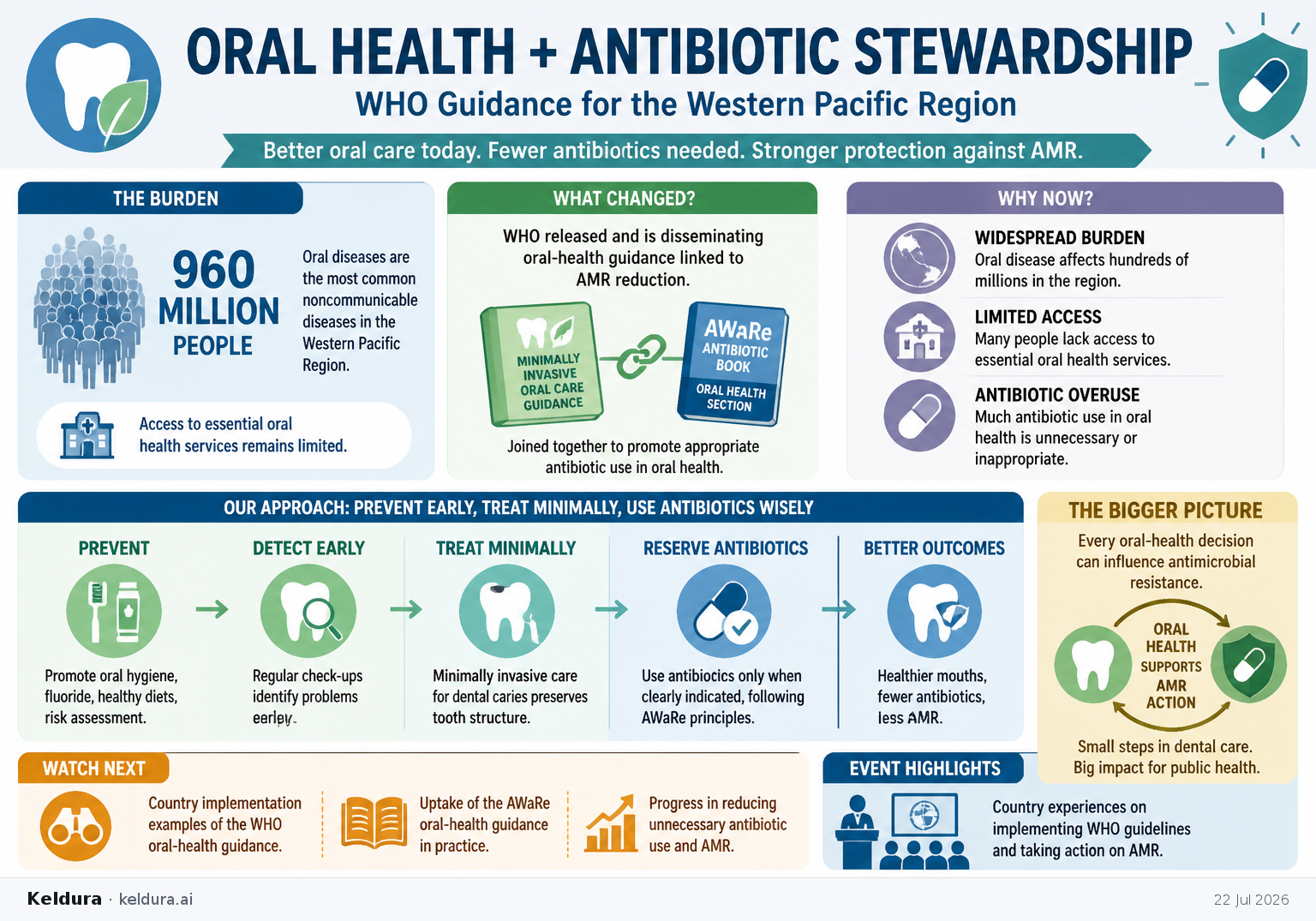
WHO says oral diseases are the most common noncommunicable diseases in the Western Pacific Region, affecting an estimated 960 million people, while access to essential oral health services remains limited [2]. In response, WHO is promoting new guidance on environmentally friendly, minimally invasive oral care for dental caries alongside the oral-health section of the AWaRe Antibiotic Book to reduce unnecessary antibiotic use and help address antimicrobial resistance [2].
Why it matters: This connects dental care directly to AMR policy, showing that routine oral-health decisions can influence broader antibiotic stewardship efforts [2]. It also matters because the burden falls heavily on vulnerable populations and the guidance is aimed at preventing disease earlier, when care is less invasive and fewer antibiotics are needed [2].
Key insights: WHO says much antibiotic use in oral health is unnecessary or inappropriate [2]. | The guidance emphasizes prevention-focused, minimally invasive care for dental caries [2]. | WHO is using the AWaRe Antibiotic Book to highlight oral health’s role in antimicrobial stewardship [2]. | The event includes country experiences on implementation of WHO guidelines and AMR action [2].
Cheatsheet facts: What changed: WHO released and is disseminating oral-health guidance linked to AMR reduction [2]. | Why now: Oral disease is widespread in the region, access is limited, and antibiotic overuse is a major concern [2]. | Watch next: Look for country implementation examples and uptake of the AWaRe oral-health guidance [2].