How clinical trials can close the evidence gap in pregnancy and breastfeeding
WHO and HRP scheduled an October 9 launch for a knowledge portal supporting pregnant and lactating women’s inclusion in clinical trials.
WHO and HRP have developed a portal bringing together ethical, scientific and operational resources for including pregnant and lactating women in clinical trials. [3] The October 9 launch webinar is intended to introduce its scope and practical use to researchers, regulators, ethics committees and…
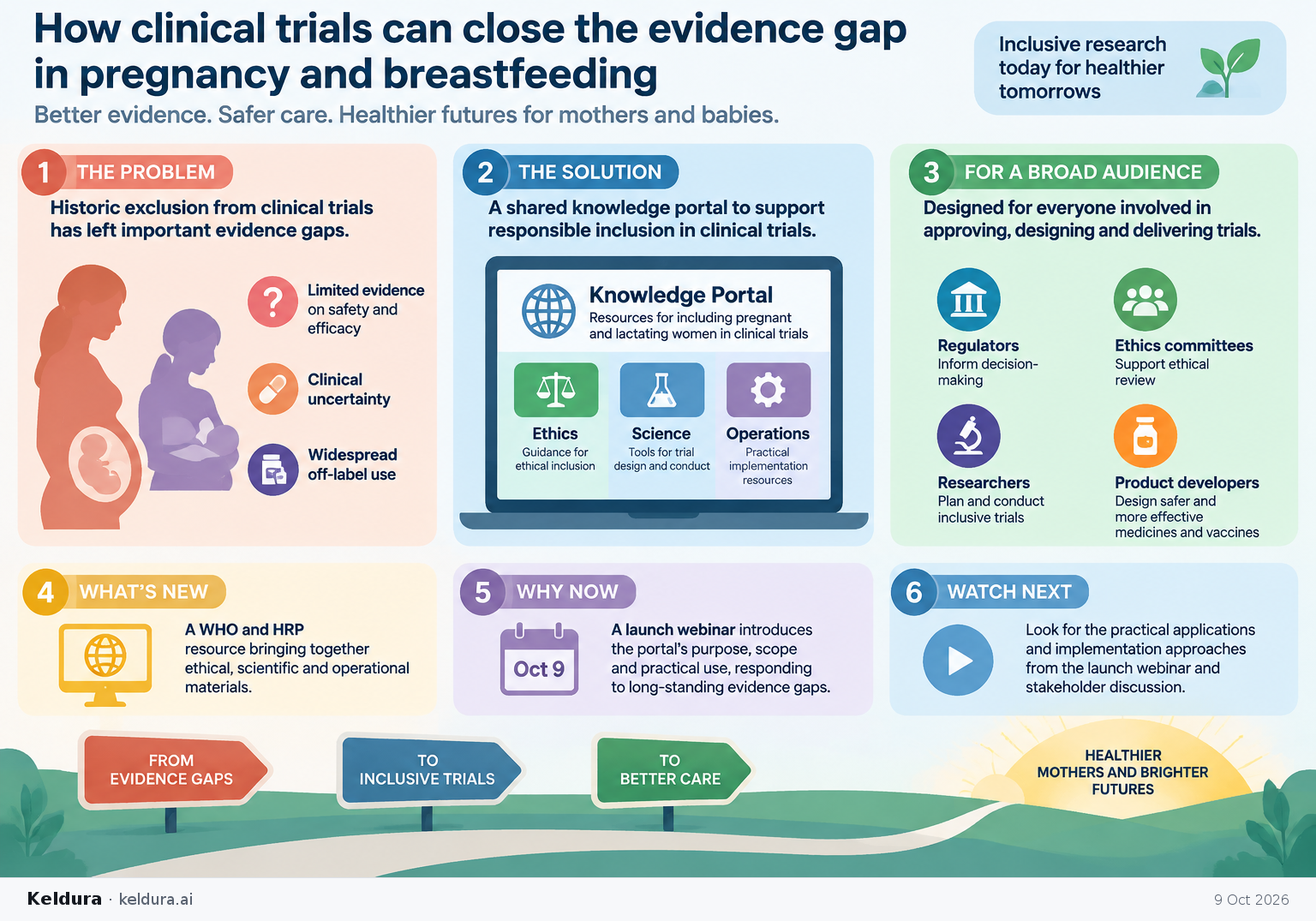
WHO and HRP have developed a portal bringing together ethical, scientific and operational resources for including pregnant and lactating women in clinical trials. [3] The October 9 launch webinar is intended to introduce its scope and practical use to researchers, regulators, ethics committees and product developers. [3]
Why it matters: Historical exclusion from trials has left gaps in evidence about medicine and vaccine safety and efficacy during pregnancy and breastfeeding, contributing to clinical uncertainty and widespread off-label use. [3]
Key insights: The portal addresses trial design and implementation; it does not itself supply new safety findings for a particular medicine or vaccine. [3] | Its resources span ethics, science and operations, reflecting that responsible inclusion requires more than simply changing eligibility criteria. [3] | The intended users include regulators and ethics committees as well as researchers, positioning the resource across several stages of trial approval and delivery. [3]
Cheatsheet facts: What changed: WHO and HRP developed a shared resource to support responsible inclusion of pregnant and lactating women in clinical trials. [3] | Why now: The October 9 webinar introduces the portal’s purpose, scope and practical application against longstanding evidence gaps. [3] | Watch next: The practical applications and implementation approaches presented during the launch webinar and stakeholder discussion. [3]