Can post-exposure pills help turn Congo’s Ebola outbreak?
On October 3, Congo’s Ebola response combined a large prevention trial with signs that transmission had eased in several health zones.
More than 250 exposed people have entered a trial of obeldesivir, an experimental antiviral taken soon after suspected contact to prevent Bundibugyo virus disease; investigators aim to enroll nearly 1,000 participants aged 12 or older, with half receiving placebo.[1] Congo reported 4,018 deaths amo…
More than 250 exposed people have entered a trial of obeldesivir, an experimental antiviral taken soon after suspected contact to prevent Bundibugyo virus disease; investigators aim to enroll nearly 1,000 participants aged 12 or older, with half receiving placebo.[1] Congo reported 4,018 deaths among 8,300 confirmed cases across seven provinces, although 12 of 63 affected health zones had recorded no new cases for 42 days.[5]
Why it matters: Bundibugyo virus has no approved vaccine or treatment, making a successful post-exposure option particularly important for relatives, health workers and others recently exposed; however, violence, damaged response infrastructure and surveillance gaps complicate both containment and interpretation of the official toll.[1][5]
Key insights: The trial enrolls people who contacted a confirmed case within the previous five days but have no symptoms, targeting the short period before disease develops.[1] | The outbreak’s reported case-fatality rate is 48.4%, and 2,162 patients have recovered.[5] | Congo is giving health workers Ervebo, a vaccine effective against a different Ebola virus, but its ability to prevent Bundibugyo illness remains under study.[1] | Localized case-free periods do not mean the emergency is over: transmission has affected seven provinces, while aid groups say incomplete detection may understate the toll.[1][5]
Cheatsheet facts: What changed: Obeldesivir is being tested as post-exposure prophylaxis, while 12 affected health zones have reached 42 days without a new case.[1][5] | Why now: The Bundibugyo outbreak has caused 4,018 reported deaths, and no vaccine or treatment is approved specifically for this virus.[1][5] | Watch next: Track enrollment toward the trial’s nearly 1,000-participant target and whether additional health zones complete 42 days without a new case.[1][5]
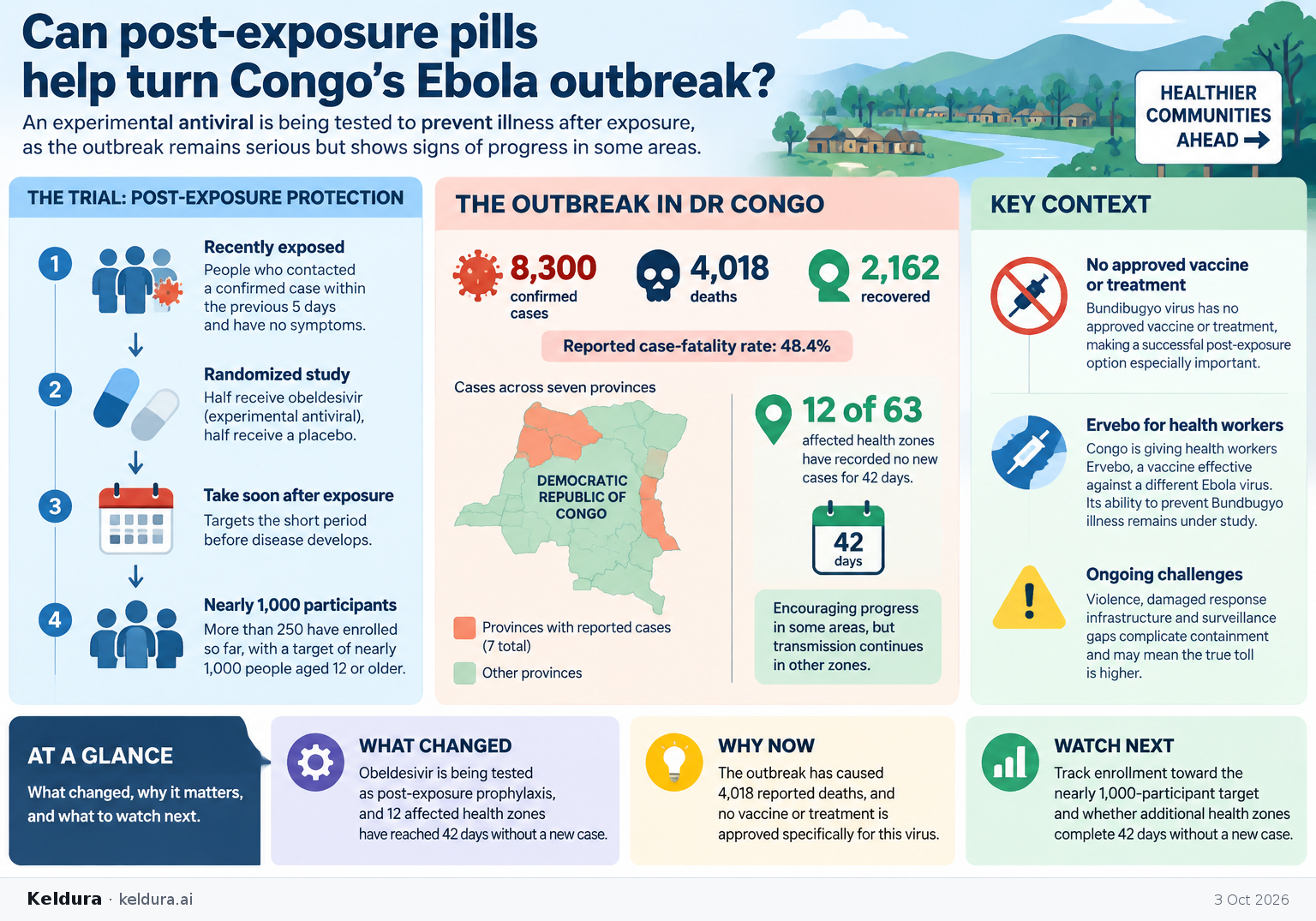
More than 250 exposed people have entered a trial of obeldesivir, an experimental antiviral taken soon after suspected contact to prevent Bundibugyo virus disease; investigators aim to enroll nearly 1,000 participants aged 12 or older, with half receiving placebo.[1] Congo reported 4,018 deaths among 8,300 confirmed cases across seven provinces, although 12 of 63 affected health zones had recorded no new cases for 42 days.[5]
Why it matters: Bundibugyo virus has no approved vaccine or treatment, making a successful post-exposure option particularly important for relatives, health workers and others recently exposed; however, violence, damaged response infrastructure and surveillance gaps complicate both containment and interpretation of the official toll.[1][5]
Key insights: The trial enrolls people who contacted a confirmed case within the previous five days but have no symptoms, targeting the short period before disease develops.[1] | The outbreak’s reported case-fatality rate is 48.4%, and 2,162 patients have recovered.[5] | Congo is giving health workers Ervebo, a vaccine effective against a different Ebola virus, but its ability to prevent Bundibugyo illness remains under study.[1] | Localized case-free periods do not mean the emergency is over: transmission has affected seven provinces, while aid groups say incomplete detection may understate the toll.[1][5]
Cheatsheet facts: What changed: Obeldesivir is being tested as post-exposure prophylaxis, while 12 affected health zones have reached 42 days without a new case.[1][5] | Why now: The Bundibugyo outbreak has caused 4,018 reported deaths, and no vaccine or treatment is approved specifically for this virus.[1][5] | Watch next: Track enrollment toward the trial’s nearly 1,000-participant target and whether additional health zones complete 42 days without a new case.[1][5]