How Russia’s infrastructure campaign is increasing pressure on Kyiv
Russian ballistic missiles and drones struck Kyiv early Saturday after repeated attacks disrupted major bridges and cross-city travel.
Saturday’s combined attack killed one person, wounded two and caused fires in several Kyiv districts, following several days of intensified strikes on the capital and critical infrastructure.[5] Earlier attacks forced the complete closure of the Southern Bridge and restrictions on the Paton and Met…
Saturday’s combined attack killed one person, wounded two and caused fires in several Kyiv districts, following several days of intensified strikes on the capital and critical infrastructure.[5] Earlier attacks forced the complete closure of the Southern Bridge and restrictions on the Paton and Metro bridges, disrupting movement across the Dnipro.[5] President Volodymyr Zelenskyy says Russia may intensify attacks before the November 3 US midterm elections to demonstrate resilience against Western pressure and push Ukraine toward chaos.[6]
Why it matters: Strikes on bridges, transport and energy systems can pressure civilian life beyond the immediate blast areas, particularly as winter approaches.[5] Zelenskyy’s argument also frames the campaign as strategic signalling toward US voters and policymakers, although that assessment is his claim rather than independently established Russian intent.[6]
Key insights: Russian drones repeatedly struck the Southern Bridge over two days before ballistic missiles returned over Kyiv early Saturday.[5] | Emergency crews remained deployed to extinguish fires and assess damage after the attack.[5] | Zelenskyy said Russia was conducting round-the-clock attacks involving hundreds of drones each day.[6] | Ukraine is seeking additional funding and stronger air defences in response to the expanding missile-and-drone campaign.[5][6]
Cheatsheet facts: What changed: Combined missile-and-drone strikes followed repeated attacks that closed or restricted three major Kyiv bridges.[5] | Why now: Russia is intensifying attacks on transport, energy and other critical infrastructure ahead of winter, while Zelenskyy links the timing to approaching US elections.[5][6] | Watch next: Watch bridge reopening decisions, confirmed damage to energy and transport systems, and the frequency of missile-and-drone alerts through November 3.[5][6]
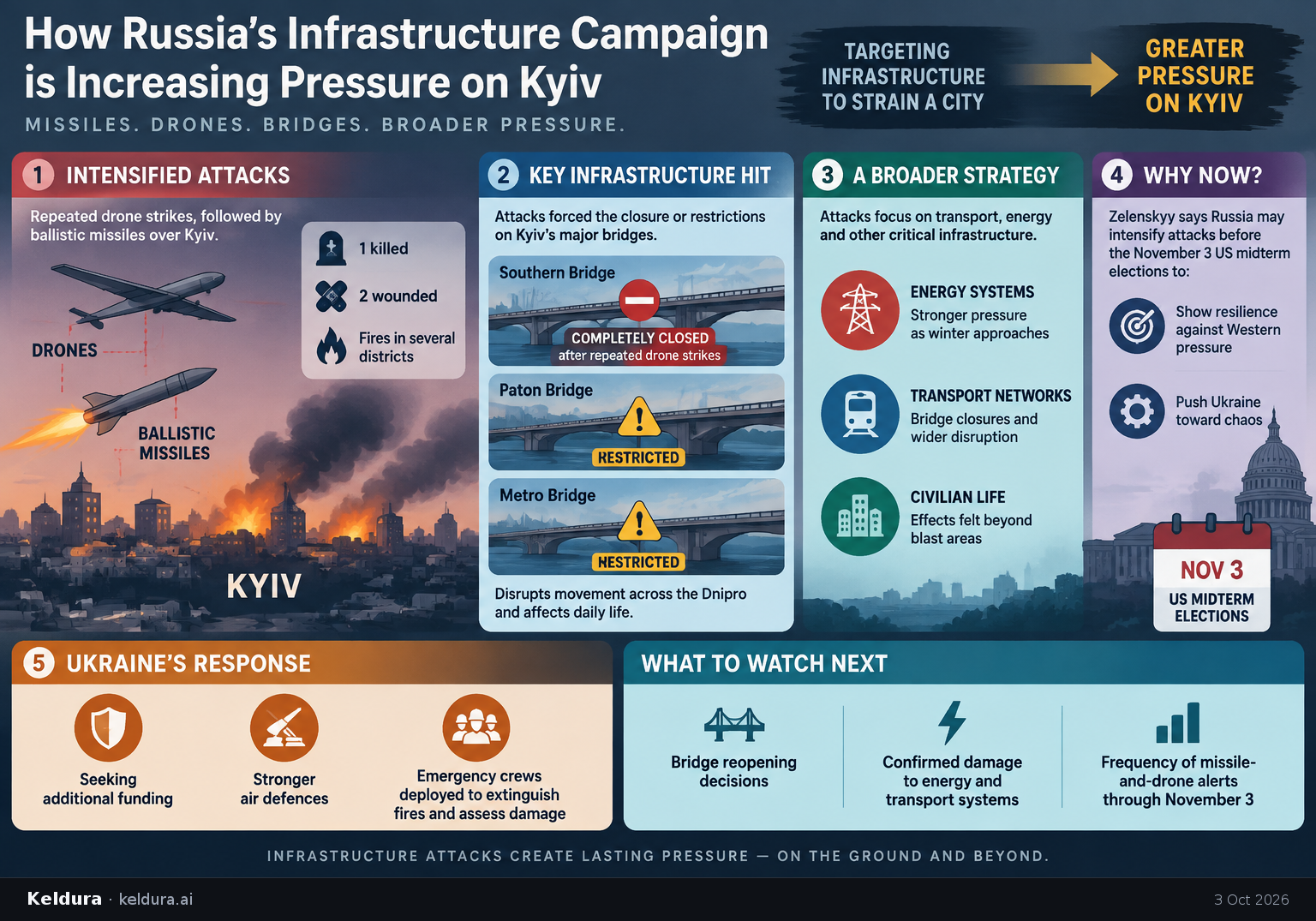
Saturday’s combined attack killed one person, wounded two and caused fires in several Kyiv districts, following several days of intensified strikes on the capital and critical infrastructure.[5] Earlier attacks forced the complete closure of the Southern Bridge and restrictions on the Paton and Metro bridges, disrupting movement across the Dnipro.[5] President Volodymyr Zelenskyy says Russia may intensify attacks before the November 3 US midterm elections to demonstrate resilience against Western pressure and push Ukraine toward chaos.[6]
Why it matters: Strikes on bridges, transport and energy systems can pressure civilian life beyond the immediate blast areas, particularly as winter approaches.[5] Zelenskyy’s argument also frames the campaign as strategic signalling toward US voters and policymakers, although that assessment is his claim rather than independently established Russian intent.[6]
Key insights: Russian drones repeatedly struck the Southern Bridge over two days before ballistic missiles returned over Kyiv early Saturday.[5] | Emergency crews remained deployed to extinguish fires and assess damage after the attack.[5] | Zelenskyy said Russia was conducting round-the-clock attacks involving hundreds of drones each day.[6] | Ukraine is seeking additional funding and stronger air defences in response to the expanding missile-and-drone campaign.[5][6]
Cheatsheet facts: What changed: Combined missile-and-drone strikes followed repeated attacks that closed or restricted three major Kyiv bridges.[5] | Why now: Russia is intensifying attacks on transport, energy and other critical infrastructure ahead of winter, while Zelenskyy links the timing to approaching US elections.[5][6] | Watch next: Watch bridge reopening decisions, confirmed damage to energy and transport systems, and the frequency of missile-and-drone alerts through November 3.[5][6]