Why weak hiring became good news for Wall Street
U.S. employers added 29,000 jobs in September, below expectations of roughly 90,000, while unemployment edged up to 4.2%.
U.S. employers added 29,000 jobs in September, below expectations of roughly 90,000, while unemployment edged up to 4.2%.[2][4] The S&P 500 gained 0.7%, the Dow Jones Industrial Average rose 0.5%, and the Nasdaq composite advanced 1.2%.[3] Traders cut the implied probability of an October rate incr…
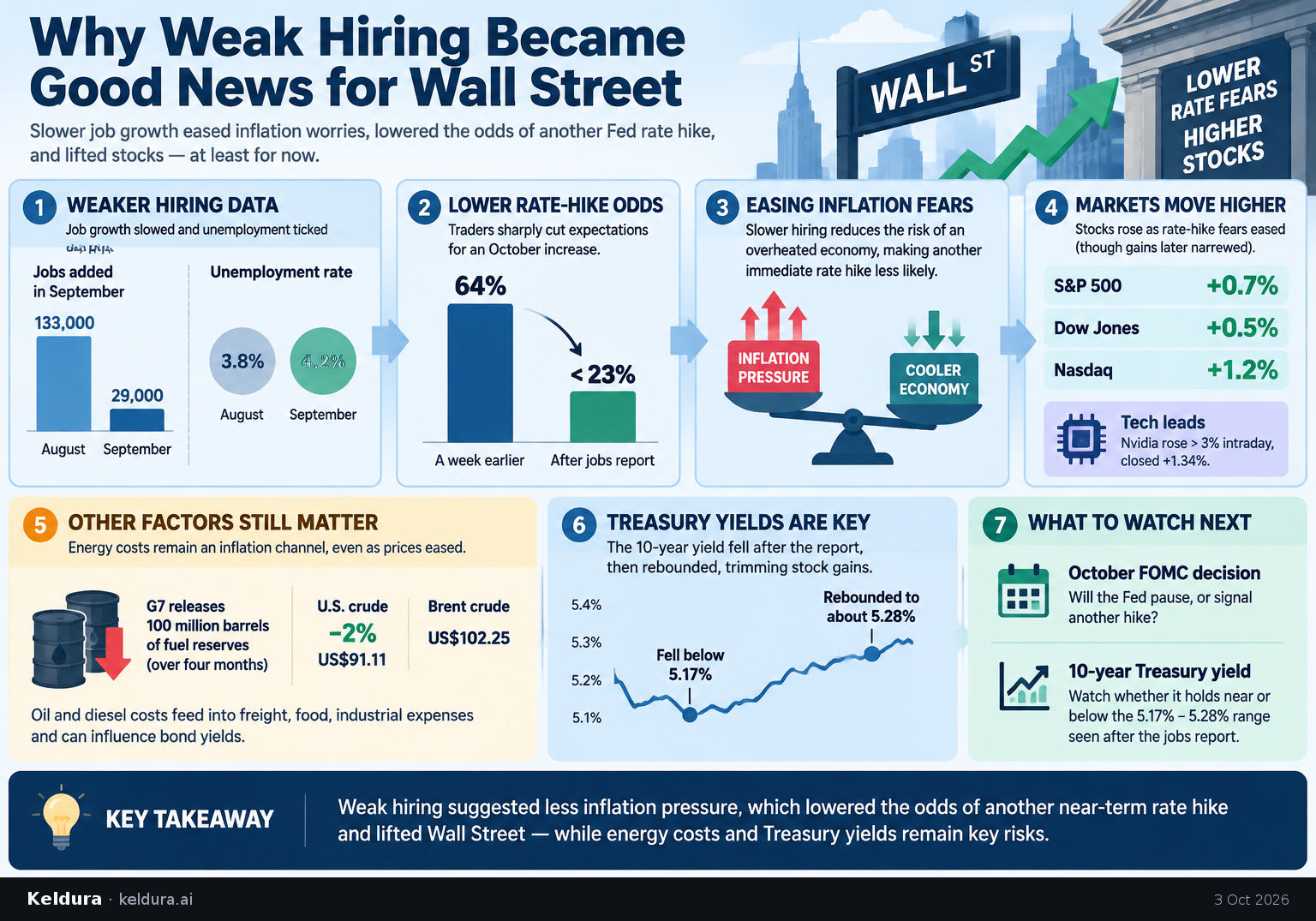
U.S. employers added 29,000 jobs in September, below expectations of roughly 90,000, while unemployment edged up to 4.2%.[2][4] The S&P 500 gained 0.7%, the Dow Jones Industrial Average rose 0.5%, and the Nasdaq composite advanced 1.2%.[3] Traders cut the implied probability of an October rate increase to less than 23%, down from 64% a week earlier.[1][3]
Why it matters: Slower hiring eased fears that an overheated economy would intensify inflation and force the Federal Reserve to tighten policy again, supporting both bonds and rate-sensitive stocks.[1][3] But oil and diesel costs remain an inflation channel because they feed into freight, food, industrial expenses, and ultimately bond yields.[2]
Key insights: September’s 29,000-job increase marked a sharp slowdown from August’s net gain of 133,000, and the previous two months were revised lower.[1][4] | The 10-year Treasury yield initially fell below 5.17% after the report but rebounded to about 5.28%, causing stocks to surrender part of their earlier gains.[3][4] | G7 countries agreed to release 100 million barrels of fuel reserves over four months, helping U.S. crude finish roughly 2% lower at US$91.11 even as Brent settled at US$102.25.[2] | Technology shares led the advance; Nvidia rose more than 3% intraday before closing 1.34% higher as Treasury yields recovered.[4]
Cheatsheet facts: What changed: Payroll growth slowed to 29,000 and unemployment reached 4.2%, sharply reducing market expectations for an October Fed rate increase.[2][3] | Why now: The Federal Reserve recently raised its main rate for the first time in three years, so softer employment data eased concern that persistent inflation would require another immediate increase.[1] | Watch next: Watch the October FOMC decision and whether the 10-year Treasury yield holds near or below the 5.17%-5.28% range traversed after the jobs report.[1][3][4]
U.S. employers added 29,000 jobs in September, below expectations of roughly 90,000, while unemployment edged up to 4.2%.[2][4] The S&P 500 gained 0.7%, the Dow Jones Industrial Average rose 0.5%, and the Nasdaq composite advanced 1.2%.[3] Traders cut the implied probability of an October rate increase to less than 23%, down from 64% a week earlier.[1][3]
Why it matters: Slower hiring eased fears that an overheated economy would intensify inflation and force the Federal Reserve to tighten policy again, supporting both bonds and rate-sensitive stocks.[1][3] But oil and diesel costs remain an inflation channel because they feed into freight, food, industrial expenses, and ultimately bond yields.[2]
Key insights: September’s 29,000-job increase marked a sharp slowdown from August’s net gain of 133,000, and the previous two months were revised lower.[1][4] | The 10-year Treasury yield initially fell below 5.17% after the report but rebounded to about 5.28%, causing stocks to surrender part of their earlier gains.[3][4] | G7 countries agreed to release 100 million barrels of fuel reserves over four months, helping U.S. crude finish roughly 2% lower at US$91.11 even as Brent settled at US$102.25.[2] | Technology shares led the advance; Nvidia rose more than 3% intraday before closing 1.34% higher as Treasury yields recovered.[4]
Cheatsheet facts: What changed: Payroll growth slowed to 29,000 and unemployment reached 4.2%, sharply reducing market expectations for an October Fed rate increase.[2][3] | Why now: The Federal Reserve recently raised its main rate for the first time in three years, so softer employment data eased concern that persistent inflation would require another immediate increase.[1] | Watch next: Watch the October FOMC decision and whether the 10-year Treasury yield holds near or below the 5.17%-5.28% range traversed after the jobs report.[1][3][4]
X copy pack
[2] Bad news is good news again as Wall Street bets on a Fed pause | Malay Mail — malaymail.com[4] 'Jobs shock? Even better' — easing rate-hike fears lift NASDAQ, Nvidia to intraday records - The Herald Business — biz.heraldcorp.com[3] US stocks rise near their record after the latest jobs report eases worries about inflation - WXXV News 25 — wxxv25.com[1] Stocks rise after jobs report eases inflation worries - Minot Daily News — minotdailynews.comRead in BriefingsPost to X