Gaza strikes kill civilians as UN warns nowhere is safe
BBC reports that at least 12 Palestinians, including six members of one family, were killed in three separate Israeli strikes in Gaza, while the Israeli military said it had targeted a Hamas operative.[3] The UN human rights office said the recent intensification of attacks has killed civilians in…
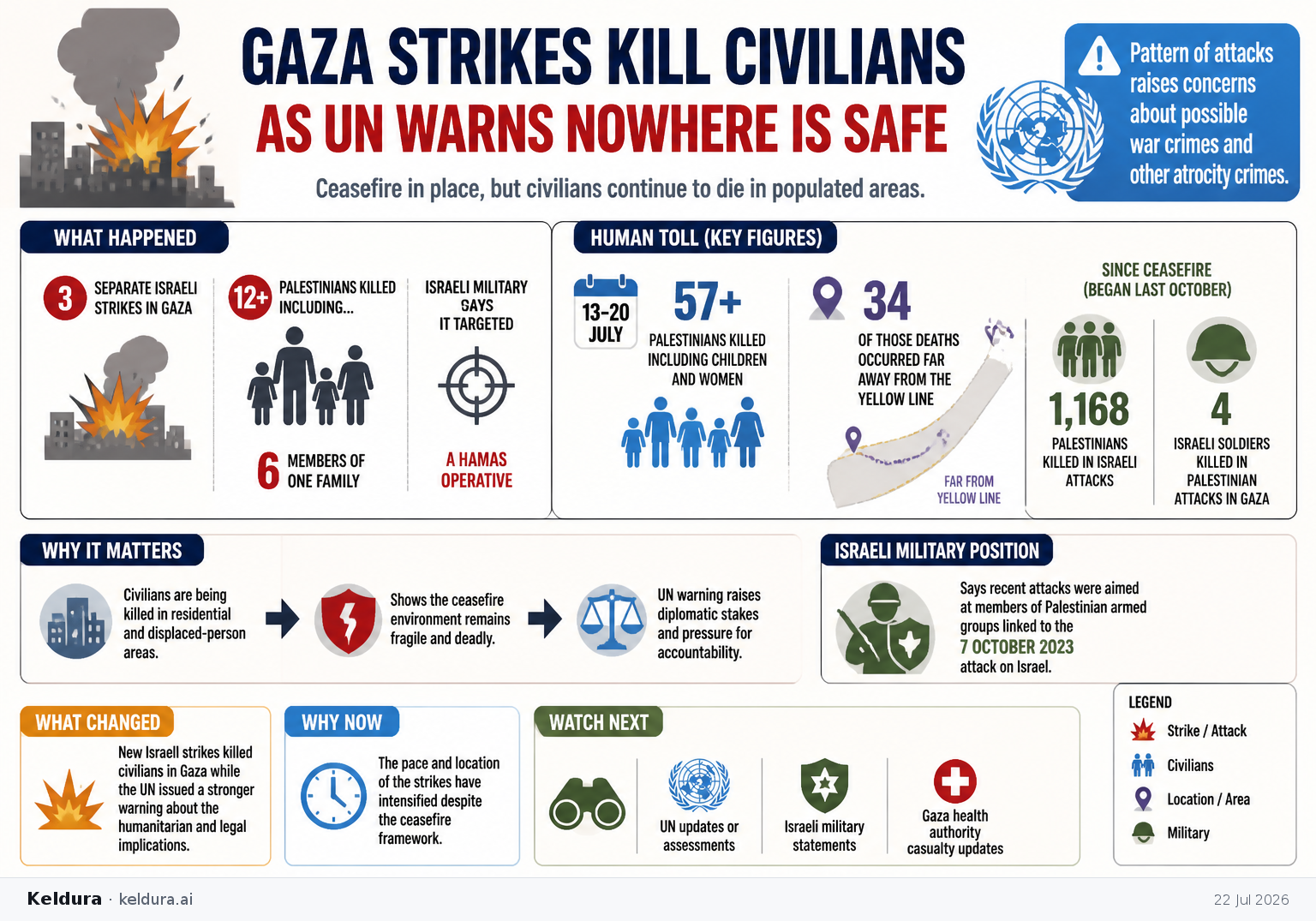
BBC reports that at least 12 Palestinians, including six members of one family, were killed in three separate Israeli strikes in Gaza, while the Israeli military said it had targeted a Hamas operative.[3] The UN human rights office said the recent intensification of attacks has killed civilians in residential and displaced-person areas and warned that the pattern raises concerns about possible war crimes and other atrocity crimes.[3]
Why it matters: The reporting shows the ceasefire environment in Gaza remains fragile and deadly, with civilians still being killed in populated areas. The UN’s language raises the diplomatic stakes by increasing pressure for accountability and scrutiny of military operations.[3]
Key insights: The UN said at least 57 Palestinians were killed between 13 and 20 July, including children and women, in strikes on crowded areas.[3] | Officials said 34 of those deaths occurred far away from the Yellow Line, suggesting harm beyond the area controlled by Israeli forces.[3] | The Hamas-run health ministry said 1,168 Palestinians have been killed in Israeli attacks since the ceasefire took effect last October, while four Israeli soldiers have been killed in Palestinian attacks in Gaza over the same period.[3] | The Israeli military said recent attacks were aimed at members of Palestinian armed groups linked to the 7 October 2023 attack on Israel.[3]
Cheatsheet facts: What changed: New Israeli strikes killed civilians in Gaza while the UN issued a stronger warning about the humanitarian and legal implications.[3] | Why now: The pace and location of the strikes have intensified despite the ceasefire framework described in the report.[3] | Watch next: Whether the UN, Israeli military, or Gaza health authorities publish further casualty updates or assessments of strike locations.[3]
BBC reports that at least 12 Palestinians, including six members of one family, were killed in three separate Israeli strikes in Gaza, while the Israeli military said it had targeted a Hamas operative.[3] The UN human rights office said the recent intensification of attacks has killed civilians in residential and displaced-person areas and warned that the pattern raises concerns about possible war crimes and other atrocity crimes.[3]
Why it matters: The reporting shows the ceasefire environment in Gaza remains fragile and deadly, with civilians still being killed in populated areas. The UN’s language raises the diplomatic stakes by increasing pressure for accountability and scrutiny of military operations.[3]
Key insights: The UN said at least 57 Palestinians were killed between 13 and 20 July, including children and women, in strikes on crowded areas.[3] | Officials said 34 of those deaths occurred far away from the Yellow Line, suggesting harm beyond the area controlled by Israeli forces.[3] | The Hamas-run health ministry said 1,168 Palestinians have been killed in Israeli attacks since the ceasefire took effect last October, while four Israeli soldiers have been killed in Palestinian attacks in Gaza over the same period.[3] | The Israeli military said recent attacks were aimed at members of Palestinian armed groups linked to the 7 October 2023 attack on Israel.[3]
Cheatsheet facts: What changed: New Israeli strikes killed civilians in Gaza while the UN issued a stronger warning about the humanitarian and legal implications.[3] | Why now: The pace and location of the strikes have intensified despite the ceasefire framework described in the report.[3] | Watch next: Whether the UN, Israeli military, or Gaza health authorities publish further casualty updates or assessments of strike locations.[3]