US-Iran truce collapses again as fighting centers on the Strait of Hormuz
The fragile memorandum of understanding between Washington and Tehran appears to have broken down, with BBC and CFR reporting fresh US strikes, renewed Iranian attacks on shipping, and a US move back to blockade the Strait of Hormuz.[2][3][4][5] The reporting says the dispute now centers on whether…
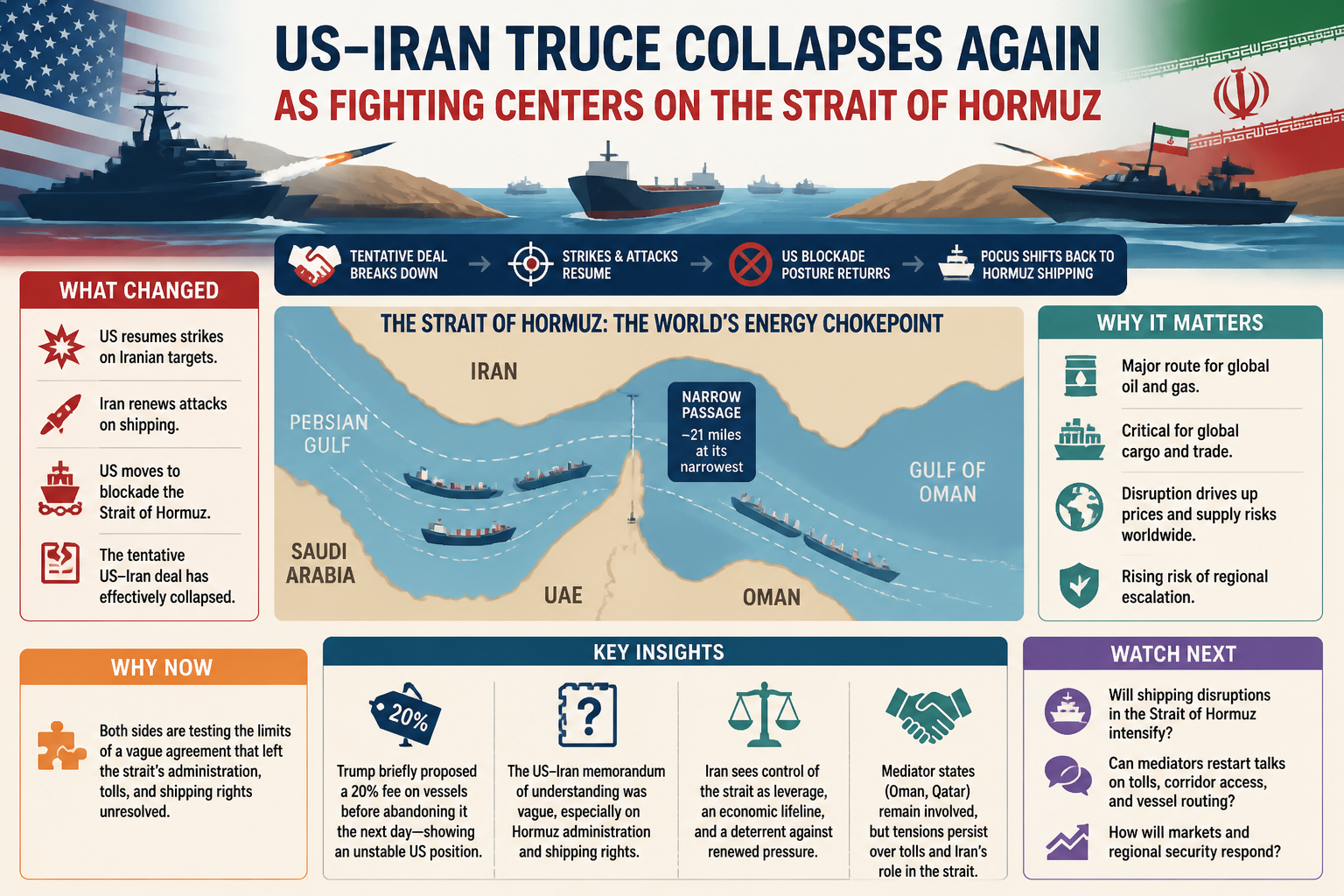
The fragile memorandum of understanding between Washington and Tehran appears to have broken down, with BBC and CFR reporting fresh US strikes, renewed Iranian attacks on shipping, and a US move back to blockade the Strait of Hormuz.[2][3][4][5] The reporting says the dispute now centers on whether Iran can control or charge for passage through the strait, while US officials have rejected tolls on an international waterway and escalated military pressure.[3][4][5]
Why it matters: Hormuz is one of the world’s most important energy and shipping chokepoints, so the breakdown of even a tentative agreement has immediate implications for global oil, gas, cargo flows, and regional escalation risk.[3][4][5] The reporting also shows how quickly ceasefires can unravel when the core issue—control of the waterway—remains unresolved.[3][4][5]
Key insights: Trump briefly proposed a 20% fee on vessels before abandoning it the next day, underscoring how unstable the US position has been.[3] | The US-Iran memorandum of understanding was described as vague, especially on the question of Hormuz administration and shipping rights.[3][4][5] | Iran’s leadership is treating control of the strait as leverage, an economic lifeline, and a deterrent against renewed pressure.[4][5] | Mediator states including Oman and Qatar remain involved, but the evidence says there are clear tensions over Iran’s role and any possible service fees.[5]
Cheatsheet facts: What changed: The tentative US-Iran deal has effectively collapsed, the US has resumed strikes and a blockade posture, and fighting has shifted back toward Hormuz shipping.[2][3][4][5] | Why now: Both sides are again testing the limits of a vague agreement that left the strait’s administration unresolved.[3][4][5] | Watch next: Whether shipping disruptions in the Strait of Hormuz intensify or whether mediators can restart talks around tolls, corridor access, and vessel routing.[3][4][5]
The fragile memorandum of understanding between Washington and Tehran appears to have broken down, with BBC and CFR reporting fresh US strikes, renewed Iranian attacks on shipping, and a US move back to blockade the Strait of Hormuz.[2][3][4][5] The reporting says the dispute now centers on whether Iran can control or charge for passage through the strait, while US officials have rejected tolls on an international waterway and escalated military pressure.[3][4][5]
Why it matters: Hormuz is one of the world’s most important energy and shipping chokepoints, so the breakdown of even a tentative agreement has immediate implications for global oil, gas, cargo flows, and regional escalation risk.[3][4][5] The reporting also shows how quickly ceasefires can unravel when the core issue—control of the waterway—remains unresolved.[3][4][5]
Key insights: Trump briefly proposed a 20% fee on vessels before abandoning it the next day, underscoring how unstable the US position has been.[3] | The US-Iran memorandum of understanding was described as vague, especially on the question of Hormuz administration and shipping rights.[3][4][5] | Iran’s leadership is treating control of the strait as leverage, an economic lifeline, and a deterrent against renewed pressure.[4][5] | Mediator states including Oman and Qatar remain involved, but the evidence says there are clear tensions over Iran’s role and any possible service fees.[5]
Cheatsheet facts: What changed: The tentative US-Iran deal has effectively collapsed, the US has resumed strikes and a blockade posture, and fighting has shifted back toward Hormuz shipping.[2][3][4][5] | Why now: Both sides are again testing the limits of a vague agreement that left the strait’s administration unresolved.[3][4][5] | Watch next: Whether shipping disruptions in the Strait of Hormuz intensify or whether mediators can restart talks around tolls, corridor access, and vessel routing.[3][4][5]
X copy pack
[2] Middle East | Latest News & Updates | BBC News — BBC World[3] Trump retreat over Hormuz tolls suggests struggle to end Iran war — BBC World[4] Trump’s Iran Deal May Be Over, But It Is Clear What the Regime Wants | Council on Foreign Relations — Council on Foreign Relations[5] Lyse Doucet: Strait of Hormuz remains the fault line as the Iran and US drift back into war — BBC WorldRead the full editionPost to X