Sickle cell treatment gains collide with an urgent blood shortage
More than 19,000 people in England live with sickle cell, while newborn screening, specialist care and red-cell exchange have improved diagnosis and treatment.[1] The NHS can currently provide only about half the blood required by sickle cell patients and says it urgently needs at least 16,000 addi…
More than 19,000 people in England live with sickle cell, while newborn screening, specialist care and red-cell exchange have improved diagnosis and treatment.[1] The NHS can currently provide only about half the blood required by sickle cell patients and says it urgently needs at least 16,000 additional Black heritage donors.[1]
Why it matters: Regular red-cell exchanges can reduce severe sickle cell crises, but their availability depends on a reliable supply of closely matched blood.[1] Black heritage donors are especially important because they are more likely than white donors to carry the RO subtype needed by many patients.[1]
Key insights: Writer and actor Nikki Fagbemi receives about 10 units of blood every six weeks through regular red-cell exchanges.[1] | Newborn screening can identify affected babies before they become seriously ill and connect them with specialist care from the beginning of life.[1] | Treatment advances have increased demand for closely matched donated blood, turning supply into a constraint on care.[1]
Cheatsheet facts: What changed: Improved screening and red-cell exchange are transforming care, but the NHS reports that blood supply meets only about half of current sickle cell demand.[1] | Why now: The NHS is using Sickle Cell Awareness Month to seek at least 16,000 more Black heritage donors.[1] | Watch next: Watch recruitment of Black heritage donors and whether the NHS closes the reported shortfall in closely matched blood.[1]
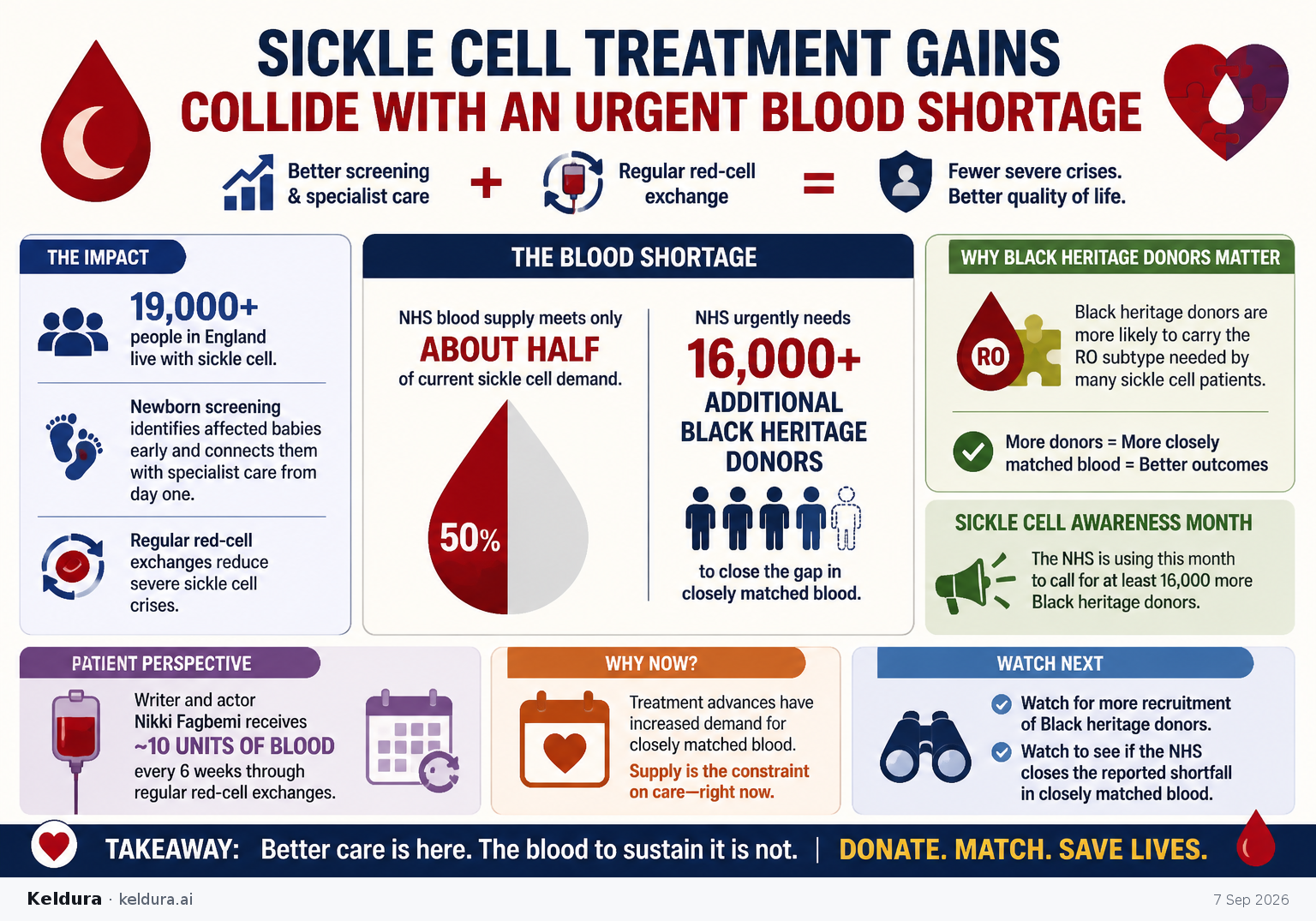
More than 19,000 people in England live with sickle cell, while newborn screening, specialist care and red-cell exchange have improved diagnosis and treatment.[1] The NHS can currently provide only about half the blood required by sickle cell patients and says it urgently needs at least 16,000 additional Black heritage donors.[1]
Why it matters: Regular red-cell exchanges can reduce severe sickle cell crises, but their availability depends on a reliable supply of closely matched blood.[1] Black heritage donors are especially important because they are more likely than white donors to carry the RO subtype needed by many patients.[1]
Key insights: Writer and actor Nikki Fagbemi receives about 10 units of blood every six weeks through regular red-cell exchanges.[1] | Newborn screening can identify affected babies before they become seriously ill and connect them with specialist care from the beginning of life.[1] | Treatment advances have increased demand for closely matched donated blood, turning supply into a constraint on care.[1]
Cheatsheet facts: What changed: Improved screening and red-cell exchange are transforming care, but the NHS reports that blood supply meets only about half of current sickle cell demand.[1] | Why now: The NHS is using Sickle Cell Awareness Month to seek at least 16,000 more Black heritage donors.[1] | Watch next: Watch recruitment of Black heritage donors and whether the NHS closes the reported shortfall in closely matched blood.[1]