Blood-brain barrier may give the brain early warning of viral infection
Rockefeller University researchers found in mice that peripheral signs of viral infection activated antiviral genes in the brain within hours, before the virus itself was detected there.[2] The study, published in Immunity, indicates that type I interferons alert blood-brain barrier endothelial cel…
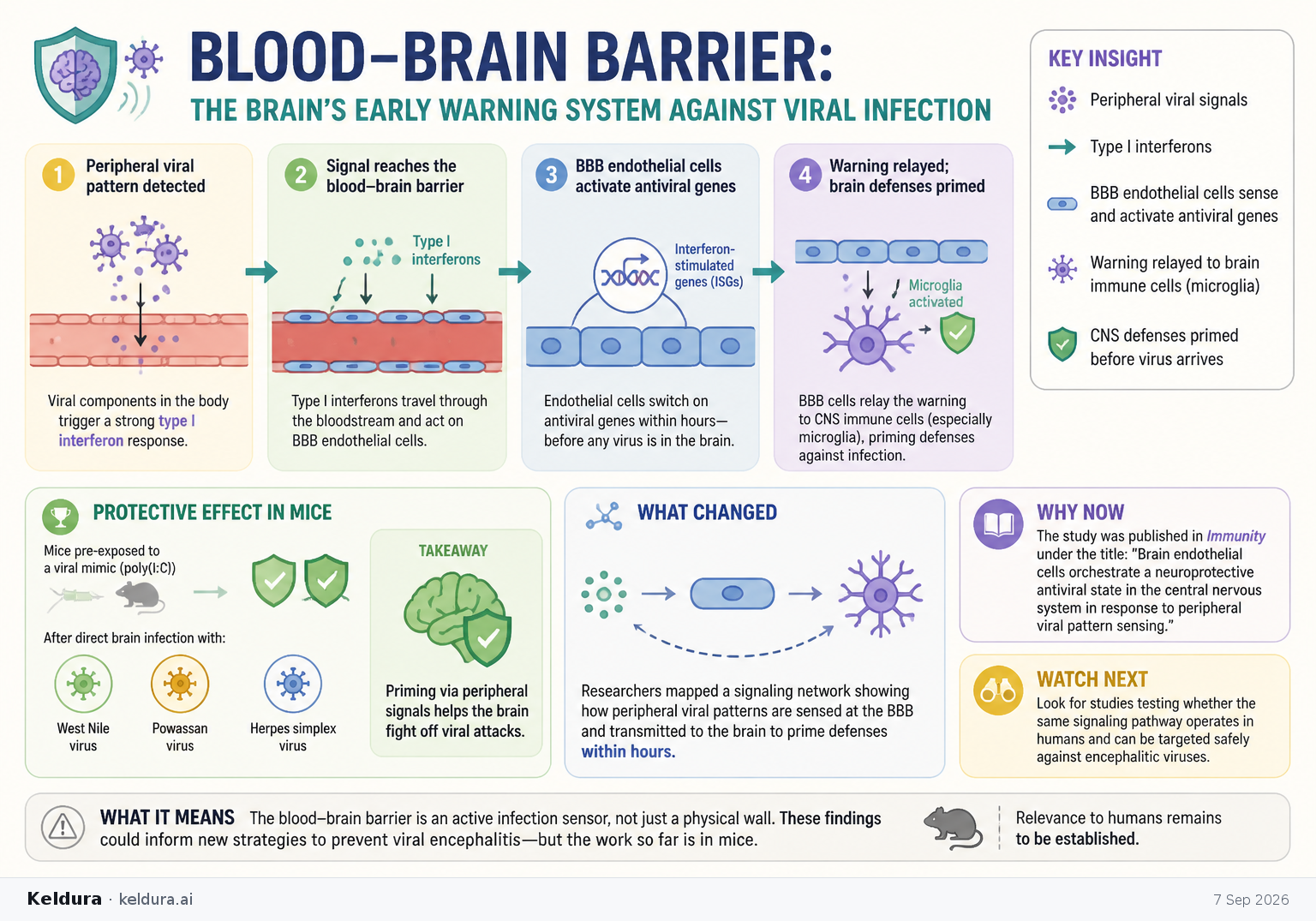
Rockefeller University researchers found in mice that peripheral signs of viral infection activated antiviral genes in the brain within hours, before the virus itself was detected there.[2] The study, published in Immunity, indicates that type I interferons alert blood-brain barrier endothelial cells, which then help prepare central nervous system immune defenses.[2]
Why it matters: The findings identify the blood-brain barrier as an active infection sensor rather than merely a physical barrier and may inform approaches to preventing viral encephalitis.[2] Because the evidence comes from mouse models, its relevance to human prevention or treatment remains to be established.[2]
Key insights: A viral mimic called poly(I:C) triggered a strong systemic type I interferon response and activated interferon-stimulated genes in brain microvascular endothelial cells.[2] | Mice pre-exposed to poly(I:C) showed improved survival after direct brain infection with West Nile virus and also benefited in tests involving Powassan and herpes simplex viruses.[2] | Bioinformatic analysis suggested that blood-brain barrier cells relay the warning to central nervous system immune cells, especially microglia.[2]
Cheatsheet facts: What changed: Researchers mapped a signaling network through which peripheral viral patterns can prime mouse brain defenses within hours.[2] | Why now: The work was published in Immunity under the title “Brain endothelial cells orchestrate a neuroprotective antiviral state in the central nervous system in response to peripheral viral pattern sensing.”[2] | Watch next: Watch for studies testing whether the same signaling pathway operates in humans and can be targeted safely against encephalitic viruses.[2]
Rockefeller University researchers found in mice that peripheral signs of viral infection activated antiviral genes in the brain within hours, before the virus itself was detected there.[2] The study, published in Immunity, indicates that type I interferons alert blood-brain barrier endothelial cells, which then help prepare central nervous system immune defenses.[2]
Why it matters: The findings identify the blood-brain barrier as an active infection sensor rather than merely a physical barrier and may inform approaches to preventing viral encephalitis.[2] Because the evidence comes from mouse models, its relevance to human prevention or treatment remains to be established.[2]
Key insights: A viral mimic called poly(I:C) triggered a strong systemic type I interferon response and activated interferon-stimulated genes in brain microvascular endothelial cells.[2] | Mice pre-exposed to poly(I:C) showed improved survival after direct brain infection with West Nile virus and also benefited in tests involving Powassan and herpes simplex viruses.[2] | Bioinformatic analysis suggested that blood-brain barrier cells relay the warning to central nervous system immune cells, especially microglia.[2]
Cheatsheet facts: What changed: Researchers mapped a signaling network through which peripheral viral patterns can prime mouse brain defenses within hours.[2] | Why now: The work was published in Immunity under the title “Brain endothelial cells orchestrate a neuroprotective antiviral state in the central nervous system in response to peripheral viral pattern sensing.”[2] | Watch next: Watch for studies testing whether the same signaling pathway operates in humans and can be targeted safely against encephalitic viruses.[2]