Suspected Somali pirates seize tanker in Gulf of Aden, reviving a dormant threat
A tanker was hijacked in the Gulf of Aden off Yemen, with UK maritime officials warning other ships to transit with caution and Somali security officials identifying the attackers as Somali [5]. It is the second seizure of a vessel off Yemen in three months, after several unsuccessful attacks and y…
A tanker was hijacked in the Gulf of Aden off Yemen, with UK maritime officials warning other ships to transit with caution and Somali security officials identifying the attackers as Somali [5]. It is the second seizure of a vessel off Yemen in three months, after several unsuccessful attacks and years in which piracy had largely faded from the region [5].
Why it matters: The incident shows maritime insecurity is re-emerging along a key global shipping route, which can raise insurance costs, disrupt trade, and force navies and shipping firms to reassess risk [5]. It also matters because the Gulf of Aden is described as more lightly protected than the Indian Ocean, suggesting a possible shift in pirate operating patterns [5].
Key insights: This was not an isolated event: the evidence describes a second hijacking since May and two additional boardings in April [5]. | The attack reportedly involved seven gunmen launching from a remote area near Garacad before heading into the Gulf of Aden [5]. | Officials say the tanker, MT Asana, was sailing under a Tanzanian flag and headed to Bosaso when it was boarded 65 nautical miles off Yemen [5]. | The revival of piracy is tied to uneven maritime security coverage, with the Gulf of Aden less heavily patrolled than the Indian Ocean [5].
Cheatsheet facts: What changed: Suspected Somali pirates hijacked another tanker in the Gulf of Aden [5]. | Why now: The region has seen multiple recent attacks, suggesting piracy is making a comeback after years of decline [5]. | Watch next: Monitor whether the vessel is released, whether more boardings are reported, and whether naval patrols or advisories are stepped up in the Gulf of Aden [5].
A tanker was hijacked in the Gulf of Aden off Yemen, with UK maritime officials warning other ships to transit with caution and Somali security officials identifying the attackers as Somali [5]. It is the second seizure of a vessel off Yemen in three months, after several unsuccessful attacks and years in which piracy had largely faded from the region [5].
Why it matters: The incident shows maritime insecurity is re-emerging along a key global shipping route, which can raise insurance costs, disrupt trade, and force navies and shipping firms to reassess risk [5]. It also matters because the Gulf of Aden is described as more lightly protected than the Indian Ocean, suggesting a possible shift in pirate operating patterns [5].
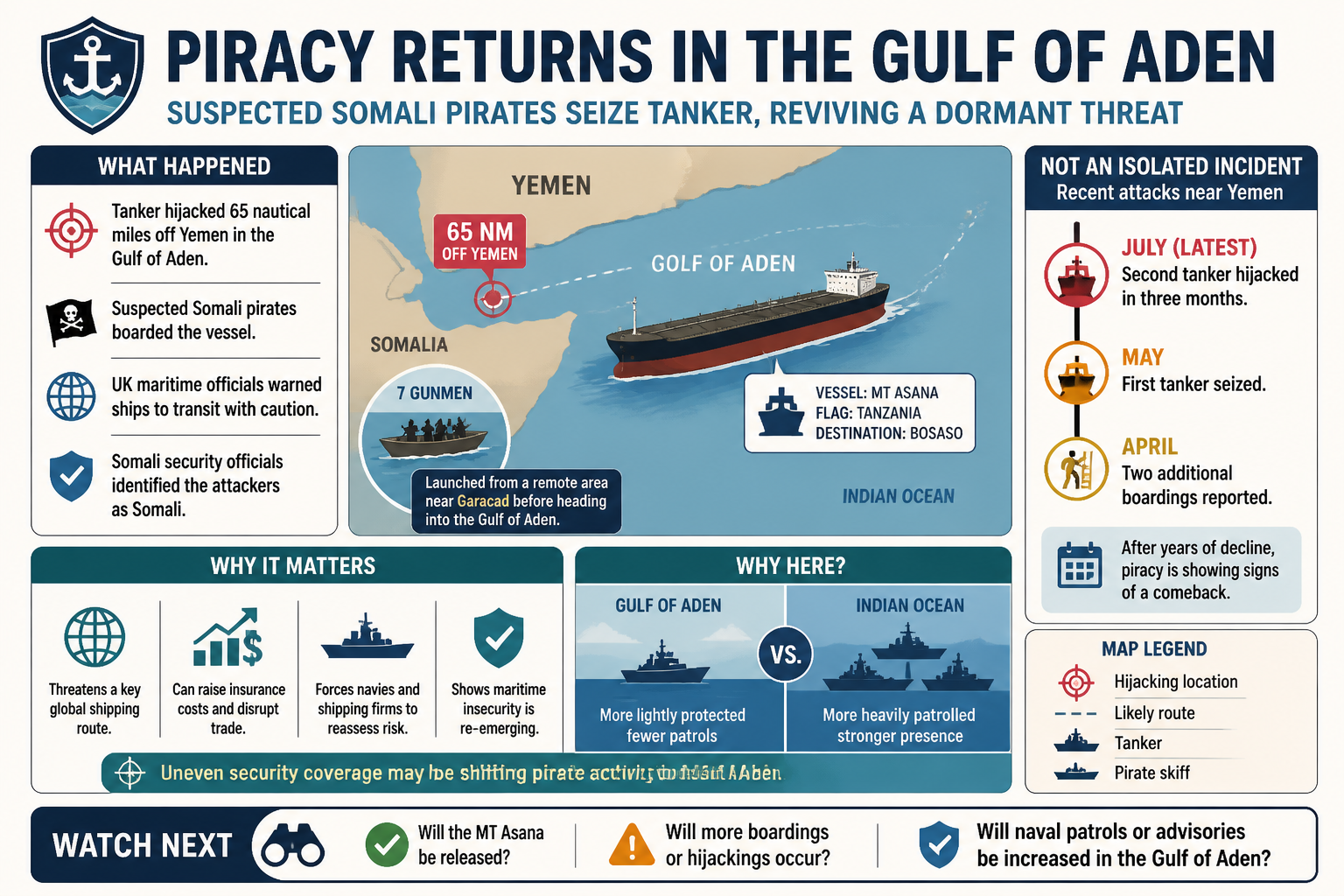
Key insights: This was not an isolated event: the evidence describes a second hijacking since May and two additional boardings in April [5]. | The attack reportedly involved seven gunmen launching from a remote area near Garacad before heading into the Gulf of Aden [5]. | Officials say the tanker, MT Asana, was sailing under a Tanzanian flag and headed to Bosaso when it was boarded 65 nautical miles off Yemen [5]. | The revival of piracy is tied to uneven maritime security coverage, with the Gulf of Aden less heavily patrolled than the Indian Ocean [5].
Cheatsheet facts: What changed: Suspected Somali pirates hijacked another tanker in the Gulf of Aden [5]. | Why now: The region has seen multiple recent attacks, suggesting piracy is making a comeback after years of decline [5]. | Watch next: Monitor whether the vessel is released, whether more boardings are reported, and whether naval patrols or advisories are stepped up in the Gulf of Aden [5].