Countries prepare for a potentially record-strength El Niño
The World Meteorological Organization says the emerging El Niño could be the strongest in more than 70 years and last until at least February 2027. [3] Forecasts suggest monthly sea-surface temperatures in the central and eastern tropical Pacific could approach 4 C above average, shifting rainfall…
The World Meteorological Organization says the emerging El Niño could be the strongest in more than 70 years and last until at least February 2027. [3] Forecasts suggest monthly sea-surface temperatures in the central and eastern tropical Pacific could approach 4 C above average, shifting rainfall patterns and amplifying drought, wildfire, typhoon and flood risks around the world. [3]
Why it matters: El Niño’s natural redistribution of ocean heat is occurring on top of long-term human-caused warming, potentially intensifying impacts on vulnerable communities, economies and ecosystems across multiple regions. [3]
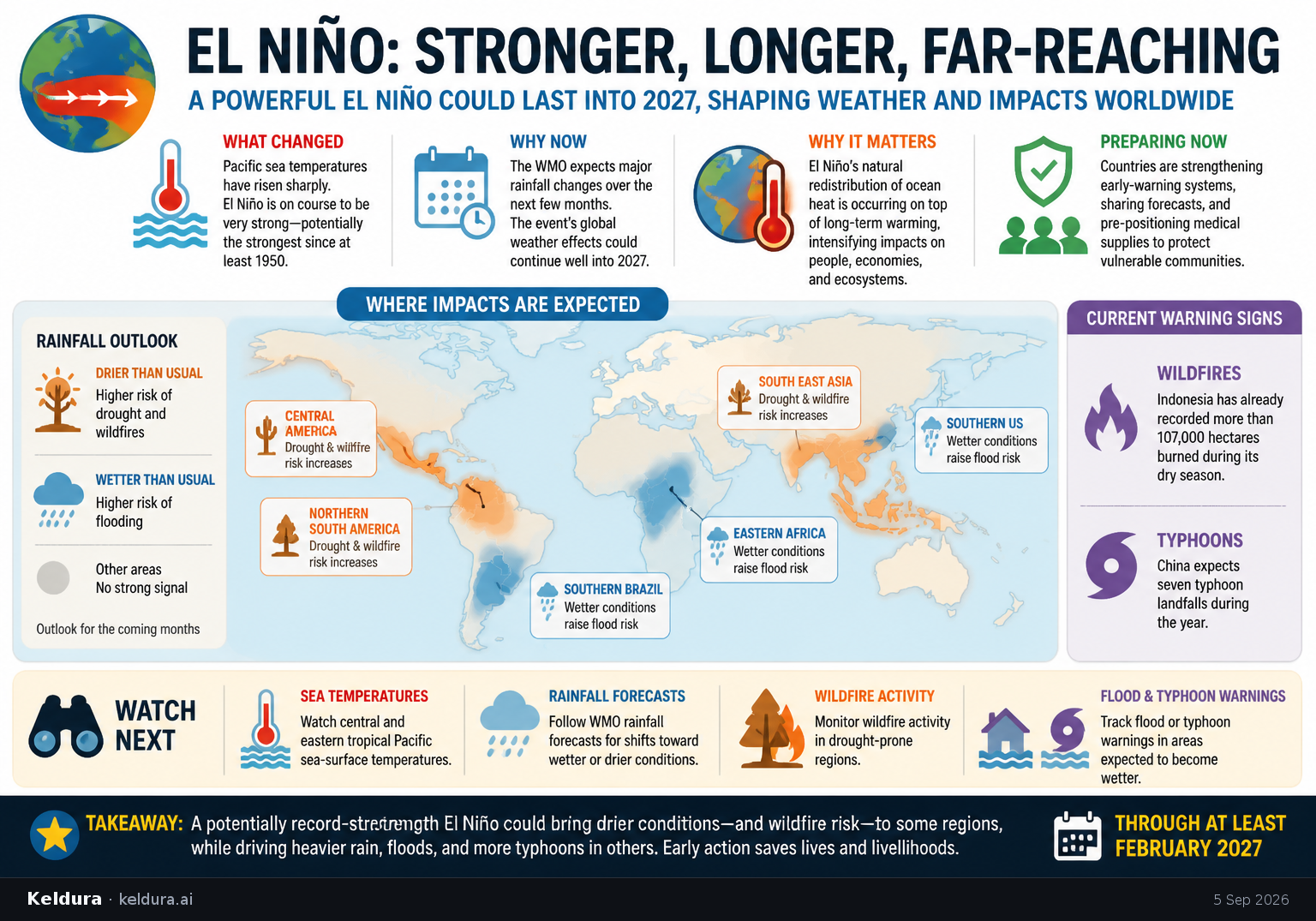
Key insights: Drier-than-usual conditions are forecast across large areas of South East Asia, Central America and northern South America, increasing drought and wildfire risks. [3] | Wetter-than-average conditions are expected in parts of eastern Africa, southern Brazil and the southern US, raising the likelihood of flooding. [3] | Indonesia has already recorded more than 107,000 hectares burned during its dry season, while China expects seven typhoon landfalls during the year. [3] | The WMO has launched a major effort to distribute extreme-weather forecasts, while governments and aid organizations are strengthening early-warning systems and pre-positioning medical assistance. [3]
Cheatsheet facts: What changed: Pacific sea temperatures have risen sharply, putting El Niño on course to become a very strong event and potentially the strongest since at least 1950. [3] | Why now: The WMO expects major rainfall changes over the next few months and says the event’s global weather effects could continue well into 2027. [3] | Watch next: Watch central and eastern tropical Pacific sea-surface temperatures, WMO rainfall forecasts, wildfire activity in drought-prone regions, and flood or typhoon warnings in areas expected to become wetter. [3]
The World Meteorological Organization says the emerging El Niño could be the strongest in more than 70 years and last until at least February 2027. [3] Forecasts suggest monthly sea-surface temperatures in the central and eastern tropical Pacific could approach 4 C above average, shifting rainfall patterns and amplifying drought, wildfire, typhoon and flood risks around the world. [3]
Why it matters: El Niño’s natural redistribution of ocean heat is occurring on top of long-term human-caused warming, potentially intensifying impacts on vulnerable communities, economies and ecosystems across multiple regions. [3]
Key insights: Drier-than-usual conditions are forecast across large areas of South East Asia, Central America and northern South America, increasing drought and wildfire risks. [3] | Wetter-than-average conditions are expected in parts of eastern Africa, southern Brazil and the southern US, raising the likelihood of flooding. [3] | Indonesia has already recorded more than 107,000 hectares burned during its dry season, while China expects seven typhoon landfalls during the year. [3] | The WMO has launched a major effort to distribute extreme-weather forecasts, while governments and aid organizations are strengthening early-warning systems and pre-positioning medical assistance. [3]
Cheatsheet facts: What changed: Pacific sea temperatures have risen sharply, putting El Niño on course to become a very strong event and potentially the strongest since at least 1950. [3] | Why now: The WMO expects major rainfall changes over the next few months and says the event’s global weather effects could continue well into 2027. [3] | Watch next: Watch central and eastern tropical Pacific sea-surface temperatures, WMO rainfall forecasts, wildfire activity in drought-prone regions, and flood or typhoon warnings in areas expected to become wetter. [3]