Climate extremes are reversing air-quality gains
A new WMO report finds that worsening wildfires and heatwaves are hindering improvements in air quality around the world.[2] Even regions that reduced pollution from vehicles and industry are increasingly exposed to wildfire smoke, while intense heat is driving higher concentrations of ground-level…
A new WMO report finds that worsening wildfires and heatwaves are hindering improvements in air quality around the world.[2] Even regions that reduced pollution from vehicles and industry are increasingly exposed to wildfire smoke, while intense heat is driving higher concentrations of ground-level ozone.[2]
Why it matters: The findings show that emissions controls on transport and industry may not deliver cleaner air on their own when climate-linked heat and fire introduce new sources of dangerous pollution.[2]
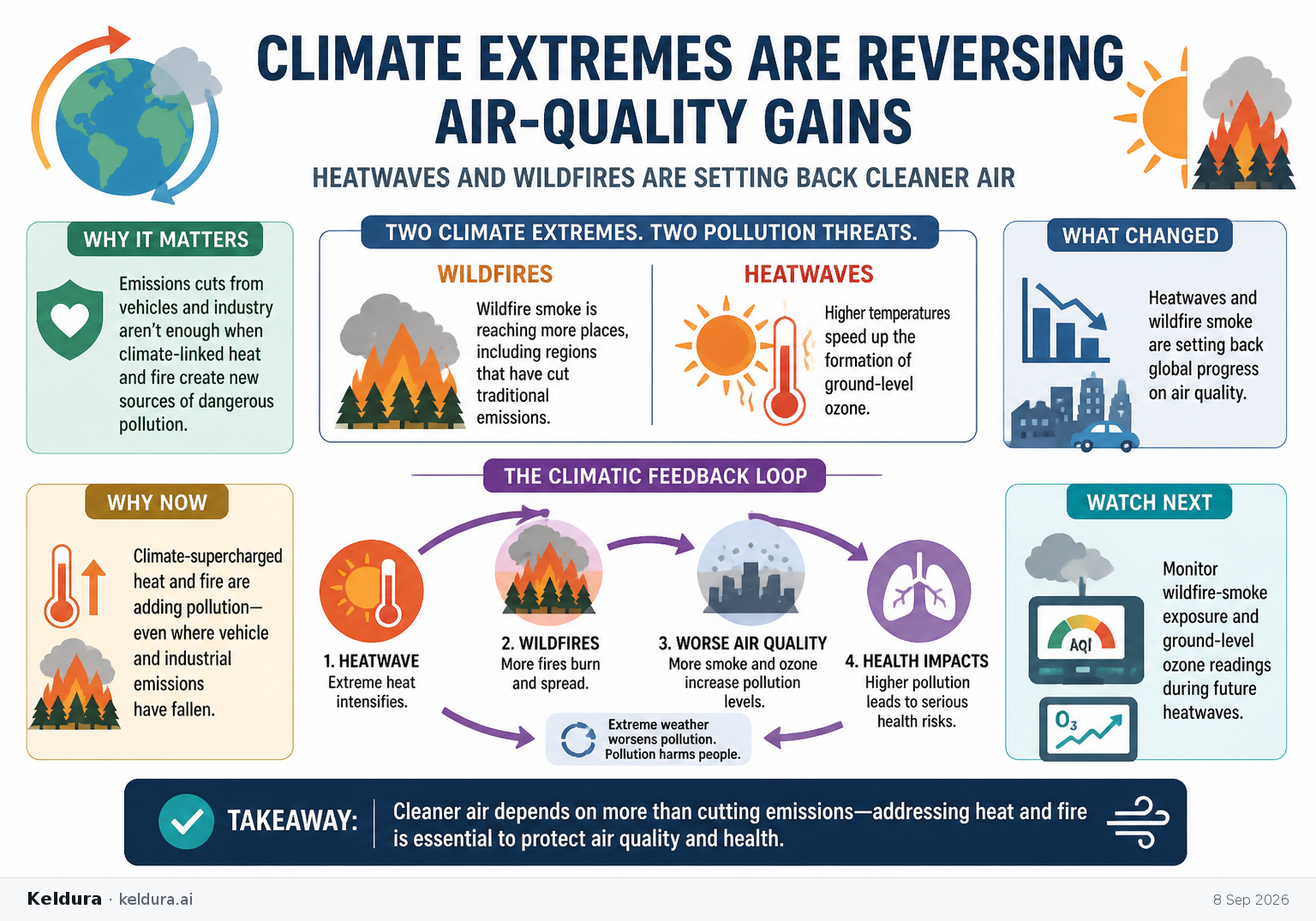
Key insights: Wildfire smoke is emerging as a major threat in regions that had previously reduced conventional pollution emissions.[2] | Higher temperatures during heatwaves accelerate the formation of ground-level ozone.[2] | The report describes a climatic feedback loop in which extreme weather worsens pollution, with serious consequences for human health.[2]
Cheatsheet facts: What changed: The WMO says heatwaves and wildfire smoke are setting back global progress on air quality.[2] | Why now: Climate-supercharged heat and fire are adding pollution even where vehicle and industrial emissions have fallen.[2] | Watch next: Monitor wildfire-smoke exposure and ground-level ozone readings during future heatwaves.[2]
A new WMO report finds that worsening wildfires and heatwaves are hindering improvements in air quality around the world.[2] Even regions that reduced pollution from vehicles and industry are increasingly exposed to wildfire smoke, while intense heat is driving higher concentrations of ground-level ozone.[2]
Why it matters: The findings show that emissions controls on transport and industry may not deliver cleaner air on their own when climate-linked heat and fire introduce new sources of dangerous pollution.[2]
Key insights: Wildfire smoke is emerging as a major threat in regions that had previously reduced conventional pollution emissions.[2] | Higher temperatures during heatwaves accelerate the formation of ground-level ozone.[2] | The report describes a climatic feedback loop in which extreme weather worsens pollution, with serious consequences for human health.[2]
Cheatsheet facts: What changed: The WMO says heatwaves and wildfire smoke are setting back global progress on air quality.[2] | Why now: Climate-supercharged heat and fire are adding pollution even where vehicle and industrial emissions have fallen.[2] | Watch next: Monitor wildfire-smoke exposure and ground-level ozone readings during future heatwaves.[2]