Nepal’s flood appeal exposes the loss and damage funding gap
Nepal has requested immediate support from the UN climate loss and damage fund after catastrophic floods killed 1,250 people and left an estimated recovery bill of at least US$5 billion.[4] The fund, fully established in 2024, has received more than US$822 million in pledges but only about US$485 m…
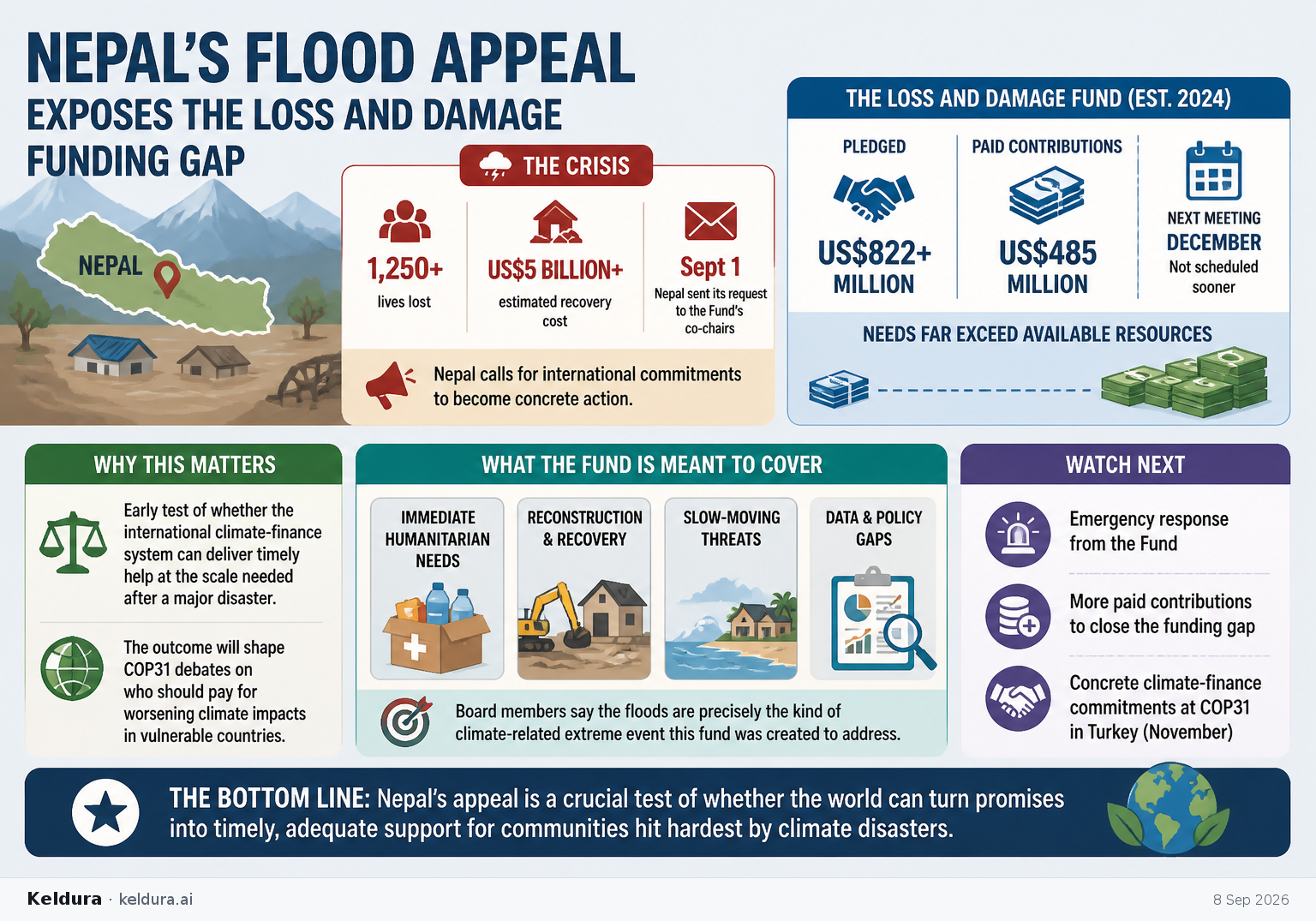
Nepal has requested immediate support from the UN climate loss and damage fund after catastrophic floods killed 1,250 people and left an estimated recovery bill of at least US$5 billion.[4] The fund, fully established in 2024, has received more than US$822 million in pledges but only about US$485 million in paid contributions, and its next scheduled meeting is not until December.[4]
Why it matters: Nepal’s needs dwarf the fund’s available resources, making the request an early test of whether the international climate-finance system can deliver timely assistance at the scale required after a major disaster.[4] The outcome also bears directly on the COP31 debate over who should pay for worsening climate impacts in vulnerable countries.[4]
Key insights: Nepal sent its request to the fund’s co-chairs on Sept 1, calling for international commitments to become concrete action.[4] | Fund board members said the floods are precisely the type of climate-related extreme event the mechanism was created to address.[4] | The fund must cover immediate humanitarian and reconstruction needs as well as slow-moving threats such as sea-level rise and gaps in climate data and policy.[4] | Improving vulnerable countries’ access to climate finance is a key agenda item for COP31 in Turkey in November.[4]
Cheatsheet facts: What changed: Nepal formally sought urgent loss and damage support for a flood recovery effort expected to cost at least US$5 billion.[4] | Why now: The new fund is under-resourced and is not scheduled to meet again until December despite Nepal’s immediate reconstruction needs.[4] | Watch next: Watch for an emergency fund response, additional paid contributions and concrete climate-finance commitments at COP31.[4]
Nepal has requested immediate support from the UN climate loss and damage fund after catastrophic floods killed 1,250 people and left an estimated recovery bill of at least US$5 billion.[4] The fund, fully established in 2024, has received more than US$822 million in pledges but only about US$485 million in paid contributions, and its next scheduled meeting is not until December.[4]
Why it matters: Nepal’s needs dwarf the fund’s available resources, making the request an early test of whether the international climate-finance system can deliver timely assistance at the scale required after a major disaster.[4] The outcome also bears directly on the COP31 debate over who should pay for worsening climate impacts in vulnerable countries.[4]
Key insights: Nepal sent its request to the fund’s co-chairs on Sept 1, calling for international commitments to become concrete action.[4] | Fund board members said the floods are precisely the type of climate-related extreme event the mechanism was created to address.[4] | The fund must cover immediate humanitarian and reconstruction needs as well as slow-moving threats such as sea-level rise and gaps in climate data and policy.[4] | Improving vulnerable countries’ access to climate finance is a key agenda item for COP31 in Turkey in November.[4]
Cheatsheet facts: What changed: Nepal formally sought urgent loss and damage support for a flood recovery effort expected to cost at least US$5 billion.[4] | Why now: The new fund is under-resourced and is not scheduled to meet again until December despite Nepal’s immediate reconstruction needs.[4] | Watch next: Watch for an emergency fund response, additional paid contributions and concrete climate-finance commitments at COP31.[4]