Can a wildfire lawsuit turn recurring haze into government accountability?
Indonesian civil society groups have sued the government as wildfires and toxic haze persist into October.
Indigenous and civil society groups in West Kalimantan have filed a class action lawsuit alleging government negligence in managing recurring wildfires; President Prabowo Subianto and the provincial governor are among 10 defendants. [2][4] Indonesia's Health Ministry has recorded at least 175,000 r…
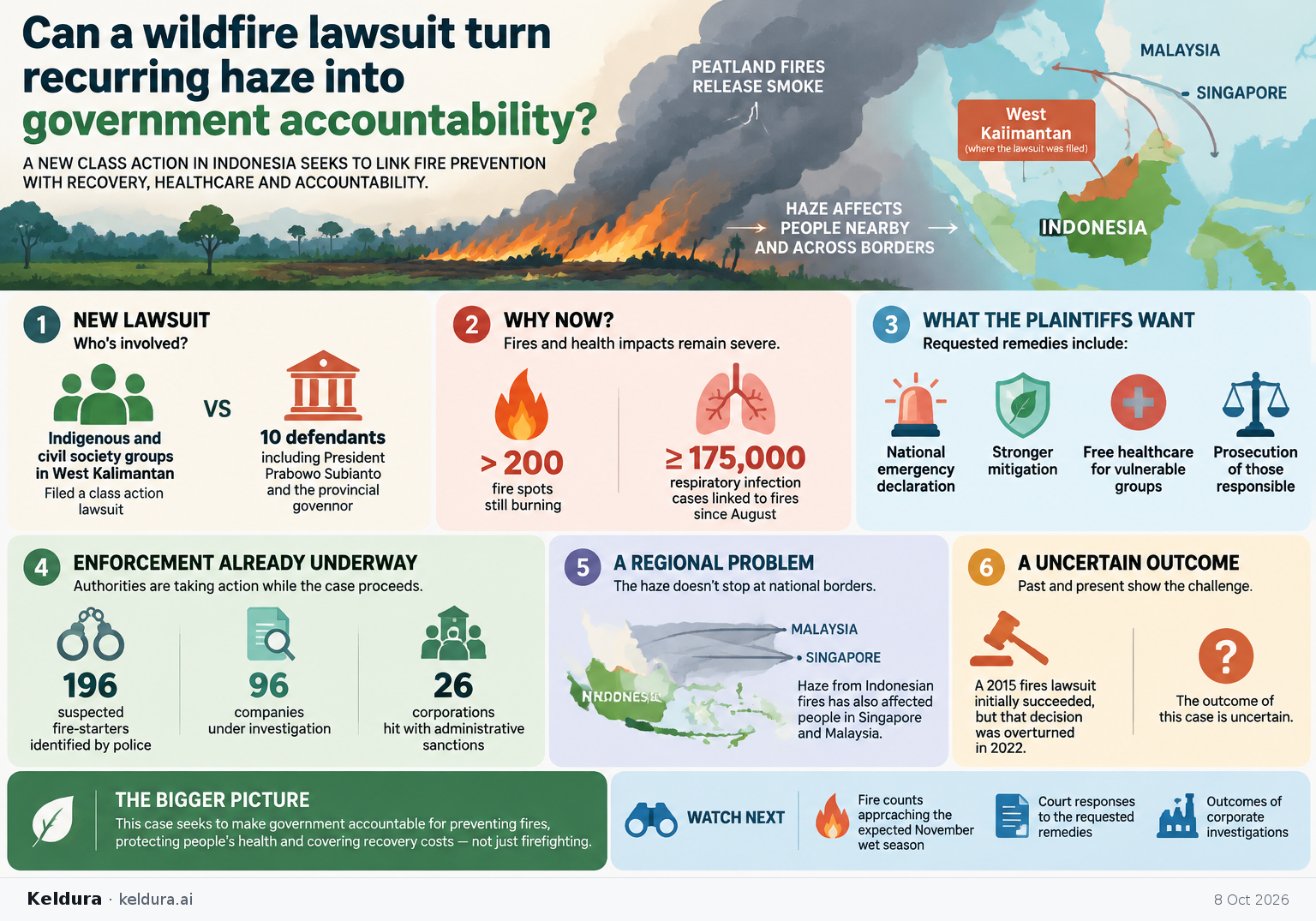
Indigenous and civil society groups in West Kalimantan have filed a class action lawsuit alleging government negligence in managing recurring wildfires; President Prabowo Subianto and the provincial governor are among 10 defendants. [2][4] Indonesia's Health Ministry has recorded at least 175,000 respiratory infection cases linked to fires since August, while official data show more than 200 fire spots still burning. [2] The government says it respects the legal action and remains focused on protecting communities and containing fires. [2]
Why it matters: The case seeks to connect fire prevention with recovery obligations, including healthcare costs, rather than treating firefighting as the entire response. Its outcome is uncertain: an earlier lawsuit over the 2015 fires initially succeeded, but that decision was overturned in 2022. [2][4]
Key insights: The plaintiffs argue that almost annual peatland fires and haze should have been anticipated; negligence is their allegation, not an established court finding. [2] | Their requested remedies include a national emergency declaration, stronger mitigation, free healthcare for vulnerable groups and prosecution of those responsible. [2] | Enforcement is already underway: police reported identifying 196 suspected fire-starters and investigating 96 companies, while the government reported administrative sanctions against 26 corporations. [2] | The exposure extends beyond Indonesia: people in Singapore and Malaysia have also faced haze from fires that began in July, and the wet season is not expected in most Indonesian regions until November. [2]
Cheatsheet facts: What changed: A new class action challenges government handling of recurring fires and seeks recovery and healthcare measures. [2][4] | Why now: Fires remain active, with at least 175,000 linked respiratory infections recorded since August and more than 200 fire spots still burning. [2] | Watch next: Track active fire counts approaching the expected November wet season, court responses to the requested remedies and outcomes of corporate investigations. [2]