How drought and damaged peatlands are feeding Southeast Asia’s haze
Singapore’s 24-hour Pollutant Standards Index reached 102 in the central region as smoke from fires in southern Sumatra and Kalimantan.
Singapore’s 24-hour Pollutant Standards Index reached 102 in the central region as smoke from fires in southern Sumatra and Kalimantan drifted across the region.[3] In Indonesian Borneo, three months without rain combined with degraded and drained peatlands to intensify water shortages and fires wh…
Singapore’s 24-hour Pollutant Standards Index reached 102 in the central region as smoke from fires in southern Sumatra and Kalimantan drifted across the region.[3] In Indonesian Borneo, three months without rain combined with degraded and drained peatlands to intensify water shortages and fires whose smoke reached neighboring countries.[5]
Why it matters: Drained peat is highly flammable, can burn underground and is difficult to extinguish, allowing local land degradation to become a prolonged regional air-pollution problem.[5] Strong El Niño conditions may also delay the end of the southern Asean dry season until late October or early November, extending the period in which fires and haze can persist.[3]
Key insights: Peatlands store carbon, regulate water and control pollution, so their degradation compounds drought, fire and water-supply risks at the same time.[5] | The haze is transboundary: smoke reached the Philippines, breached an emergency-level pollution threshold in Malaysia and pushed part of Singapore into the unhealthy PSI range.[3][5] | Low water on the Kapuas has disrupted fishing and river travel, while smoke has reduced visibility for boat operators.[5] | Indonesia says its fire policy is shifting toward prevention through patrols, early detection, enforcement against burning-based land clearing and peatland restoration.[5]
Cheatsheet facts: What changed: Central Singapore’s 24-hour PSI reached 102, while Borneo communities experienced water shortages and peatland fires after three months without rain.[3][5] | Why now: El Niño-driven dryness is interacting with drained, degraded peat that ignites easily and can keep burning underground.[3][5] | Watch next: Monitor regional fire hotspots, Singapore’s 24-hour PSI and the timing of the seasonal transition expected in late October or early November.[3]
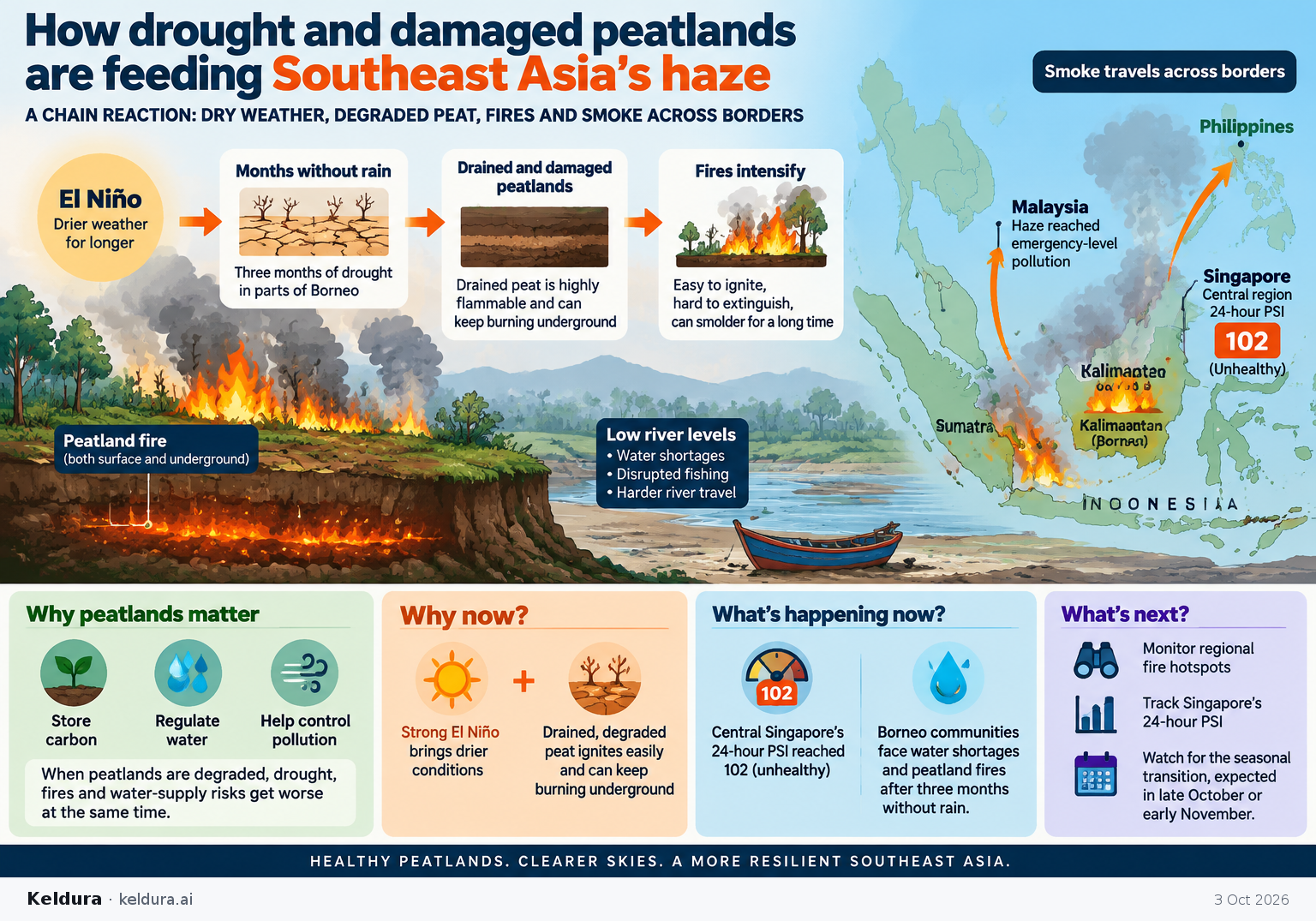
Singapore’s 24-hour Pollutant Standards Index reached 102 in the central region as smoke from fires in southern Sumatra and Kalimantan drifted across the region.[3] In Indonesian Borneo, three months without rain combined with degraded and drained peatlands to intensify water shortages and fires whose smoke reached neighboring countries.[5]
Why it matters: Drained peat is highly flammable, can burn underground and is difficult to extinguish, allowing local land degradation to become a prolonged regional air-pollution problem.[5] Strong El Niño conditions may also delay the end of the southern Asean dry season until late October or early November, extending the period in which fires and haze can persist.[3]
Key insights: Peatlands store carbon, regulate water and control pollution, so their degradation compounds drought, fire and water-supply risks at the same time.[5] | The haze is transboundary: smoke reached the Philippines, breached an emergency-level pollution threshold in Malaysia and pushed part of Singapore into the unhealthy PSI range.[3][5] | Low water on the Kapuas has disrupted fishing and river travel, while smoke has reduced visibility for boat operators.[5] | Indonesia says its fire policy is shifting toward prevention through patrols, early detection, enforcement against burning-based land clearing and peatland restoration.[5]
Cheatsheet facts: What changed: Central Singapore’s 24-hour PSI reached 102, while Borneo communities experienced water shortages and peatland fires after three months without rain.[3][5] | Why now: El Niño-driven dryness is interacting with drained, degraded peat that ignites easily and can keep burning underground.[3][5] | Watch next: Monitor regional fire hotspots, Singapore’s 24-hour PSI and the timing of the seasonal transition expected in late October or early November.[3]
X copy pack
[3] Smoke from Indonesia pushes Singapore air quality back into unhealthy territory | Malay Mail — malaymail.com[5] Indonesian villagers on Borneo struggle for water as El Niño intensifies peatland fires | Environment News | thecanadianpressnews.ca — thecanadianpressnews.caRead in BriefingsPost to X