COP31 draft puts fossil-fuel phaseout into contested negotiations
Nearly 200 countries have a draft climate deal, but will its fossil-fuel commitments survive negotiations?
On November 16, Chris Bowen released an 18-page COP31 draft in Antalya covering fossil fuels and climate finance ahead of a November 20 deal deadline.
COP31 negotiators released a draft agreement containing competing language on “transitioning away” from fossil fuels and their “phaseout”; either could disappear from the final agreement. Negotiations leader Chris Bowen said some countries had already rejected clauses in the text, which draws on su…
Open original (2 sources):
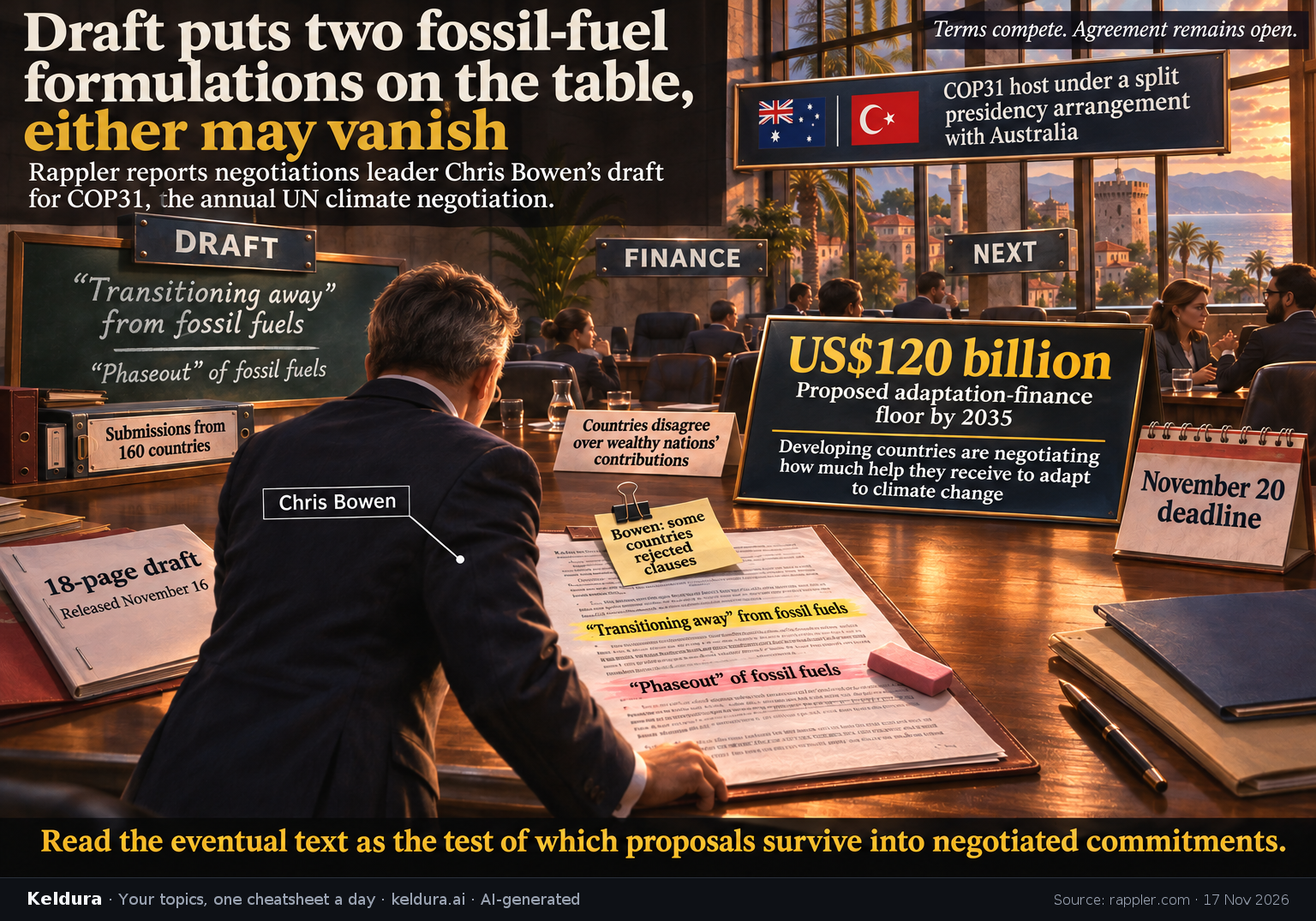
COP31 negotiators released a draft agreement containing competing language on “transitioning away” from fossil fuels and their “phaseout”; either could disappear from the final agreement. Negotiations leader Chris Bowen said some countries had already rejected clauses in the text, which draws on submissions from 160 countries. [2][4] The draft also addresses adaptation funding and a proposal to make electricity 35% of global energy consumption by 2035. [2][4]
Why it matters: Developing countries are negotiating how much help they receive to adapt to climate change: the draft proposes tripling adaptation finance to at least US$120 billion by 2035. That funding proposal, like the fossil-fuel language, remains subject to agreement rather than being money already delivered. [2][4]
Key insights: The fossil-fuel dispute is not simply over stronger or weaker wording: both the transition and phaseout clauses could be omitted altogether. [2] | Turkey's proposed 35% electricity share by 2035 concerns total energy consumption, not the percentage of electricity generated from renewables. [2] | The November 20 deadline is an observable checkpoint, but previous UN climate conferences have continued beyond their scheduled finish. [2]
Cheatsheet facts: What happened: Bowen released an 18-page draft on November 16 to narrow disagreements among almost 200 countries. [2][4] | Background: COP31 is the annual UN climate negotiation, held this year in Antalya; countries are seeking consensus on fossil fuels, climate finance and responses to warming. [2] | Who pays: The draft calls for adaptation finance to triple to at least US$120 billion by 2035, while countries disagree over wealthy nations' contributions. [2][4] | The catch: Some countries have already rejected draft clauses, and neither fossil-fuel formulation is guaranteed a place in the final deal. [2] | What's next: Watch the text agreed by the November 20 deadline—or any extension—for surviving fossil-fuel language and adaptation-finance commitments. [2]