Fiji declares nationwide disaster as drought depletes water supplies
Fiji has sent water trucks to dry villages, but what can the government do if the rains stay away?
By November 19, Fiji had declared a national state of disaster after the government said an El Nino-driven drought had reached crisis levels.
Fiji declared a nationwide disaster as El Nino suppressed the tropical rains that normally replenish water supplies. [16] Local media reported that water sources across much of the country had dropped and that scores of trucks had been sent to resupply villages. [16]
Open original · [16] Tropical Fiji declares El Nino drought 'crisis' | AFP.com — afp.com
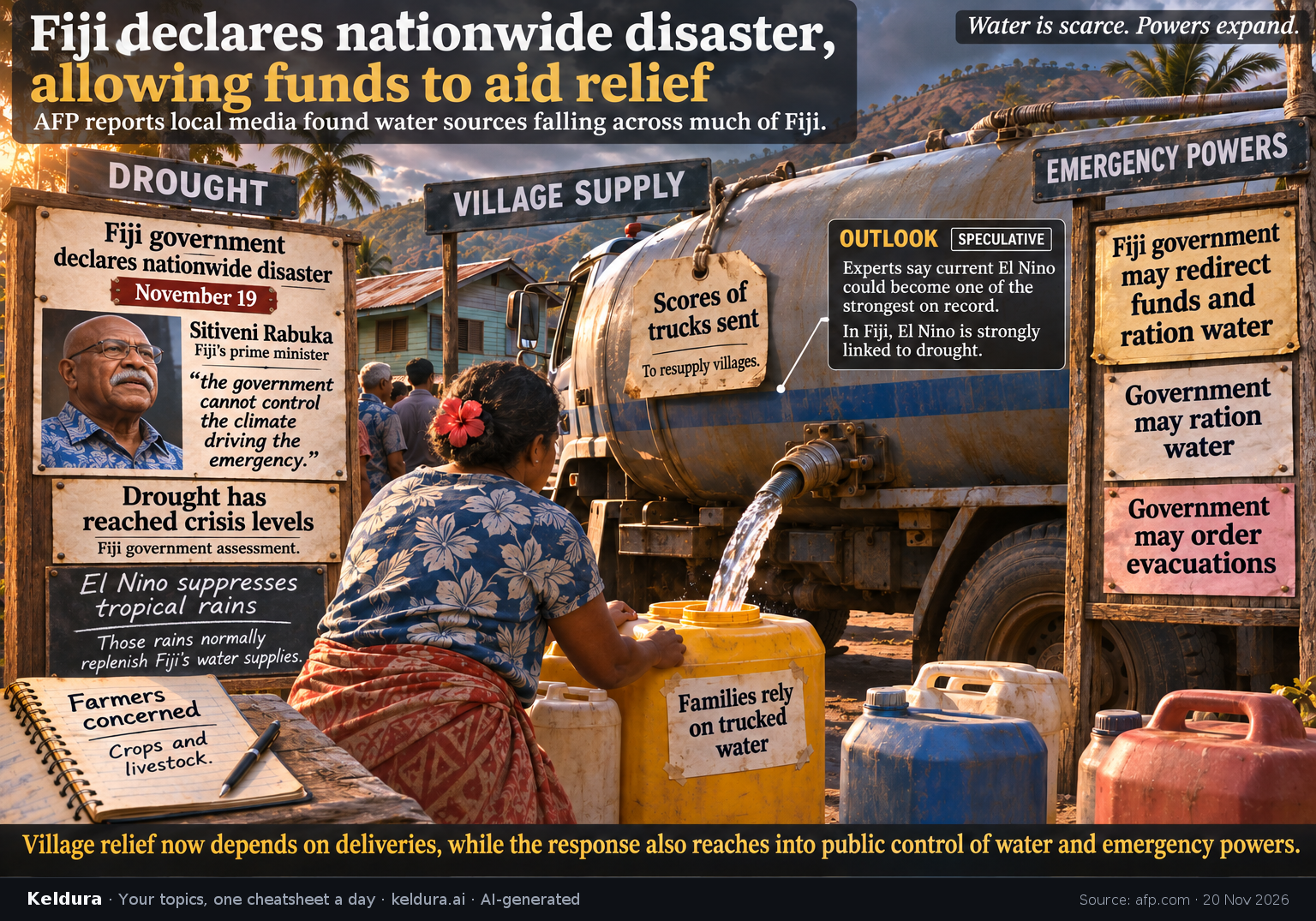
Fiji declared a nationwide disaster as El Nino suppressed the tropical rains that normally replenish water supplies. [16] Local media reported that water sources across much of the country had dropped and that scores of trucks had been sent to resupply villages. [16]
Why it matters: Families in affected villages are relying on trucked water, and farmers are concerned about crops and livestock. The declaration lets the government ration water and redirect public funds to disaster assistance. [16]
Key insights: The emergency declaration gives the government power to order evacuations as well as ration water, though the declaration itself is not an evacuation order. [16] | Experts say the current El Nino could become one of the strongest on record; in Fiji, the pattern is strongly linked to drought. [16]
Cheatsheet facts: What happened: Fiji declared a nationwide state of disaster after the government said the drought had reached crisis levels. [16] | Why: El Nino dries up the tropical rains that normally replenish Fiji’s water supplies. [16] | Who pays: The declaration lets Fiji’s government redirect public funds toward disaster assistance. [16] | The catch: Water trucks can resupply villages, but emergency powers also allow the government to ration water or order evacuations. [16]