COP31 draft drops fossil fuels and Panama threatens to object
Australia wants nearly 200 countries to agree on a climate deal, but can it get them on board without naming fossil fuels?
On November 19, Australia released a revised COP31 draft in Antalya, Turkey, that omitted fossil fuels, and Panama threatened to oppose a deal without a plan to move away from them.
Australia’s revised text was half the length of the earlier draft and dropped a proposal to accelerate the phaseout of fossil fuels, without naming coal, oil or gas. [8][13] Panama said it would not join a consensus without a clear transition plan and proposed a cap on global oil production as a fi…
Open original (7 sources):
- [8] Cop31 as it happened: Fossil fuels dumped from latest draft deal at climate summit | Cop31 | The Guardian — theguardian.com
- [13] COP31 draft climate deal removes mention of fossil fuels | AFP.com — afp.com
- [6] Tensions Flare Over Fossil Fuels at UN Climate Talks - Inside Climate News — insideclimatenews.org
- [2] Pacific islanders face a ‘sickening disconnect’ between Cop31 and the climate devastation at their doorstep | Cop31 | The Guardian — theguardian.com
- [4] UN climate talks enter crunch time with no deal in sight - CNA — channelnewsasia.com
- [5] Warming has gotten so out of hand, nations call for sucking carbon out of air somehow — apnews.com
- [7] Nations still seeking deeper fossil fuel cuts as annual UN climate change summit enters final day — apnews.com
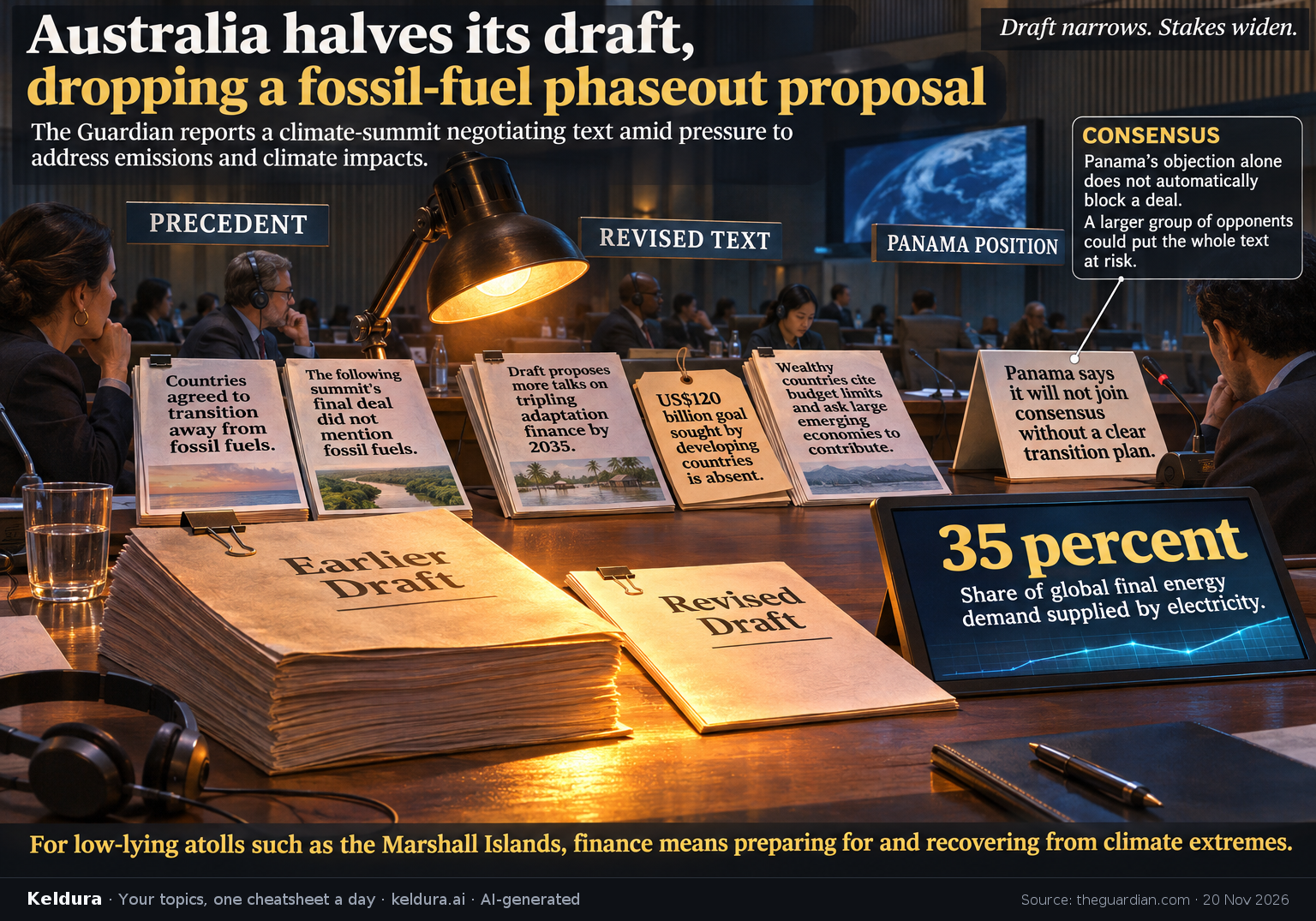
Australia’s revised text was half the length of the earlier draft and dropped a proposal to accelerate the phaseout of fossil fuels, without naming coal, oil or gas. [8][13] Panama said it would not join a consensus without a clear transition plan and proposed a cap on global oil production as a first step. [6][13]
Why it matters: For communities on low-lying atolls such as the Marshall Islands, the talks are also about paying to prepare for and recover from climate extremes. The draft proposes more talks on tripling adaptation finance by 2035 but leaves out the US$120 billion goal developing countries sought. [2][4][13]
Key insights: Panama’s objection does not automatically block a deal: the 2023 Dubai summit adopted a decision over some objections, though a larger group of opponents could put the whole text at risk. [6] | The revised text still calls for electricity to meet 35 percent of global final energy demand by 2035, a priority for host Turkey. [13] | The expected overshoot of the Paris Agreement’s 1.5°C goal is putting carbon removal on the agenda alongside emissions cuts; AP reported that removal could cost tens of trillions of dollars and rely on technology that is still unproven. [5][7][13]
Cheatsheet facts: Background: At the Dubai climate summit in 2023, countries agreed to transition away from fossil fuels; the following summit in Brazil ended without mentioning them in its final deal. [6][13] | What happened: Australia cut the draft roughly in half and removed explicit references to coal, oil and gas. [8][13] | Who pays: The draft leaves out the US$120 billion adaptation finance goal sought by developing countries; wealthy countries cite budget constraints and say large emerging economies should also contribute. [4][13] | The catch: Panama wants a global oil production cap, but its leverage depends in part on whether other countries join its objection. [6][13] | What's next: The summit was scheduled to close November 20, with talks expected to run longer; the test is whether the final text restores fossil-fuel language. [2][6][13]