Strong US Hiring Revives Federal Reserve Hike Bets
US nonfarm payrolls increased by 162,000 in August, exceeding the 56,000 consensus estimate, while unemployment remained at 4.1%.[2][8] The US Dollar Index traded around 99.20, Treasury yields rose and traders assigned an approximately 58.3% probability to a Federal Reserve rate increase during the…
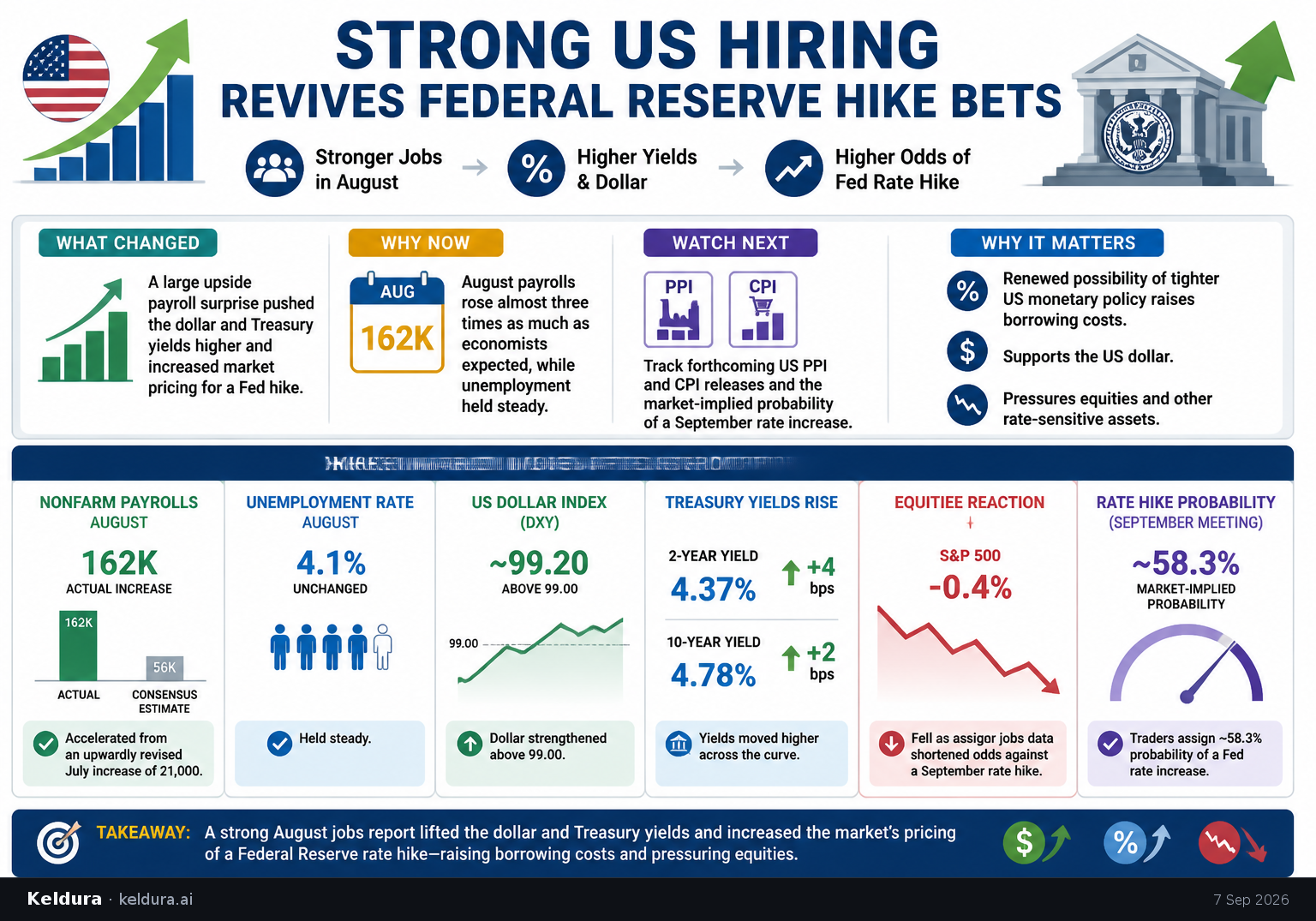
US nonfarm payrolls increased by 162,000 in August, exceeding the 56,000 consensus estimate, while unemployment remained at 4.1%.[2][8] The US Dollar Index traded around 99.20, Treasury yields rose and traders assigned an approximately 58.3% probability to a Federal Reserve rate increase during the month.[2][8]
Why it matters: A renewed possibility of tighter US monetary policy raises borrowing costs and supports the dollar, while putting pressure on equities and other rate-sensitive assets.[2][8]
Key insights: August payroll growth accelerated from an upwardly revised July increase of 21,000.[2][8] | The policy-sensitive two-year Treasury yield rose 4 basis points to 4.37%, while the 10-year yield climbed nearly 2 basis points to about 4.78%.[8] | The S&P 500 fell 0.4% as stronger employment data shortened the perceived odds against a September rate increase.[8] | US Producer Price Index and Consumer Price Index reports later in the week are the next scheduled data inputs for the Federal Reserve outlook.[2]
Cheatsheet facts: What changed: A large upside payroll surprise pushed the dollar and Treasury yields higher and increased market pricing for a Federal Reserve hike.[2][8] | Why now: August payrolls rose almost three times as much as economists expected, while unemployment held steady.[2][8] | Watch next: Track the forthcoming US PPI and CPI releases and the market-implied probability of a September rate increase.[2]
US nonfarm payrolls increased by 162,000 in August, exceeding the 56,000 consensus estimate, while unemployment remained at 4.1%.[2][8] The US Dollar Index traded around 99.20, Treasury yields rose and traders assigned an approximately 58.3% probability to a Federal Reserve rate increase during the month.[2][8]
Why it matters: A renewed possibility of tighter US monetary policy raises borrowing costs and supports the dollar, while putting pressure on equities and other rate-sensitive assets.[2][8]
Key insights: August payroll growth accelerated from an upwardly revised July increase of 21,000.[2][8] | The policy-sensitive two-year Treasury yield rose 4 basis points to 4.37%, while the 10-year yield climbed nearly 2 basis points to about 4.78%.[8] | The S&P 500 fell 0.4% as stronger employment data shortened the perceived odds against a September rate increase.[8] | US Producer Price Index and Consumer Price Index reports later in the week are the next scheduled data inputs for the Federal Reserve outlook.[2]
Cheatsheet facts: What changed: A large upside payroll surprise pushed the dollar and Treasury yields higher and increased market pricing for a Federal Reserve hike.[2][8] | Why now: August payrolls rose almost three times as much as economists expected, while unemployment held steady.[2][8] | Watch next: Track the forthcoming US PPI and CPI releases and the market-implied probability of a September rate increase.[2]