Middle East Escalation Pushes Oil and Yields Higher
Brent crude climbed above $97 a barrel after the largest exchange of tanker attacks yet between Iran and the U.S., alongside reports of strikes on Saudi oil infrastructure.[3] Rising oil prices lifted inflation concerns and bond yields in Europe and Asia, while stock futures slipped.[3]
Brent crude climbed above $97 a barrel after the largest exchange of tanker attacks yet between Iran and the U.S., alongside reports of strikes on Saudi oil infrastructure.[3] Rising oil prices lifted inflation concerns and bond yields in Europe and Asia, while stock futures slipped.[3]
Why it matters: A sustained energy-price increase could intensify inflation pressure and keep borrowing costs elevated, creating a difficult backdrop for economically sensitive equities.[3]
Key insights: Brent rose 1.3% to $97.53 a barrel in the cited market snapshot.[3] | S&P 500 futures fell 0.2%, Dow futures declined 0.5% and the Stoxx Europe 600 was little changed.[3] | Germany’s 10-year yield advanced three basis points to 3.36%, while Britain’s rose two basis points to 5.15%.[3] | Reports of a potential Iran-Oman accord to manage shipping through the Strait of Hormuz offered a separate diplomatic development for traders to assess.[3]
Cheatsheet facts: What changed: An escalation involving tanker attacks and reported strikes on oil infrastructure sent Brent above $97 and pressured stocks and bonds.[3] | Why now: Markets are reassessing energy-supply and shipping risks following conflict involving Iran and the U.S.[3] | Watch next: Watch reported conditions at the Strait of Hormuz, progress on the potential Iran-Oman shipping accord and Brent’s movement around $97 a barrel.[3]
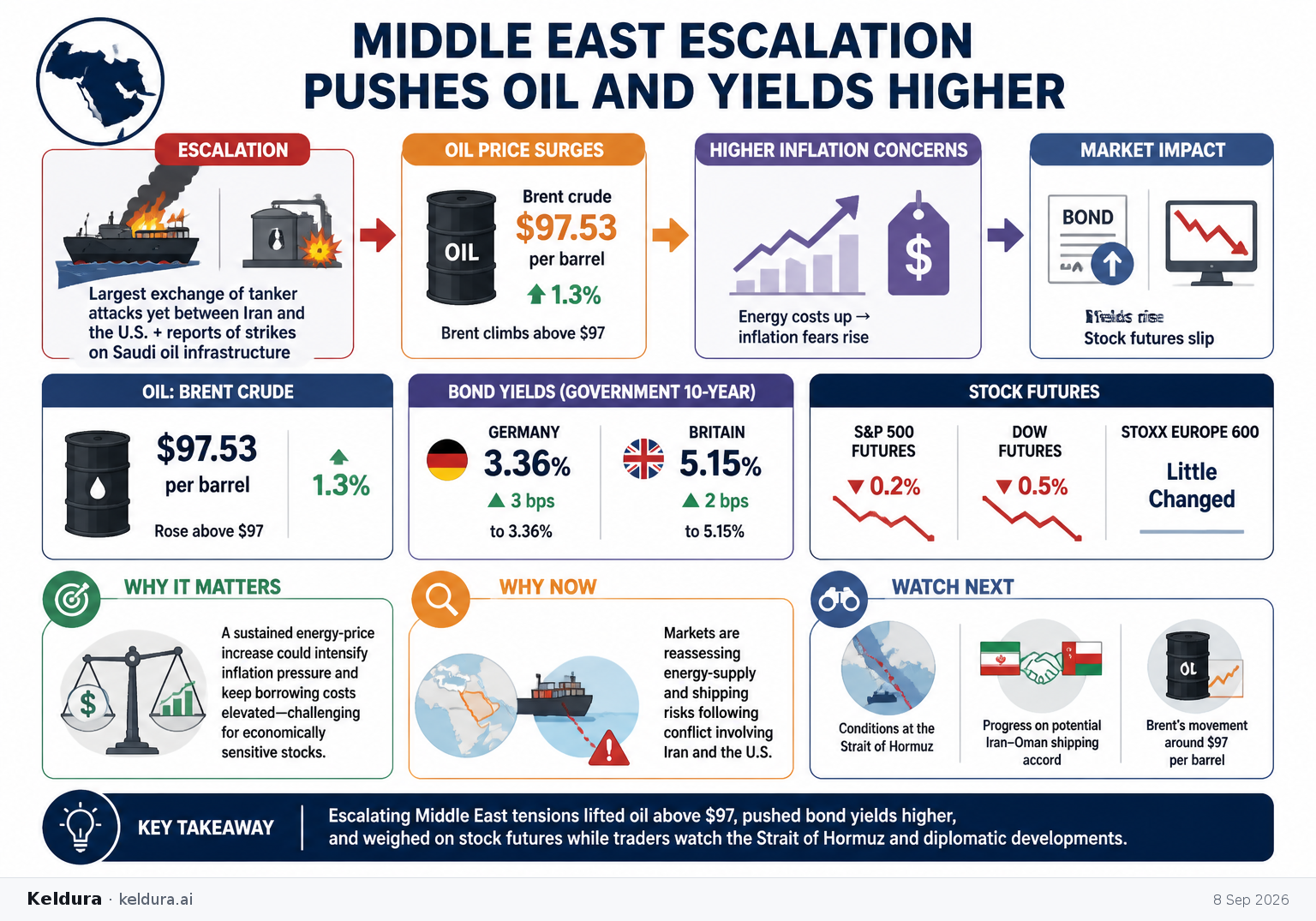
Brent crude climbed above $97 a barrel after the largest exchange of tanker attacks yet between Iran and the U.S., alongside reports of strikes on Saudi oil infrastructure.[3] Rising oil prices lifted inflation concerns and bond yields in Europe and Asia, while stock futures slipped.[3]
Why it matters: A sustained energy-price increase could intensify inflation pressure and keep borrowing costs elevated, creating a difficult backdrop for economically sensitive equities.[3]
Key insights: Brent rose 1.3% to $97.53 a barrel in the cited market snapshot.[3] | S&P 500 futures fell 0.2%, Dow futures declined 0.5% and the Stoxx Europe 600 was little changed.[3] | Germany’s 10-year yield advanced three basis points to 3.36%, while Britain’s rose two basis points to 5.15%.[3] | Reports of a potential Iran-Oman accord to manage shipping through the Strait of Hormuz offered a separate diplomatic development for traders to assess.[3]
Cheatsheet facts: What changed: An escalation involving tanker attacks and reported strikes on oil infrastructure sent Brent above $97 and pressured stocks and bonds.[3] | Why now: Markets are reassessing energy-supply and shipping risks following conflict involving Iran and the U.S.[3] | Watch next: Watch reported conditions at the Strait of Hormuz, progress on the potential Iran-Oman shipping accord and Brent’s movement around $97 a barrel.[3]