U.S. Workers’ Share of Growth Hits a Record Low
Wages have fallen to their lowest recorded share of the growing U.S. economy, while corporate profits have surged and stock prices remain near all-time highs.[2] Since 2000, the S&P 500 has gained about 600%, compared with a 12.5% increase in inflation-adjusted worker earnings.[2]
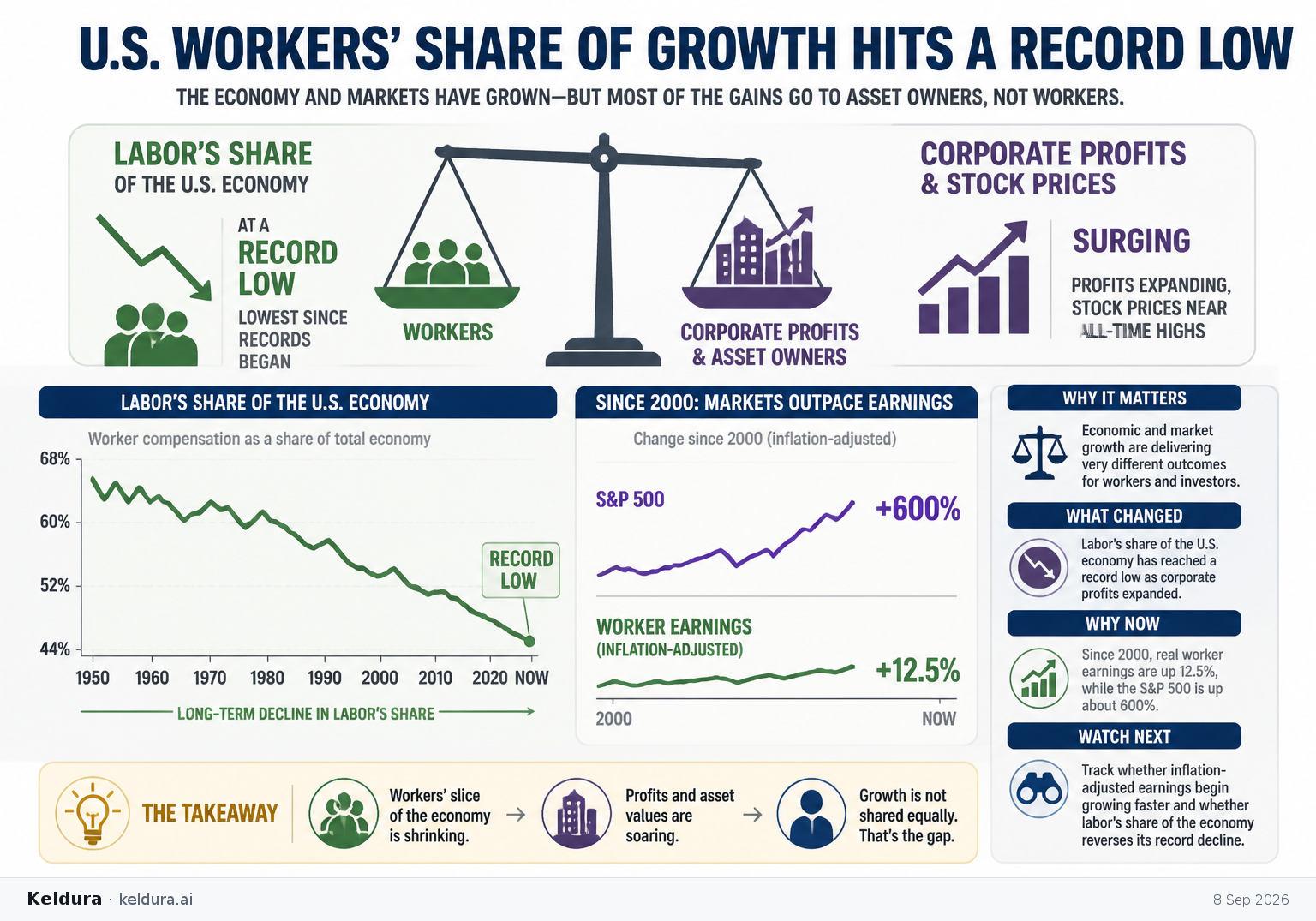
Wages have fallen to their lowest recorded share of the growing U.S. economy, while corporate profits have surged and stock prices remain near all-time highs.[2] Since 2000, the S&P 500 has gained about 600%, compared with a 12.5% increase in inflation-adjusted worker earnings.[2]
Why it matters: The widening gap between asset appreciation and real earnings shows that economic and market growth is delivering markedly different outcomes for workers and investors.[2]
Key insights: Worker compensation now represents the smallest share recorded since the government began tracking the measure.[2] | Wage growth is barely keeping pace with inflation despite continued economic growth.[2] | The long-term divergence between the S&P 500 and inflation-adjusted earnings highlights how gains have accrued disproportionately to asset owners.[2]
Cheatsheet facts: What changed: Labor’s share of the U.S. economy has reached a record low as corporate profits expanded.[2] | Why now: Worker pay has lagged far behind stock-market gains, with real earnings up 12.5% since 2000 versus roughly 600% for the S&P 500.[2] | Watch next: Track whether inflation-adjusted earnings begin growing faster and whether labor’s measured share of the economy reverses its record decline.[2]
Wages have fallen to their lowest recorded share of the growing U.S. economy, while corporate profits have surged and stock prices remain near all-time highs.[2] Since 2000, the S&P 500 has gained about 600%, compared with a 12.5% increase in inflation-adjusted worker earnings.[2]
Why it matters: The widening gap between asset appreciation and real earnings shows that economic and market growth is delivering markedly different outcomes for workers and investors.[2]
Key insights: Worker compensation now represents the smallest share recorded since the government began tracking the measure.[2] | Wage growth is barely keeping pace with inflation despite continued economic growth.[2] | The long-term divergence between the S&P 500 and inflation-adjusted earnings highlights how gains have accrued disproportionately to asset owners.[2]
Cheatsheet facts: What changed: Labor’s share of the U.S. economy has reached a record low as corporate profits expanded.[2] | Why now: Worker pay has lagged far behind stock-market gains, with real earnings up 12.5% since 2000 versus roughly 600% for the S&P 500.[2] | Watch next: Track whether inflation-adjusted earnings begin growing faster and whether labor’s measured share of the economy reverses its record decline.[2]