How oil inflation and AI borrowing are squeezing markets
Asian stocks fell on October 8 as investors confronted renewed oil-price pressure and reports of large AI-related borrowing plans.
Stocks extended their decline as higher oil prices renewed inflation concerns, with Wall Street falling on Wednesday and Asian markets sliding on Thursday. [1][2][4] Reports of substantial borrowing plans by major technology companies added pressure to bond markets already strained by inflation fea…
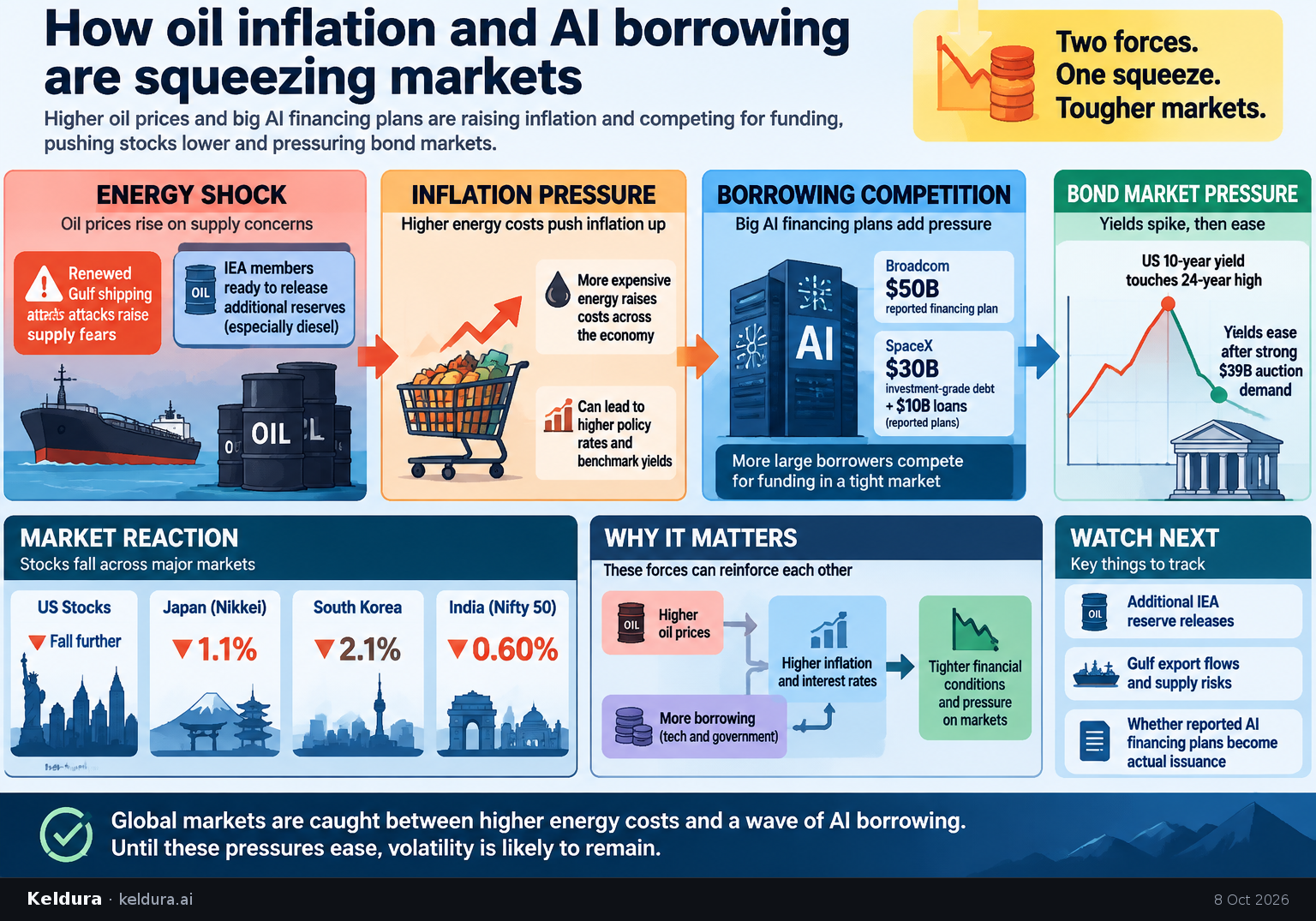
Stocks extended their decline as higher oil prices renewed inflation concerns, with Wall Street falling on Wednesday and Asian markets sliding on Thursday. [1][2][4] Reports of substantial borrowing plans by major technology companies added pressure to bond markets already strained by inflation fears and government deficits. [4] Treasury yields nevertheless eased from earlier 24-year highs on Wednesday afternoon as oil retreated and a $39 billion 10-year note auction attracted strong demand. [6]
Why it matters: The squeeze has two channels: expensive energy raises inflation pressure, while corporate and government borrowers compete for funding. The IMF identifies higher energy prices as a force pushing up policy rates and benchmark yields, and warns that growing AI-sector leverage could transmit sector-specific shocks more widely. [4][7]
Key insights: Oil markets are responding to both supply threats and policy relief: attacks on shipping renewed concerns, while the IEA said members were ready to release additional reserves, prioritising diesel because supplies were tight. [2] | Reported financing plans include $50 billion for Broadcom and $30 billion in investment-grade debt plus $10 billion in loans for SpaceX; these are reported plans, not completed fundraising. [4] | The pressure crossed markets: Japan's Nikkei fell 1.1%, South Korean shares fell 2.1%, and Indian equities also opened lower, with the Nifty 50 down about 0.60% in the cited morning snapshot. [4][10] | The bond-market retreat was not uninterrupted: strong demand at the Treasury auction helped yields ease, showing that buyers still emerged despite the earlier selloff. [6]
Cheatsheet facts: What changed: Stocks fell across US and Asian markets; US 10-year Treasury yields touched a 24-year high before easing. [2][4][6] | Why now: Renewed Gulf shipping attacks raised oil-supply concerns, while reported AI financing plans added competition for funding. [2][4] | Watch next: Track additional IEA reserve releases, Gulf export flows and whether the reported technology-company borrowing plans become actual issuance. [2][4]
X copy pack
[1] Stocks fall further as oil spike fans fresh inflation worries | AFP.com — afp.com[2] US stocks slide as oil prices fluctuate over renewed Iran war fears | Business and Economy News | Al Jazeera — aljazeera.com[4] Asia shares slip, bonds submerged in tide of AI debt - CNA — channelnewsasia.com[6] US Treasury selloff eases as oil retreats and auction draws strong demand - Global Markets News | The Financial Express — financialexpress.com[7] https://www.imf.org/en/news/articles/2026/10/07/sp100726-2026-annual-meetings-curtain-raiser/index.md — IMF Blog[10] Why is the market falling today? Nifty below 22450, Sensex drops nearly 500 points · Business Upturn — businessupturn.comRead in BriefingsPost to X