WHO launches Western Pacific research agenda on climate, migration, displacement and health
WHO launched the Regional research agenda on health, migration and displacement in the WHO Western Pacific Region, with a focus on climate change, bringing together WHO, UN agencies, academia, civil society, and migrant youth networks [2]. The agenda was shaped by a multistage process involving 108…
WHO launched the Regional research agenda on health, migration and displacement in the WHO Western Pacific Region, with a focus on climate change, bringing together WHO, UN agencies, academia, civil society, and migrant youth networks [2]. The agenda was shaped by a multistage process involving 108 participants from the Pacific and Asian subregions and identifies priorities including inclusive UHC, primary health care, emergency preparedness for migrants and displaced populations, and climate-related health research [2].
Why it matters: WHO says migration, displacement and climate change are increasingly shaping health outcomes in the Western Pacific Region, while evidence gaps still limit effective and equitable responses [2]. The roadmap matters because it is meant to strengthen evidence-informed policymaking, research capacity, collaboration, and policy uptake so health systems can become more inclusive and climate-responsive [2].
Key insights: The agenda includes two cross-cutting priorities: better evidence on under-researched migrant and displaced populations, and more equitable, inclusive research partnerships [2]. | Panelists called for stronger governance, sustainable financing, migration-sensitive data systems, and closer collaboration among researchers, policymakers, and affected communities [2]. | The roadmap includes subregional implementation plans for the Pacific and Asia to adapt priorities to local contexts [2]. | Priority action areas include research governance, knowledge exchange, flexible funding, translation into policy and practice, and integration of indigenous and traditional knowledge [2].
Cheatsheet facts: What changed: WHO published a new regional research agenda focused on health, migration, displacement, and climate change in the Western Pacific Region [2]. | Why now: WHO says the region faces growing migration- and climate-related health pressures alongside persistent evidence gaps [2]. | Watch next: Adoption of subregional roadmaps and visible moves on data systems, funding, and research-to-policy implementation [2].
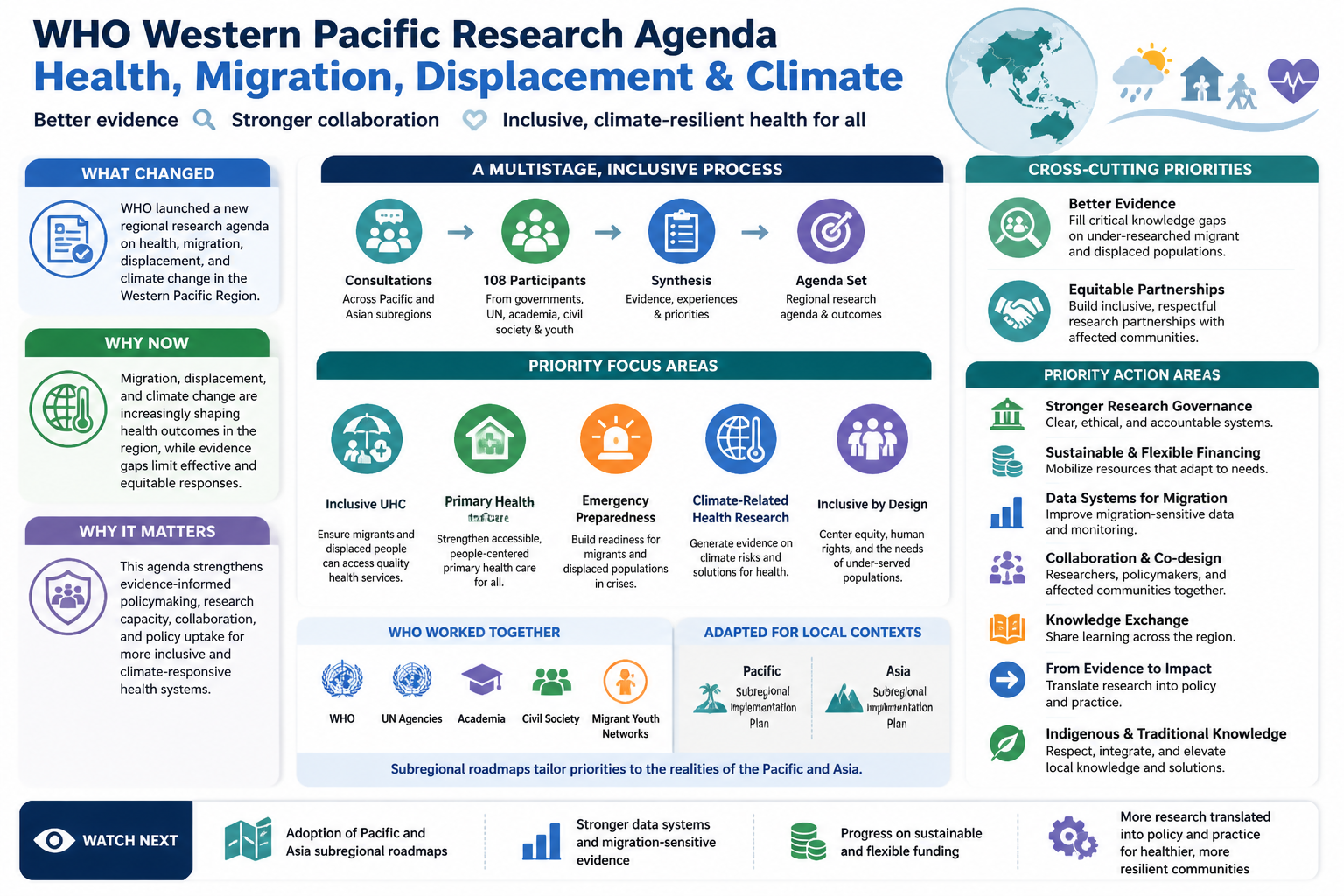
WHO launched the Regional research agenda on health, migration and displacement in the WHO Western Pacific Region, with a focus on climate change, bringing together WHO, UN agencies, academia, civil society, and migrant youth networks [2]. The agenda was shaped by a multistage process involving 108 participants from the Pacific and Asian subregions and identifies priorities including inclusive UHC, primary health care, emergency preparedness for migrants and displaced populations, and climate-related health research [2].
Why it matters: WHO says migration, displacement and climate change are increasingly shaping health outcomes in the Western Pacific Region, while evidence gaps still limit effective and equitable responses [2]. The roadmap matters because it is meant to strengthen evidence-informed policymaking, research capacity, collaboration, and policy uptake so health systems can become more inclusive and climate-responsive [2].
Key insights: The agenda includes two cross-cutting priorities: better evidence on under-researched migrant and displaced populations, and more equitable, inclusive research partnerships [2]. | Panelists called for stronger governance, sustainable financing, migration-sensitive data systems, and closer collaboration among researchers, policymakers, and affected communities [2]. | The roadmap includes subregional implementation plans for the Pacific and Asia to adapt priorities to local contexts [2]. | Priority action areas include research governance, knowledge exchange, flexible funding, translation into policy and practice, and integration of indigenous and traditional knowledge [2].
Cheatsheet facts: What changed: WHO published a new regional research agenda focused on health, migration, displacement, and climate change in the Western Pacific Region [2]. | Why now: WHO says the region faces growing migration- and climate-related health pressures alongside persistent evidence gaps [2]. | Watch next: Adoption of subregional roadmaps and visible moves on data systems, funding, and research-to-policy implementation [2].