Why advertised vacancies understate England’s nursing shortage
The analysis counted roughly 23,000 advertised nursing vacancies but estimated that England would have 55,000 more registered nurses if.
The analysis counted roughly 23,000 advertised nursing vacancies but estimated that England would have 55,000 more registered nurses if staffing had kept pace with hospital activity since 2009/10, or more than 77,000 additional nurses if growth had matched doctor numbers.[6][7] Hospital board recor…
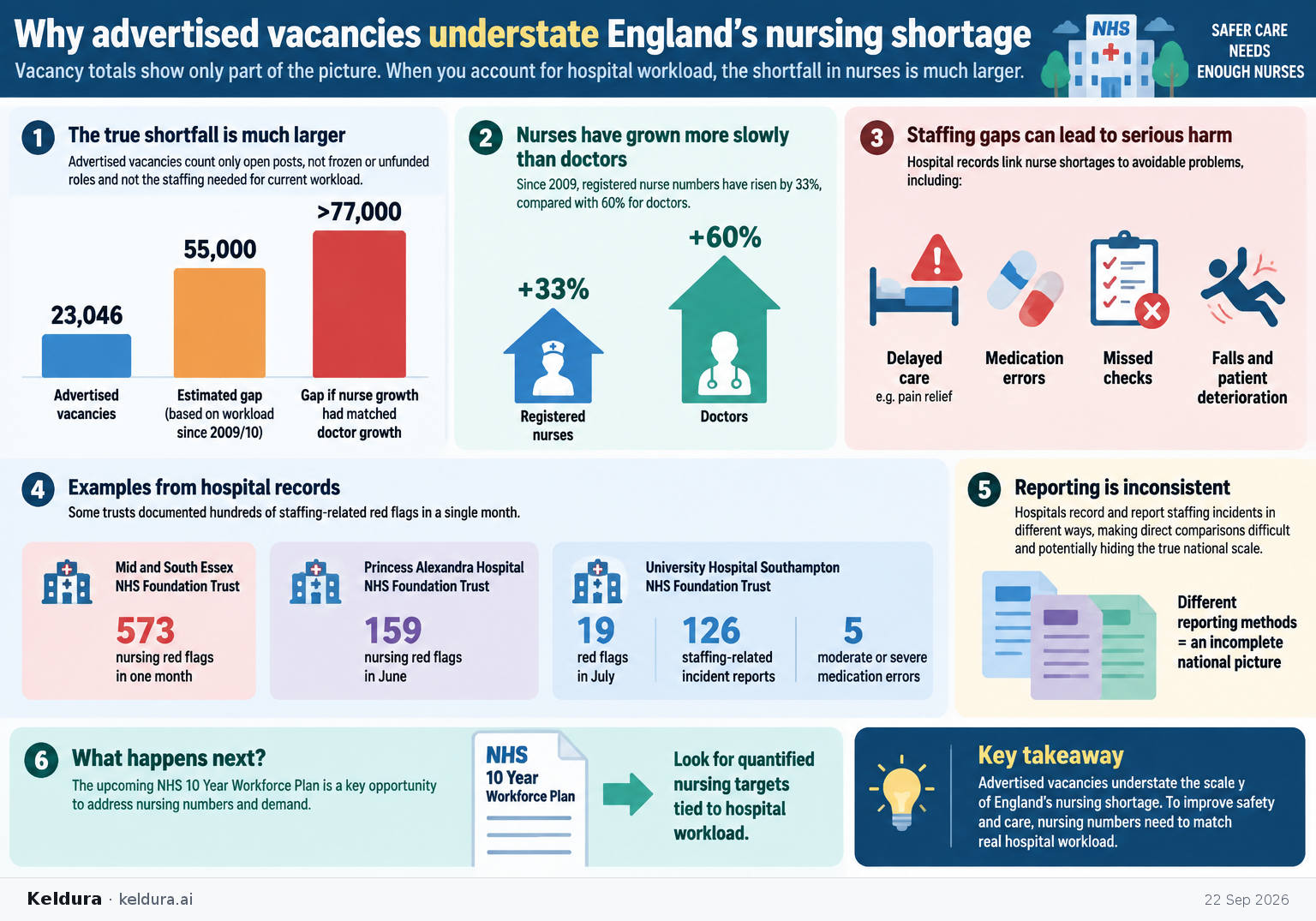
The analysis counted roughly 23,000 advertised nursing vacancies but estimated that England would have 55,000 more registered nurses if staffing had kept pace with hospital activity since 2009/10, or more than 77,000 additional nurses if growth had matched doctor numbers.[6][7] Hospital board records included hundreds of staffing-related “red flags” in some trusts, covering delayed pain relief, medication errors, missed checks and shifts with fewer than two registered nurses.[6][7]
Why it matters: Vacancy totals exclude frozen or unfunded posts and do not measure staffing against workload, so they can conceal the operational shortfall associated with delayed care, falls and patient deterioration.[6][7] The upcoming NHS 10 Year Workforce Plan provides a concrete point at which the government can address nursing numbers and demand.[7]
Key insights: Registered nurse numbers have risen by 33% since 2009, compared with 60% growth in doctor numbers.[6] | Mid and South Essex NHS Foundation Trust recorded 573 nursing red flags in one month, while Princess Alexandra Hospital NHS Foundation Trust reported 159 in June.[7] | University Hospital Southampton NHS Foundation Trust recorded 19 red flags and 126 staffing-related incident reports in July, including five moderate or severe medication errors.[7] | Reporting is inconsistent between hospitals, limiting direct comparisons and potentially obscuring the national scale of staffing-related harm.[6]
Cheatsheet facts: What changed: Workload-based analysis estimated a 55,000-nurse gap, compared with 23,046 advertised vacancies; matching doctor growth would imply a gap of more than 77,000.[6][7] | Why now: Hospital records are documenting staffing-related delays, medication errors, missed care, falls and deterioration, sometimes in the hundreds per month at individual trusts.[6][7] | Watch next: Examine whether the upcoming NHS 10 Year Workforce Plan sets quantified nursing targets tied to hospital workload.[7]
The analysis counted roughly 23,000 advertised nursing vacancies but estimated that England would have 55,000 more registered nurses if staffing had kept pace with hospital activity since 2009/10, or more than 77,000 additional nurses if growth had matched doctor numbers.[6][7] Hospital board records included hundreds of staffing-related “red flags” in some trusts, covering delayed pain relief, medication errors, missed checks and shifts with fewer than two registered nurses.[6][7]
Why it matters: Vacancy totals exclude frozen or unfunded posts and do not measure staffing against workload, so they can conceal the operational shortfall associated with delayed care, falls and patient deterioration.[6][7] The upcoming NHS 10 Year Workforce Plan provides a concrete point at which the government can address nursing numbers and demand.[7]
Key insights: Registered nurse numbers have risen by 33% since 2009, compared with 60% growth in doctor numbers.[6] | Mid and South Essex NHS Foundation Trust recorded 573 nursing red flags in one month, while Princess Alexandra Hospital NHS Foundation Trust reported 159 in June.[7] | University Hospital Southampton NHS Foundation Trust recorded 19 red flags and 126 staffing-related incident reports in July, including five moderate or severe medication errors.[7] | Reporting is inconsistent between hospitals, limiting direct comparisons and potentially obscuring the national scale of staffing-related harm.[6]
Cheatsheet facts: What changed: Workload-based analysis estimated a 55,000-nurse gap, compared with 23,046 advertised vacancies; matching doctor growth would imply a gap of more than 77,000.[6][7] | Why now: Hospital records are documenting staffing-related delays, medication errors, missed care, falls and deterioration, sometimes in the hundreds per month at individual trusts.[6][7] | Watch next: Examine whether the upcoming NHS 10 Year Workforce Plan sets quantified nursing targets tied to hospital workload.[7]