New Afghan border centre brings emergency care to returning families
About 1,500 Afghans cross back from Iran daily, but can urgent care begin before another hospital journey?
On October 26, a new emergency and trauma care centre opened at Afghanistan’s Pul-e-Abrisham/Milak crossing, where about 1,500 Afghans return from Iran daily.
A new Emergency Response and Trauma Care Centre at the Pul-e-Abrisham/Milak crossing in Nimroz Province provides immediate assessment and treatment for returnees and other people crossing the border. WHO is supporting the facility with IOM and ECHO funding, supplying staff, medicines, trauma kits,…
Open original · [12] New emergency care centre provides lifesaving services to returnees at Nimroz border — World Health Organization News
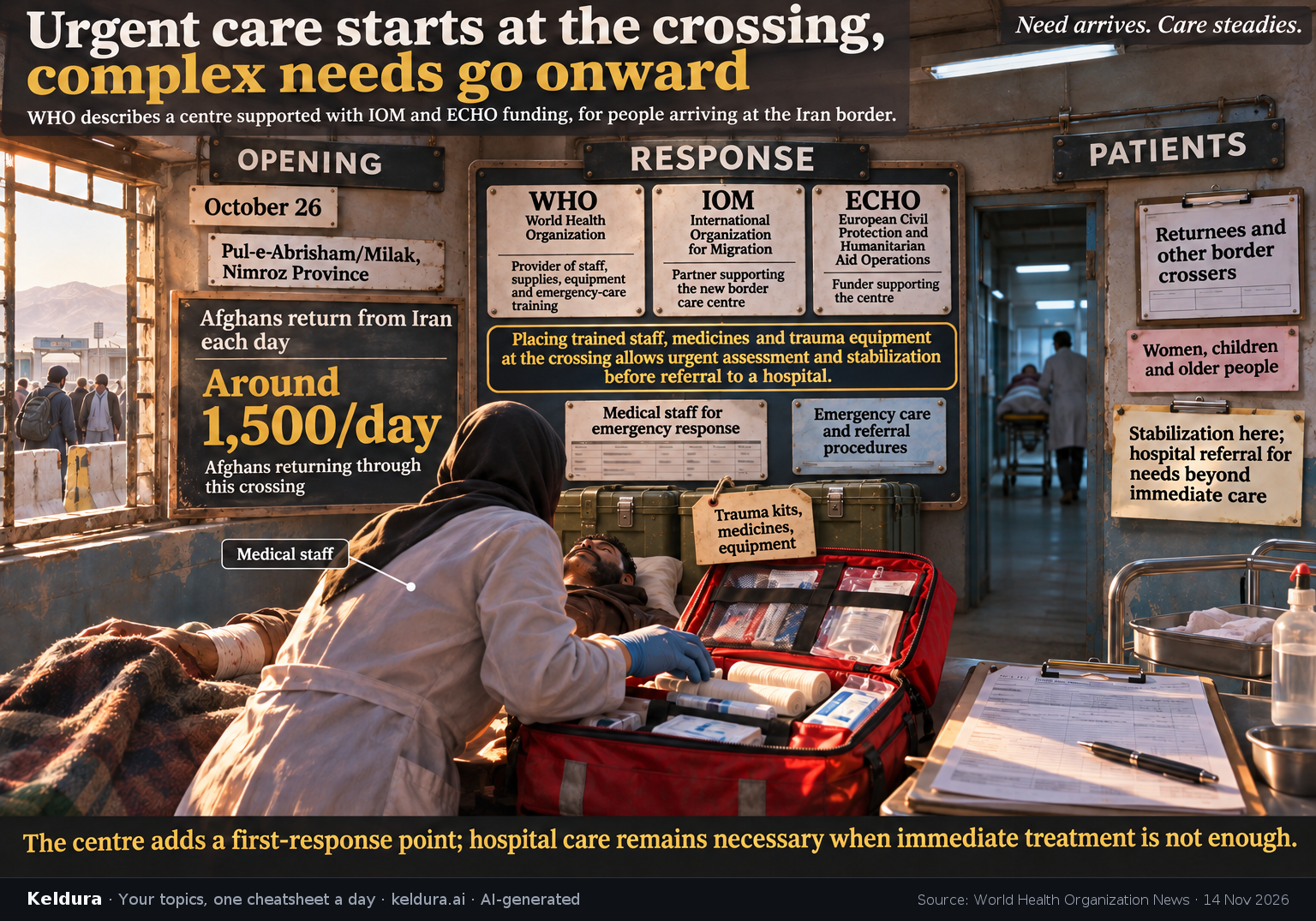
A new Emergency Response and Trauma Care Centre at the Pul-e-Abrisham/Milak crossing in Nimroz Province provides immediate assessment and treatment for returnees and other people crossing the border. WHO is supporting the facility with IOM and ECHO funding, supplying staff, medicines, trauma kits, equipment and training. [12]
Why it matters: Around 1,500 Afghans return through this crossing each day, including people arriving exhausted, injured or needing urgent medical attention. The centre allows treatment to begin at the border, with hospital referrals when more care is required, rather than making patients first search for emergency services elsewhere. [12]
Key insights: The facility serves other border crossers as well as returnees, including women, children and older people. [12] | Its role includes stabilization and referral, not just initial assessment or the distribution of medicines. [12] | WHO's support combines physical supplies with medical staff and training in emergency care and referral procedures. [12]
Cheatsheet facts: What happened: An emergency and trauma centre opened on October 26 at the Pul-e-Abrisham/Milak crossing in Nimroz Province. [12] | Why: About 1,500 Afghans return from Iran through the crossing daily, and some arrive with injuries or urgent medical conditions. [12] | Who pays: ECHO funds the centre's support, with WHO and IOM working in partnership. [12] | The catch: Patients needing care beyond the centre's immediate treatment and stabilization services are referred to hospitals. [12]
X copy pack
Edition complete
You've reached the end of this edition.