Potatoes complete their life cycle in amended lunar dust substitute
Potatoes grew in imitation Moon soil, but what did researchers have to add to make it work?
On November 20, Oregon State University researchers published results showing that potatoes completed their life cycle in simulated lunar soil with added compost.
The team tested five materials designed to mimic the dust and rock from different parts of the Moon. Simulated lunar material mixed with 30 percent vermicompost performed about as well as regular soil for growing potatoes. [9]
Open original · [9] Will astronauts farm on the moon? Scientists successfully grow potatoes in simulated lunar dust | Space — Space.com
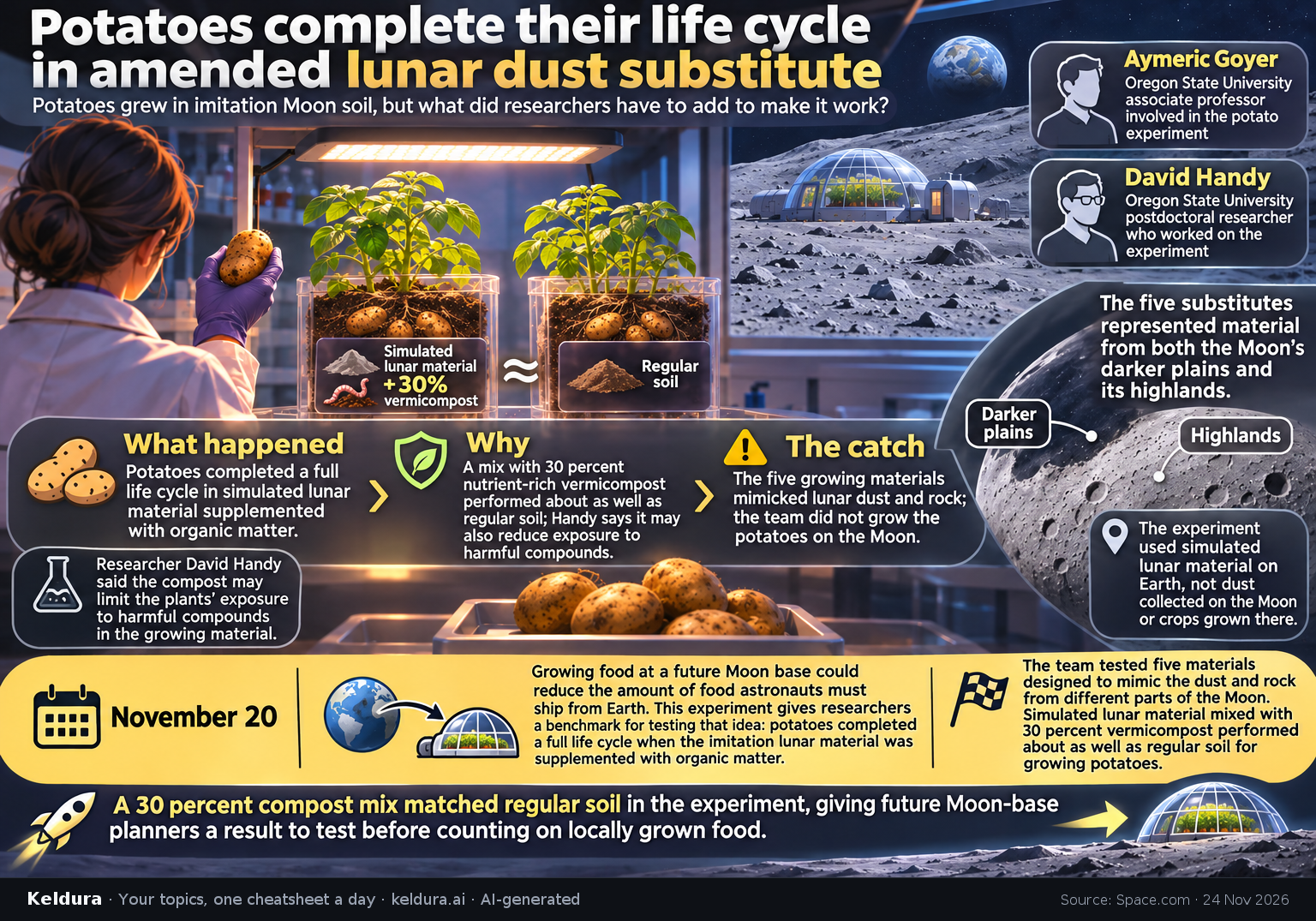
The team tested five materials designed to mimic the dust and rock from different parts of the Moon. Simulated lunar material mixed with 30 percent vermicompost performed about as well as regular soil for growing potatoes. [9]
Why it matters: Growing food at a future Moon base could reduce the amount of food astronauts must ship from Earth. This experiment gives researchers a benchmark for testing that idea: potatoes completed a full life cycle when the imitation lunar material was supplemented with organic matter. [9]
Key insights: The five substitutes represented material from both the Moon’s darker plains and its highlands. [9] | Researcher David Handy said the compost may limit the plants’ exposure to harmful compounds in the growing material. [9] | The experiment used simulated lunar material on Earth, not dust collected on the Moon or crops grown there. [9]
Cheatsheet facts: What happened: Potatoes completed a full life cycle in simulated lunar material supplemented with organic matter. [9] | Why: A mix with 30 percent nutrient-rich vermicompost performed about as well as regular soil; Handy says it may also reduce exposure to harmful compounds. [9] | The catch: The five growing materials mimicked lunar dust and rock; the team did not grow the potatoes on the Moon. [9]