Fighting interrupts Ebola response in Congo’s hardest-hit province
Ebola responders are working in the hardest-hit province, but how can they reach patients when fighting forces them to shelter?
On November 22, the WHO said fighting near a hospital in Ituri had forced Ebola responders to shelter for more than 24 hours.
Heavy fighting near a hospital in Ituri province in the Democratic Republic of the Congo forced Ebola response teams to shelter for more than 24 hours. The World Health Organization said it was working with partners to evacuate staff safely and called for protection for patients, staff and the hosp…
Open original · [8] Heavy fighting in Ituri traps DR Congo Ebola responders: WHO | UN News — news.un.org
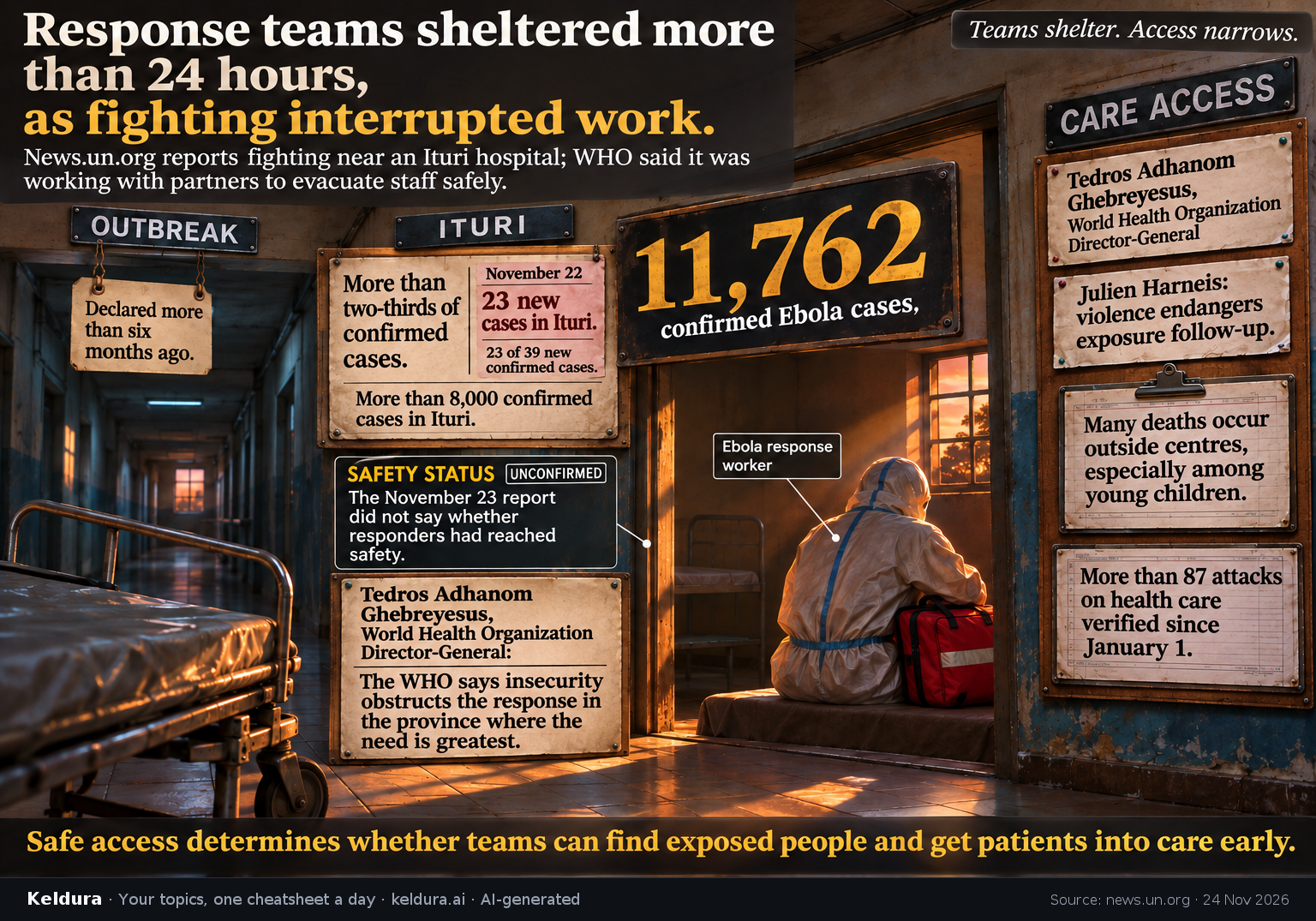
Heavy fighting near a hospital in Ituri province in the Democratic Republic of the Congo forced Ebola response teams to shelter for more than 24 hours. The World Health Organization said it was working with partners to evacuate staff safely and called for protection for patients, staff and the hospital. [8]
Why it matters: In Ituri, which accounts for more than two-thirds of confirmed cases, fighting makes it harder to find people who may have been exposed and get patients into care early. Many deaths still occur outside treatment centres, especially among young children. [8]
Key insights: The November 20 figures put the outbreak at 11,762 confirmed cases, including 5,775 deaths, across eight provinces. [8] | Ituri recorded 23 of the 39 new confirmed cases in the latest epidemiological update. [8] | The WHO has verified more than 87 attacks on health care in the Democratic Republic of the Congo since January 1. [8]
Cheatsheet facts: What happened: Fighting near a hospital in Ituri interrupted Ebola response work and forced teams to shelter for more than 24 hours. [8] | Background: Ituri is the centre of an Ebola outbreak that has reached eight provinces and was declared more than six months ago. [8] | Why: UN Ebola response coordinator Julien Harneis said violence makes it dangerous for teams to follow up with people who may have been exposed. [8] | The catch: Ituri has recorded more than 8,000 confirmed cases, yet violence makes it harder to find patients early and get them to treatment. [8] | What we don't know: Had the responders reached safety by the time of the November 23 report? The WHO had said it was working to evacuate them. [8]