More U.S. newborns are going without vitamin K shots
A routine vitamin K shot prevents dangerous newborn bleeding, but can one Michigan hospital persuade more parents to accept it?
On November 24, NPR and KFF Health News reported that 6.8% of U.S. newborns went without a vitamin K shot in 2025, up from 3.1% in 2017.
The share of U.S. newborns who did not receive intramuscular vitamin K rose from 3.1% in 2017 to 6.8% in 2025, according to research published in JAMA. [10] At a Corewell Health hospital in Grand Rapids, a team led by pediatrician Torrie LeBlanc began working to reduce refusals; two years in, the h…
Open original · [10] Doctors struggle to save babies after parents refuse vitamin K : NPR — npr.org
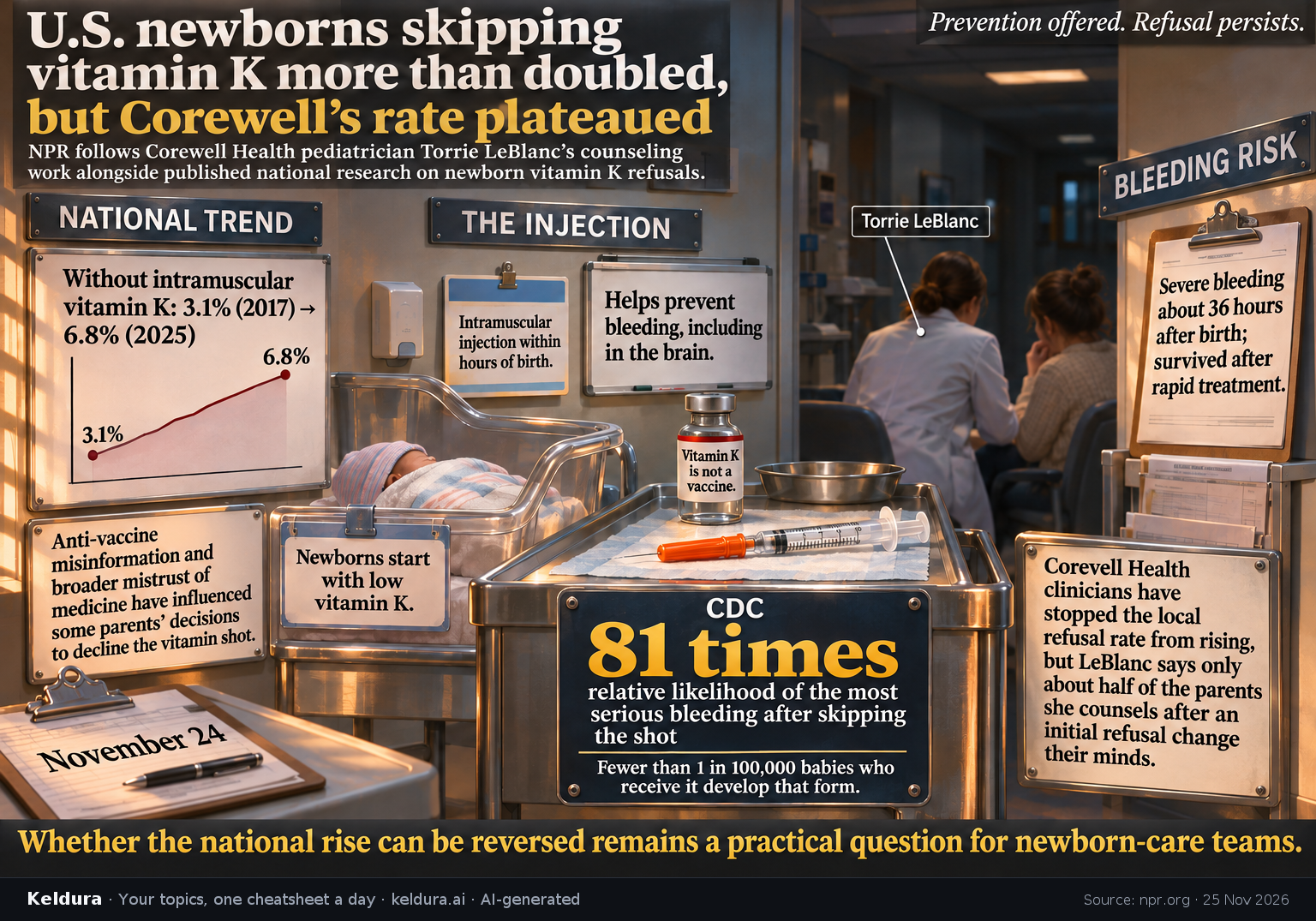
The share of U.S. newborns who did not receive intramuscular vitamin K rose from 3.1% in 2017 to 6.8% in 2025, according to research published in JAMA. [10] At a Corewell Health hospital in Grand Rapids, a team led by pediatrician Torrie LeBlanc began working to reduce refusals; two years in, the hospital’s refusal rate had stopped rising, but at least one family still declined the shot on an average day. [10]
Why it matters: The CDC says babies who skip the shot are 81 times as likely to develop the most serious form of vitamin K deficiency bleeding; fewer than 1 in 100,000 babies who receive it develop that form. Among babies who do develop it, one in five die. [10]
Key insights: Vitamin K is not a vaccine: newborns start with low levels of the vitamin, and the injection is given to prevent bleeding. [10] | One newborn whose parents initially declined the shot developed severe bleeding about 36 hours after birth and survived after rapid hospital treatment. [10] | LeBlanc says about half of the parents she counsels after an initial refusal change their minds; other doctors at the hospital report rates of 20% to 40%. [10]
Cheatsheet facts: What happened: The national share of newborns who went without a vitamin K shot more than doubled from 2017 to 2025. [10] | Why: Babies are born with low vitamin K levels, and an injection within hours of birth helps prevent rare but potentially fatal bleeding, including in the brain. [10] | The catch: Corewell Health’s refusal rate stopped rising after two years of work, but an average of at least one family a day still declines the injection. [10]