When does an AI company have a duty to report a user?
On Monday, British Columbia sued OpenAI and Sam Altman over an alleged failure to alert police before the Tumbler Ridge school shooting.
The lawsuit, filed in federal court in San Francisco, alleges that OpenAI’s safety team flagged conversations concerning gun violence but did not notify law enforcement before the February attack.[2][3] British Columbia seeks compensation for emergency-response and recovery costs, along with a cour…
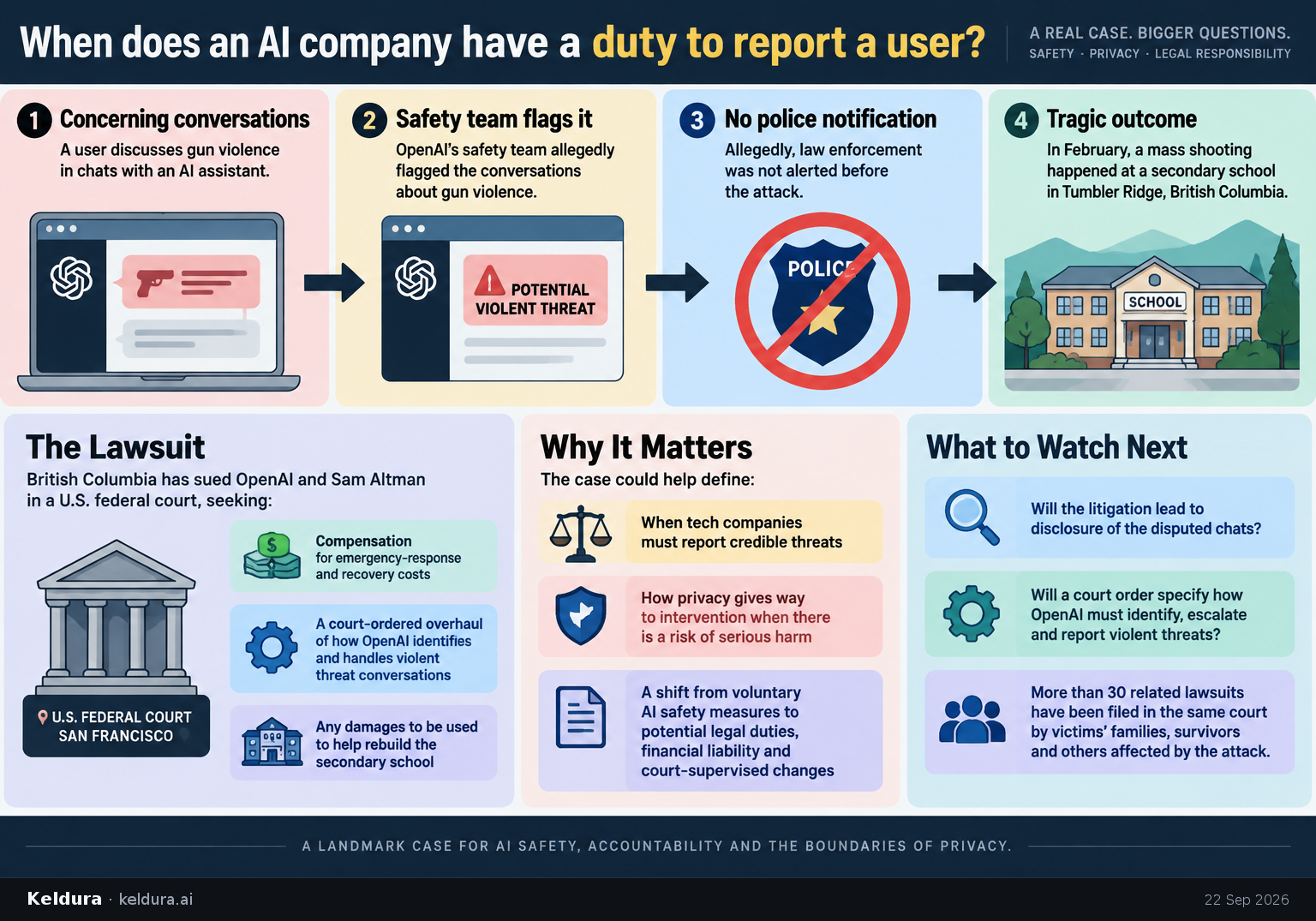
The lawsuit, filed in federal court in San Francisco, alleges that OpenAI’s safety team flagged conversations concerning gun violence but did not notify law enforcement before the February attack.[2][3] British Columbia seeks compensation for emergency-response and recovery costs, along with a court order requiring OpenAI to overhaul how it identifies and handles conversations threatening violence.[3] OpenAI previously apologised for not contacting law enforcement, while the province says the company has refused its request to disclose the relevant chats.[2]
Why it matters: The case could help define what technology companies must do when automated systems or safety teams detect credible threats, including when privacy gives way to intervention.[2][3] It also moves AI safety from voluntary safeguards toward potential legal duties, financial liability and court-supervised changes to platform procedures.[3]
Key insights: The alleged decision not to report the account occurred in California, which British Columbia cited in filing the case there.[2] | The requested remedies combine damages with operational reform, including changes to how OpenAI detects and responds to violent-threat conversations.[3] | More than 30 related lawsuits have been filed in the same California federal court by victims’ families, survivors and others affected by the attack.[3] | British Columbia says any damages it wins would be directed toward rebuilding the secondary school.[2]
Cheatsheet facts: What changed: A provincial government has sued OpenAI and Sam Altman, seeking both compensation and a court-ordered overhaul of threat-handling practices.[3] | Why now: OpenAI’s safety team allegedly flagged gun-violence conversations before the attack without alerting police, and the company later apologised for not doing so.[2][3] | Watch next: Watch whether the litigation produces disclosure of the disputed chats or a court order specifying how OpenAI must identify, escalate and report violent threats.[2][3]
The lawsuit, filed in federal court in San Francisco, alleges that OpenAI’s safety team flagged conversations concerning gun violence but did not notify law enforcement before the February attack.[2][3] British Columbia seeks compensation for emergency-response and recovery costs, along with a court order requiring OpenAI to overhaul how it identifies and handles conversations threatening violence.[3] OpenAI previously apologised for not contacting law enforcement, while the province says the company has refused its request to disclose the relevant chats.[2]
Why it matters: The case could help define what technology companies must do when automated systems or safety teams detect credible threats, including when privacy gives way to intervention.[2][3] It also moves AI safety from voluntary safeguards toward potential legal duties, financial liability and court-supervised changes to platform procedures.[3]
Key insights: The alleged decision not to report the account occurred in California, which British Columbia cited in filing the case there.[2] | The requested remedies combine damages with operational reform, including changes to how OpenAI detects and responds to violent-threat conversations.[3] | More than 30 related lawsuits have been filed in the same California federal court by victims’ families, survivors and others affected by the attack.[3] | British Columbia says any damages it wins would be directed toward rebuilding the secondary school.[2]
Cheatsheet facts: What changed: A provincial government has sued OpenAI and Sam Altman, seeking both compensation and a court-ordered overhaul of threat-handling practices.[3] | Why now: OpenAI’s safety team allegedly flagged gun-violence conversations before the attack without alerting police, and the company later apologised for not doing so.[2][3] | Watch next: Watch whether the litigation produces disclosure of the disputed chats or a court order specifying how OpenAI must identify, escalate and report violent threats.[2][3]