Canada’s counter-tariffs deepen the trade war with the US
Canada has imposed retaliatory tariffs of up to 50% on nearly C$28bn ($20bn) of US products, including steel, furniture and clothing.[1] The measures follow new US tariffs on Canadian goods, while bilateral trade talks remain suspended after collapsing in late August.[1]
Canada has imposed retaliatory tariffs of up to 50% on nearly C$28bn ($20bn) of US products, including steel, furniture and clothing.[1] The measures follow new US tariffs on Canadian goods, while bilateral trade talks remain suspended after collapsing in late August.[1]
Why it matters: The dispute affects a bilateral trading relationship valued at nearly $900bn in 2025, and economists warn that Canada’s counter-tariffs will increase consumer prices for everyday goods such as food, clothing and furniture.[1]
Key insights: Canada removed dozens of seafood products from its tariff list after industry objections, illustrating the domestic costs of retaliating against its largest trading partner.[1] | The US already applies a 25% tax to Canadian cars and trucks, alongside tariffs on Canadian steel, aluminium and lumber; President Donald Trump added 50% tariffs on goods including dairy, alcohol, hockey sticks and perfume in late August.[1] | Canada lost about 41,000 jobs in August after gaining 181,000 from April through July, with the latest decline coinciding with new US tariffs and the breakdown of negotiations.[1] | The share of Canadian exports destined for the US fell to 66% in July, compared with an average of 75% before the trade war.[1]
Cheatsheet facts: What changed: Canada’s tariffs on hundreds of US products took effect Tuesday and will reach as high as 50%.[1] | Why now: Ottawa describes the measures as a dollar-for-dollar response to US tariffs, while negotiations have not resumed since their late-August collapse.[1] | Watch next: Watch for a formal resumption of bilateral talks and further changes to Canada’s tariff list following domestic industry pressure.[1]
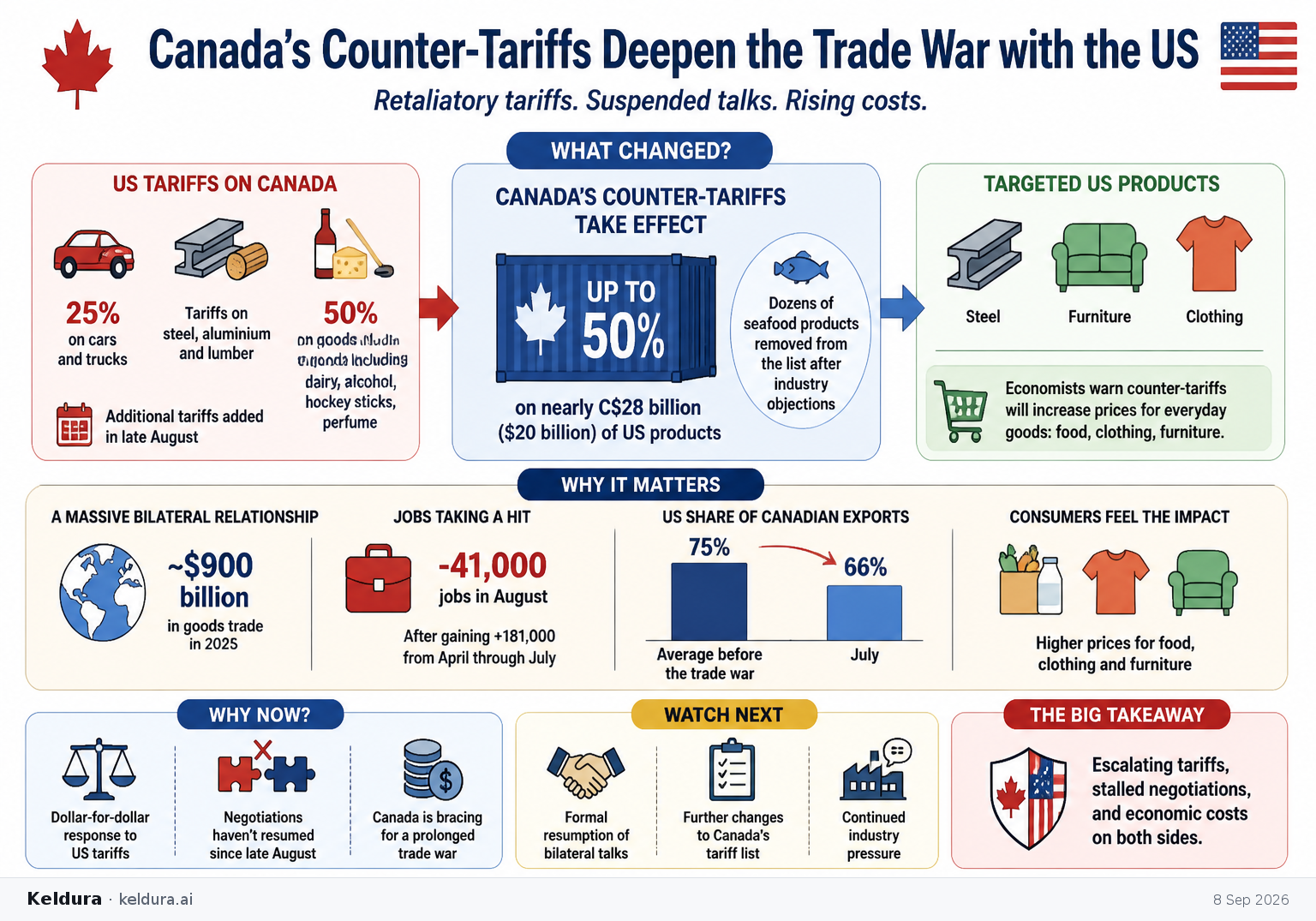
Canada has imposed retaliatory tariffs of up to 50% on nearly C$28bn ($20bn) of US products, including steel, furniture and clothing.[1] The measures follow new US tariffs on Canadian goods, while bilateral trade talks remain suspended after collapsing in late August.[1]
Why it matters: The dispute affects a bilateral trading relationship valued at nearly $900bn in 2025, and economists warn that Canada’s counter-tariffs will increase consumer prices for everyday goods such as food, clothing and furniture.[1]
Key insights: Canada removed dozens of seafood products from its tariff list after industry objections, illustrating the domestic costs of retaliating against its largest trading partner.[1] | The US already applies a 25% tax to Canadian cars and trucks, alongside tariffs on Canadian steel, aluminium and lumber; President Donald Trump added 50% tariffs on goods including dairy, alcohol, hockey sticks and perfume in late August.[1] | Canada lost about 41,000 jobs in August after gaining 181,000 from April through July, with the latest decline coinciding with new US tariffs and the breakdown of negotiations.[1] | The share of Canadian exports destined for the US fell to 66% in July, compared with an average of 75% before the trade war.[1]
Cheatsheet facts: What changed: Canada’s tariffs on hundreds of US products took effect Tuesday and will reach as high as 50%.[1] | Why now: Ottawa describes the measures as a dollar-for-dollar response to US tariffs, while negotiations have not resumed since their late-August collapse.[1] | Watch next: Watch for a formal resumption of bilateral talks and further changes to Canada’s tariff list following domestic industry pressure.[1]