Trump eases Russian diesel sanctions without a confirmed energy truce
Can diesel sales bring Moscow back to talks, but without giving Russia revenue before it makes concessions?
On October 12, Donald Trump defended his Russian diesel deal and an energy ceasefire as Volodymyr Zelenskyy reported new Russian attacks.
Donald Trump temporarily eased sanctions on Russian diesel and subsequently announced an energy ceasefire, but the warring sides had not confirmed that agreement, Reuters reported. US envoys told Ukrainian officials the diesel deal could draw Moscow back to negotiations; Zelenskyy said Russia attac…
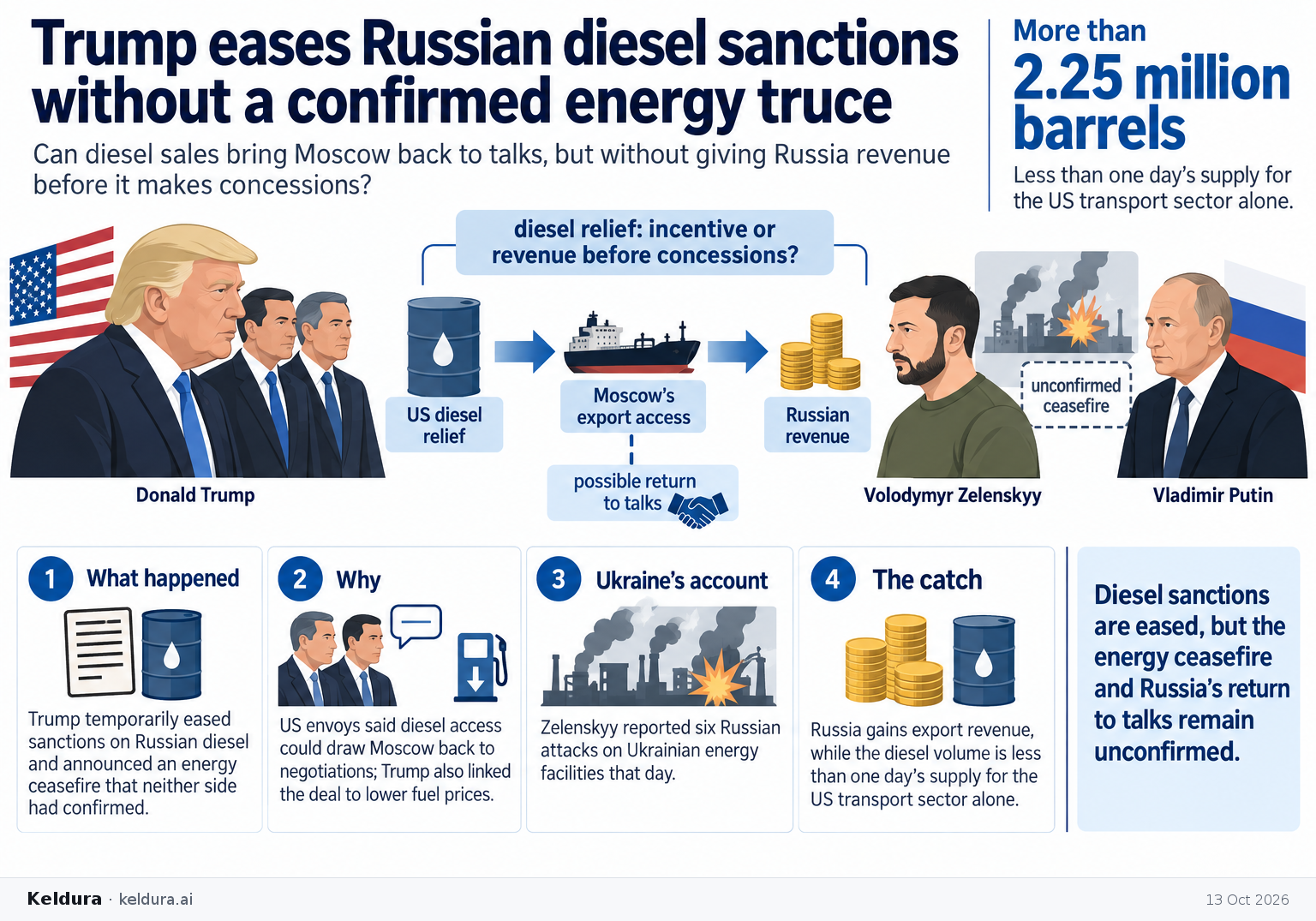
Donald Trump temporarily eased sanctions on Russian diesel and subsequently announced an energy ceasefire, but the warring sides had not confirmed that agreement, Reuters reported. US envoys told Ukrainian officials the diesel deal could draw Moscow back to negotiations; Zelenskyy said Russia attacked six Ukrainian energy facilities on October 12. [6][12] The Associated Press describes the sanctions reversal as a political gain for the Kremlin, with additional revenue available to support its war. [7]
Why it matters: Washington is offering an economic concession before securing an observable military concession, while Kyiv and European allies seek continued pressure on Moscow. The potential fuel-price benefit is limited: the promised diesel volume is less than one day’s supply for the US transport sector alone, according to experts cited by Reuters. [6][7][12]
Key insights: The US negotiating rationale differs from Trump’s public account: his envoys reportedly told Ukrainian officials that Vladimir Putin was not prepared to negotiate and needed an incentive to return. [12] | Zelenskyy said Ukraine supported an energy ceasefire and had not attacked Russian refineries overnight, but reported six Russian attacks on Ukrainian energy facilities that day. These are attributed claims, not independently established compliance findings. [6] | Europe is pursuing the opposite pressure strategy: EU foreign ministers added approximately 1,569 people and businesses to sanctions lists, while Kaja Kallas argued that easing diesel sanctions gives Moscow more war revenue. [2][6] | Trump links the deal to lower US fuel prices, but experts cited by Reuters identify the war in Iran as the main driver of high costs. [12]
Cheatsheet facts: What happened: Trump eased Russian diesel sanctions and announced an energy ceasefire that neither warring side had confirmed, according to Reuters. [12] | Why: US envoys said the deal could bring Moscow back to negotiations; Trump also argues it will lower American energy prices. [12] | Who pays: Russia gains export revenue while Ukraine reports continued attacks on energy facilities; the AP says the deal weakens Kyiv’s and its allies’ pressure campaign. [6][7] | The catch: More than 2.25 million barrels would enter US and global markets, but experts say that is less than one day’s supply for the US transport sector alone. [12]
X copy pack
[6] Trump insists energy ceasefire holds as Ukraine reports new Russian strikes | Russia-Ukraine war News | Al Jazeera — aljazeera.com[12] US hopes diesel deal can 'soften' Moscow on peace talks, sources say - The Korea Times — koreatimes.co.kr[7] The Kremlin relishes in the US-Russia diesel deal and Trump's criticism of Zelenskyy — apnews.com[2] Trump aligns with Putin yet again, squeezing Ukraine and Europe - Asia Times — asiatimes.comRead in BriefingsPost to X