Kyiv faces repeated missile strikes as Zelenskyy questions partner warnings
Ukraine relies on partners for missile warnings, but why did officials say Kyiv received none before consecutive attacks?
On October 14, Ukrainian officials reported a second consecutive day of Russian ballistic missile strikes on Kyiv without advance warning from Western partners.
Russian ballistic missiles struck Kyiv for a second consecutive day, Ukrainian officials said, with President Volodymyr Zelenskyy saying Ukraine detected the missiles only as they neared the capital. [8] A day earlier, he said partners had provided no early warning about five ballistic missiles tha…
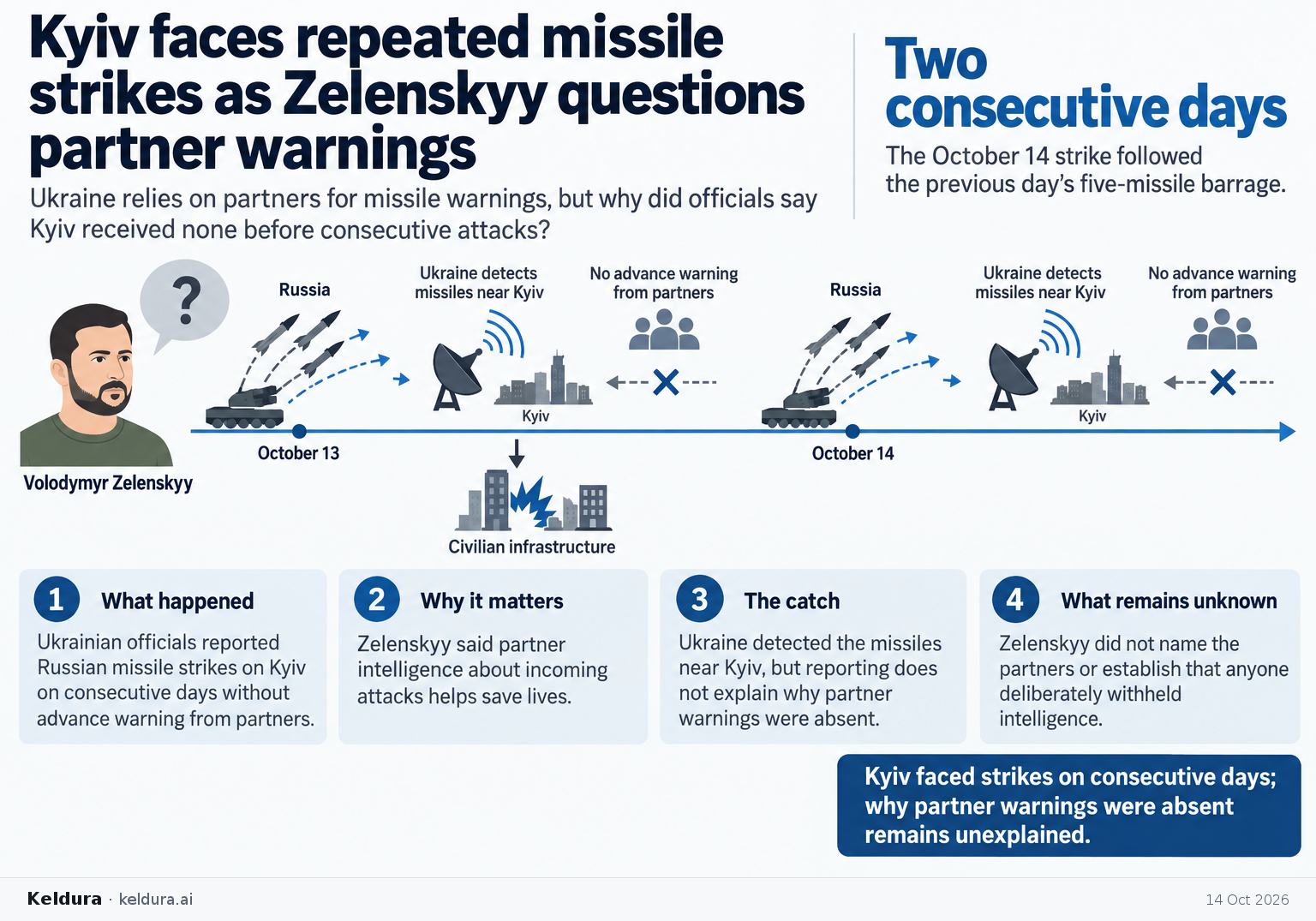
Russian ballistic missiles struck Kyiv for a second consecutive day, Ukrainian officials said, with President Volodymyr Zelenskyy saying Ukraine detected the missiles only as they neared the capital. [8] A day earlier, he said partners had provided no early warning about five ballistic missiles that hit civilian infrastructure, without identifying the partners concerned. [3]
Why it matters: Zelenskyy says intelligence from partners helps save lives, making the warning gap a civilian-protection issue as well as a question about allied cooperation. The evidence does not establish why warnings were absent or that any partner deliberately withheld intelligence. [3][8]
Key insights: The reported problem concerns advance warning: Zelenskyy said Ukraine still detected the missiles, but only as they approached Kyiv. [8] | The first reported barrage involved five ballistic missiles striking civilian infrastructure, giving the warning dispute a specific operational context. [3] | AP places Zelenskyy’s remarks amid rising tensions with U.S. President Donald Trump, but Zelenskyy did not identify which partners he meant. [3]
Cheatsheet facts: What happened: Ukrainian officials reported Russian ballistic missile attacks on Kyiv on two consecutive days without advance warning from partners. [3][8] | Why: Zelenskyy said partner intelligence about incoming attacks helps save lives. [3] | The catch: Ukraine detected the missiles near Kyiv, but the supplied reporting does not explain why earlier partner warnings were absent. [3][8] | What we don't know: Zelenskyy did not name the partners concerned, and the evidence does not establish deliberate withholding. [3]