Why a warmer atmosphere makes the water cycle more erratic
On September 17, WMO and Copernicus findings highlighted deepening disruption across the planet’s freshwater system and atmosphere.
The WMO says river flows, groundwater and glaciers show sustained disruption, with 2025 ranking among the driest years for global river flows in 35 years and below-normal discharge covering 36 per cent of the world.[3][7] Separately, Copernicus found that the atmosphere held more water vapour in Au…
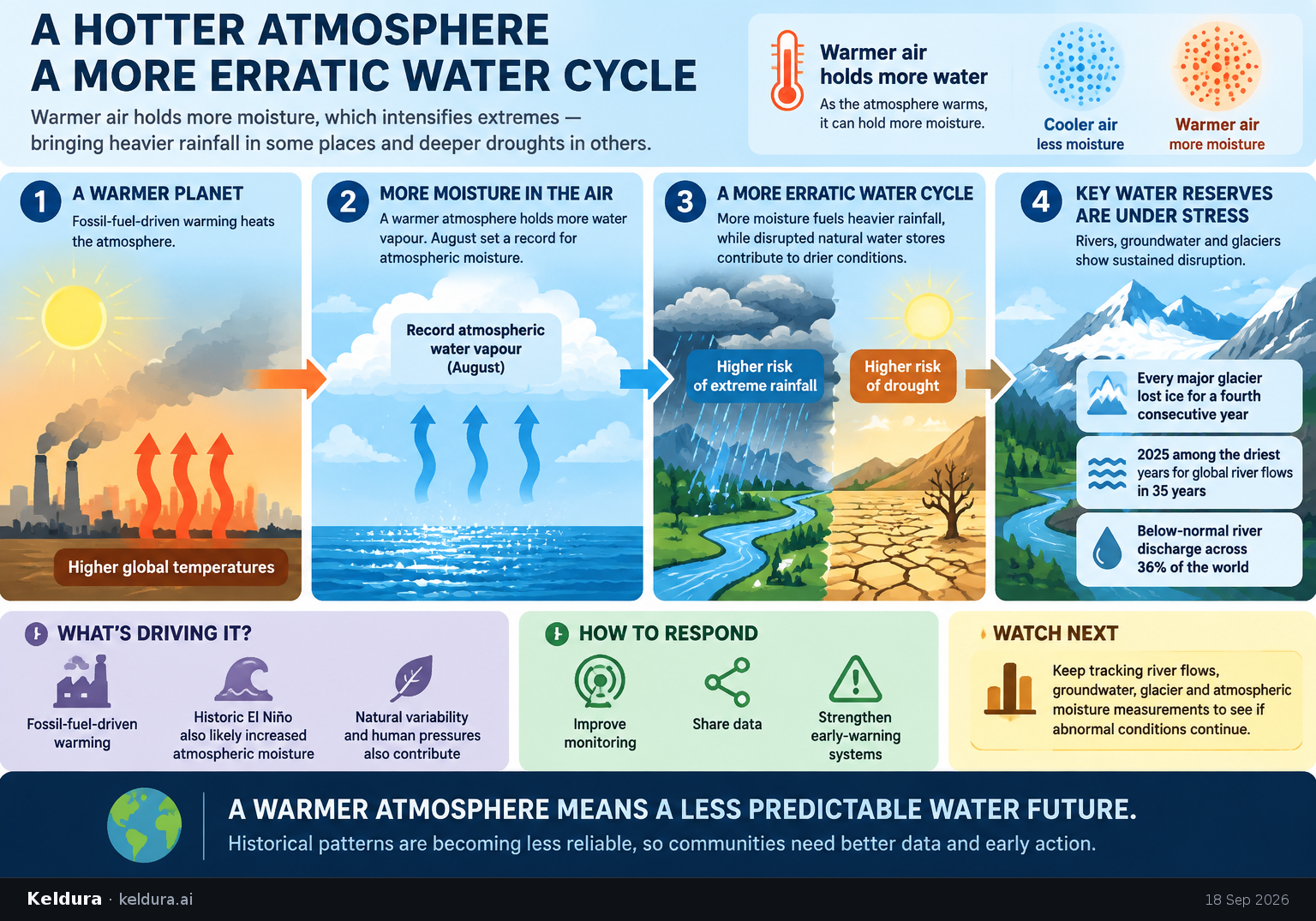
The WMO says river flows, groundwater and glaciers show sustained disruption, with 2025 ranking among the driest years for global river flows in 35 years and below-normal discharge covering 36 per cent of the world.[3][7] Separately, Copernicus found that the atmosphere held more water vapour in August than during any other recorded month, increasing the risk of extreme heat and rainfall.[4]
Why it matters: A warmer atmosphere can hold more moisture, while disrupted rivers, glaciers and groundwater leave communities facing sharper swings between floods and droughts; WMO says historical water patterns are therefore becoming less reliable for planning.[3][4][7]
Key insights: Every major glacier on Earth lost ice for a fourth consecutive year, weakening an important reserve that helps balance wet and dry seasons.[7] | Global heating contributed to August’s record atmospheric moisture, while the historic Pacific El Niño was also likely a factor.[4] | WMO does not attribute every water change to climate change alone, noting that natural variability and pressure on water resources also contribute.[7] | WMO identifies improved monitoring, data-sharing and early-warning systems as important tools for adapting to shifting water conditions.[7]
Cheatsheet facts: What changed: August set a record for atmospheric water vapour, while 2025 brought below-normal river discharge across 36 per cent of the world.[4][7] | Why now: Fossil-fuel-driven warming is making the water cycle more erratic, and the historic El Niño also likely elevated atmospheric moisture.[3][4] | Watch next: River-flow, groundwater, glacier and atmospheric-moisture measurements will show whether abnormal water conditions continue across successive years.[4][7]
The WMO says river flows, groundwater and glaciers show sustained disruption, with 2025 ranking among the driest years for global river flows in 35 years and below-normal discharge covering 36 per cent of the world.[3][7] Separately, Copernicus found that the atmosphere held more water vapour in August than during any other recorded month, increasing the risk of extreme heat and rainfall.[4]
Why it matters: A warmer atmosphere can hold more moisture, while disrupted rivers, glaciers and groundwater leave communities facing sharper swings between floods and droughts; WMO says historical water patterns are therefore becoming less reliable for planning.[3][4][7]
Key insights: Every major glacier on Earth lost ice for a fourth consecutive year, weakening an important reserve that helps balance wet and dry seasons.[7] | Global heating contributed to August’s record atmospheric moisture, while the historic Pacific El Niño was also likely a factor.[4] | WMO does not attribute every water change to climate change alone, noting that natural variability and pressure on water resources also contribute.[7] | WMO identifies improved monitoring, data-sharing and early-warning systems as important tools for adapting to shifting water conditions.[7]
Cheatsheet facts: What changed: August set a record for atmospheric water vapour, while 2025 brought below-normal river discharge across 36 per cent of the world.[4][7] | Why now: Fossil-fuel-driven warming is making the water cycle more erratic, and the historic El Niño also likely elevated atmospheric moisture.[3][4] | Watch next: River-flow, groundwater, glacier and atmospheric-moisture measurements will show whether abnormal water conditions continue across successive years.[4][7]
X copy pack
[3] The water cycle you learned about at school is off balance | CNN — cnn.com[7] As freshwater reserves shrink, countries must prepare for a new water reality | UN News — news.un.org[4] Planet’s atmosphere breaks record for water vapour levels increasing risk of extreme heat and rainfall | Environment | The Guardian — theguardian.comRead in BriefingsPost to X