How warming helped turn a vulnerable Himalayan slope into a disaster
World Weather Attribution concluded that climate change was a destabilising factor in the collapse, though not its sole cause.
World Weather Attribution concluded that climate change was a destabilising factor in the collapse, though not its sole cause.[2][5] The researchers described a compound event involving temperatures about 1.5C warmer because of human influence, thinning glaciers, thawing permafrost, meltwater and p…
World Weather Attribution concluded that climate change was a destabilising factor in the collapse, though not its sole cause.[2][5] The researchers described a compound event involving temperatures about 1.5C warmer because of human influence, thinning glaciers, thawing permafrost, meltwater and pre-existing geological weaknesses.[5] The collapse involved about 2 sq km of rock wall and glacier ice and produced flooding that killed around 1,400 people, with thousands reported missing.[2]
Why it matters: The finding shows how climate change can amplify an existing geological hazard rather than acting as a single trigger, complicating risk assessment for communities beneath warming mountain slopes.[2][5]
Key insights: Glaciers in the region had been thinning by about half a metre annually, potentially weakening fractures and increasing instability.[5] | Heavy snowfall in October and November supplied substantial meltwater early in the year, adding another component to the compound event.[5] | Researchers said the slope may also have been weakened by the 7.8-magnitude earthquake that struck the area in 2015.[5] | Nepal argues that its low contribution to greenhouse-gas emissions contrasts with its high vulnerability to warming, placing the disaster within a wider climate-justice debate.[5]
Cheatsheet facts: What changed: About 2 sq km of rock wall and glacier ice collapsed, unleashing destructive flooding across the Nepal-Tibet border region.[2] | Why now: Human-driven warming, glacier thinning, permafrost thaw, meltwater and an already vulnerable rock mass interacted to destabilise the slope.[2][5] | Watch next: Further assessments of fractures, permafrost retreat and possible damage from the 2015 earthquake can clarify the remaining instability at Langtang Lirung.[5]
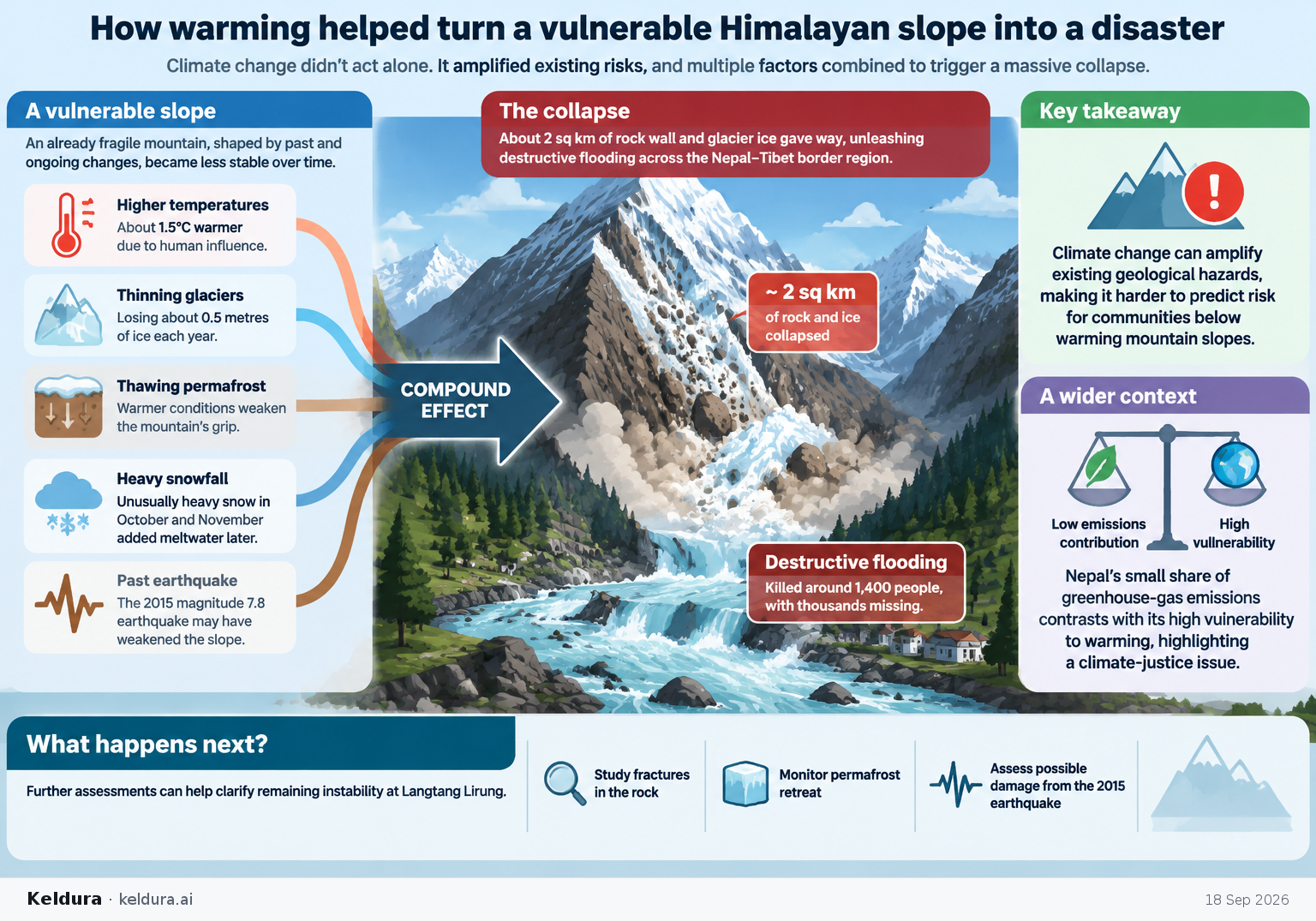
World Weather Attribution concluded that climate change was a destabilising factor in the collapse, though not its sole cause.[2][5] The researchers described a compound event involving temperatures about 1.5C warmer because of human influence, thinning glaciers, thawing permafrost, meltwater and pre-existing geological weaknesses.[5] The collapse involved about 2 sq km of rock wall and glacier ice and produced flooding that killed around 1,400 people, with thousands reported missing.[2]
Why it matters: The finding shows how climate change can amplify an existing geological hazard rather than acting as a single trigger, complicating risk assessment for communities beneath warming mountain slopes.[2][5]
Key insights: Glaciers in the region had been thinning by about half a metre annually, potentially weakening fractures and increasing instability.[5] | Heavy snowfall in October and November supplied substantial meltwater early in the year, adding another component to the compound event.[5] | Researchers said the slope may also have been weakened by the 7.8-magnitude earthquake that struck the area in 2015.[5] | Nepal argues that its low contribution to greenhouse-gas emissions contrasts with its high vulnerability to warming, placing the disaster within a wider climate-justice debate.[5]
Cheatsheet facts: What changed: About 2 sq km of rock wall and glacier ice collapsed, unleashing destructive flooding across the Nepal-Tibet border region.[2] | Why now: Human-driven warming, glacier thinning, permafrost thaw, meltwater and an already vulnerable rock mass interacted to destabilise the slope.[2][5] | Watch next: Further assessments of fractures, permafrost retreat and possible damage from the 2015 earthquake can clarify the remaining instability at Langtang Lirung.[5]